For many travelers, ancient Egyptian tombs are among the most powerful experiences in Luxor. Yet they are also the most misunderstood. Visitors often enter tombs expecting decoration and exit without grasping the purpose, symbolism, or emotional weight of what they just witnessed.
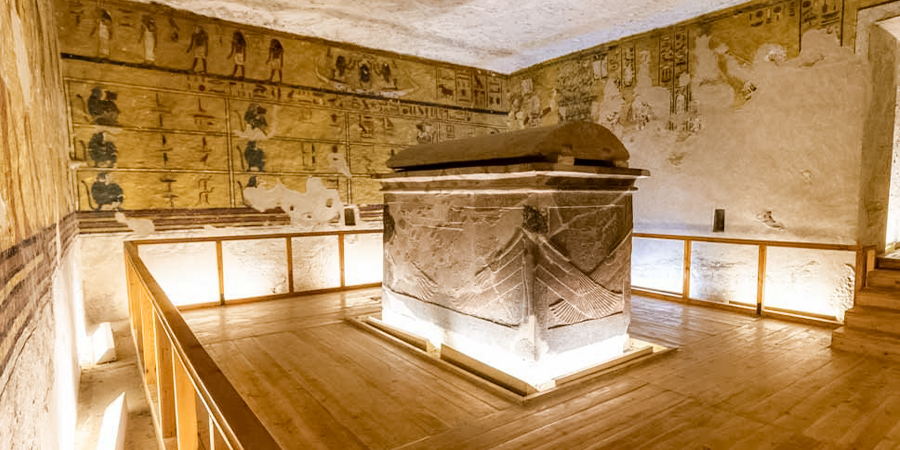
Experienced travelers approach tombs differently. They understand that tombs were never meant for the living—and that this changes everything about how they should be experienced.
What Makes Tombs Different from Temples
Temples were public spaces designed for ritual, ceremony, and visibility. Tombs were private, symbolic, and hidden. Every surface inside a tomb served a purpose tied to belief, protection, and the journey to the afterlife.
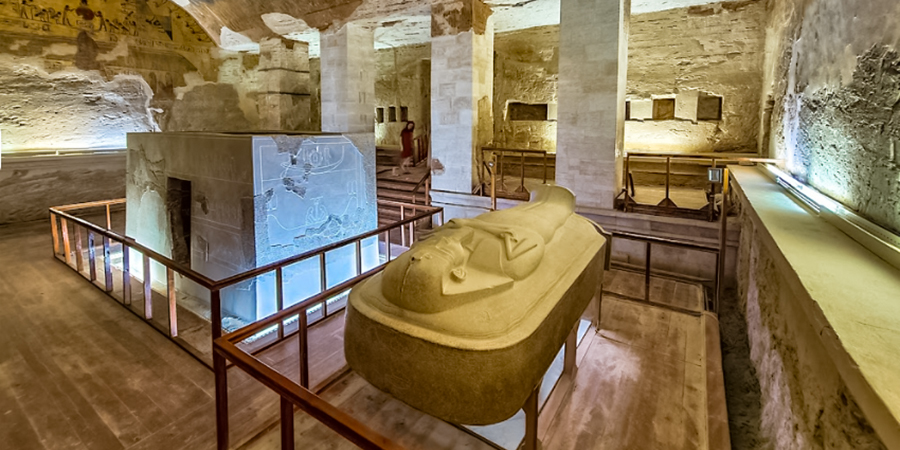
Understanding this distinction helps travelers adjust expectations. Tombs are quieter, more intimate, and mentally demanding.
Why Tombs Feel Intense
Descending into a tomb is a physical and psychological transition. Light changes, space narrows, and silence increases. These conditions were intentional. Tombs were designed to separate the world of the living from the realm of eternity.
Experienced travelers slow down immediately upon entering. Rushing breaks the narrative the space was designed to create.
The Language of Tomb Walls
Tomb walls are not decorative. They are instructional. Scenes depict protection spells, journeys, offerings, and transformations. Colors, figures, and sequences follow religious logic rather than artistic preference.
Without context, these scenes blur together. With explanation, they reveal a carefully structured map of the afterlife.
Why Fewer Tombs Create Greater Understanding
Many visitors try to enter as many tombs as possible. This approach usually leads to confusion. Tombs share themes, and visiting too many in succession causes details to overlap.
Experienced travelers choose a small number of tombs and spend time understanding each one. Depth replaces quantity.
How to Read a Tomb Rather Than Walk Through It
Experienced visitors do not move continuously. They pause at key scenes, notice directionality, and observe repetition. Movement through a tomb is meant to be sequential, not random.
Understanding where to stop and where to look transforms the visit into a narrative rather than a corridor walk.
Mental Preparation Matters
Tombs require concentration. Heat, low light, and narrow spaces affect focus. Entering a tomb already fatigued reduces comprehension.
Experienced travelers plan tomb visits early in the day and avoid stacking them with other intense sites.
Respecting the Space
Tombs were not designed for crowds or noise. Quiet movement, patience, and awareness preserve the atmosphere. Respect enhances understanding—for both the visitor and the site itself.
Travelers who treat tombs with reverence often describe a stronger emotional response.
Why Tomb Experiences Stay with You
Unlike temples, tombs often leave a lasting internal impression. Visitors remember moments of stillness, symbolism, and realization rather than architectural scale.
Tombs connect travelers directly to ancient belief systems and human concerns about death, legacy, and eternity.
How Tombs Complete the Luxor Experience
Luxor without tombs feels incomplete. Temples show power and ritual; tombs reveal belief and vulnerability. Together, they form a complete picture of ancient Egyptian civilization.
Understanding tombs allows travelers to leave Luxor with insight rather than images alone.
Related Experiences in Luxor :
• Guided tomb visits focused on symbolism and context
• West Bank itineraries including select tombs
• Private tours designed for depth, not volume
Enter Luxor’s tombs with intention and understanding, and they reveal one of the most profound dimensions of ancient Egypt.