





For more than a century, travelers arriving in Cairo have made their way to a distinctive pink building overlooking Tahrir Square.
Inside, generations of visitors encountered ancient Egypt through towering royal statues, painted coffins, intricate jewelry, and rooms filled with objects recovered from temples and tombs across the country.
It was the Egyptian Museum: one of the great archaeological museums of the world.
Today, there is another extraordinary destination.
Near the Pyramids of Giza, the Grand Egyptian Museum introduces ancient Egyptian civilization on an entirely different scale. Its monumental architecture, carefully organized galleries, and extraordinary collections offer a new way to experience thousands of years of history.
For travelers planning their first trip to Egypt, this creates an important question.
Should you visit the Grand Egyptian Museum, the Egyptian Museum in Tahrir, or both?
The answer depends on what you want to see, how much time you have, and the kind of museum experience you enjoy.
The newer museum is not simply a larger version of the older one. And the original Egyptian Museum has not become irrelevant because major collections have moved.
Each tells Egypt's story in a different way.
This guide explains the differences and helps you decide how to include them in your Cairo itinerary.
Two Museums, Two Different Experiences
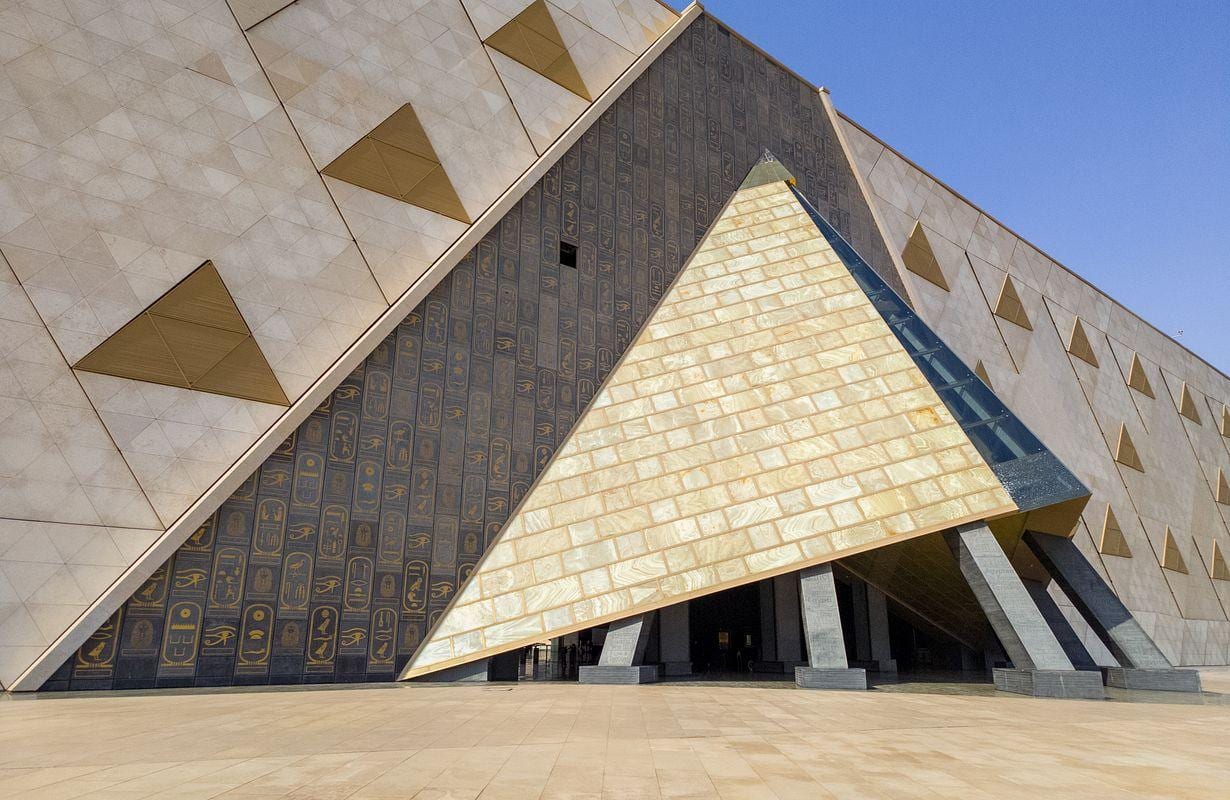
The Grand Egyptian Museum, often called the GEM, is a modern museum complex near the Giza Pyramids.
Its architecture, galleries, and visitor facilities were designed to present ancient Egyptian civilization through a large-scale, carefully organized experience.
The Egyptian Museum in Tahrir is a historic institution in central Cairo, officially opened in 1902.
Its building and collections are part of the history of modern Egyptology.
Where the GEM emphasizes spacious presentation, interpretation, and a purpose-built visitor journey, the Tahrir museum offers the atmosphere of a historic archaeological collection.
One feels like entering a major new cultural landmark.
The other feels like stepping into the history of archaeological discovery itself.
Neither experience can be fully reduced to the number of objects on display.
Grand Egyptian Museum vs Egyptian Museum: Quick Comparison
Feature | Grand Egyptian Museum (GEM) | Egyptian Museum in Tahrir |
|---|---|---|
Location | Giza, near the pyramids | Downtown Cairo, Tahrir Square |
Building | Modern, purpose-built complex | Historic museum opened in 1902 |
Atmosphere | Spacious, contemporary, monumental | Traditional, historic, collection-rich |
Tutankhamun | Dedicated Tutankhamun Galleries | No longer the principal home of the famous Tutankhamun treasures |
Other highlights | Main Galleries, Grand Staircase, Ramesses II, Khufu's boats | Major royal statues, coffins, papyri, jewelry, and historic collections |
Suggested visit | Approximately 4–6 hours or longer | Approximately 2–3 hours, longer for enthusiasts |
Best combination | Giza Pyramids | Downtown Cairo, Islamic Cairo, or other central attractions |
Best for | First-time visitors, families, comprehensive museum experience | History enthusiasts, repeat visitors, traditional museum lovers |
These suggested visit durations are planning estimates, not museum rules.
1. The Grand Egyptian Museum: A New Way to Discover Ancient Egypt
The Grand Egyptian Museum stands near the Giza Plateau, where the pyramids have dominated the landscape for more than four thousand years.
The location is deliberate.
Visitors can experience Egypt's ancient monuments and its modern museum architecture within the same part of Greater Cairo.
The building itself makes a powerful first impression.
The entrance leads toward a monumental hall dominated by an immense statue of Ramesses II.
From there, the Grand Staircase introduces visitors to a series of large-scale ancient sculptures and architectural elements.
The experience is designed to build anticipation.
Rather than immediately entering a crowded collection of display cases, you move through an architectural journey that gradually reveals the scale and complexity of ancient Egyptian civilization.
The Main Galleries
The GEM's main exhibition halls explore ancient Egyptian history through a combination of chronological and thematic displays.
The principal themes include kingship, society, and beliefs.
Together, they help visitors understand more than the familiar stories of pharaohs and pyramids.
You encounter the lives of ancient Egyptians, the relationship between rulers and religion, the development of artistic traditions, and the beliefs that shaped temples and funerary practices.
This is one of the GEM's greatest strengths.
The museum does not simply ask visitors to admire individual masterpieces.
It helps explain the civilization that created them.
The Grand Staircase
The Grand Staircase is one of the museum's defining spaces.
Large statues and monumental objects are arranged across different levels, creating a dramatic progression through Egyptian history.
The scale is particularly impressive for first-time visitors.
It also provides a useful introduction to the relationship between royal power, religious imagery, and monumental art.
The Colossal Statue of Ramesses II
The enormous statue of Ramesses II is among the most recognizable objects associated with the museum.
Its presence in the Grand Hall immediately communicates the ambition of ancient Egyptian royal sculpture.
Even travelers who have already visited Karnak or Abu Simbel may find the opportunity to examine such a monumental statue in a museum setting remarkable.
Khufu's Boats Museum
The GEM visitor experience also includes the Khufu's Boats Museum.
These ancient vessels are associated with the funerary complex of King Khufu, the ruler connected with the Great Pyramid.
Their preservation offers an extraordinary insight into ancient Egyptian woodworking, boat construction, and royal funerary traditions.
For travelers who have just visited the pyramids, this connection is particularly meaningful.
2. Tutankhamun: Which Museum Should You Visit?
For many travelers, this is the deciding factor.
Tutankhamun became internationally famous after Howard Carter discovered his tomb in the Valley of the Kings in 1922.
The discovery revealed an extraordinary collection of royal funerary objects, including the famous golden mask, shrines, jewelry, furniture, and other treasures.
For decades, the Egyptian Museum in Tahrir was closely associated with these objects.
Today, the Grand Egyptian Museum is the principal destination for the Tutankhamun collection.
Its dedicated galleries form part of the museum's official visitor experience.
What Makes the Tutankhamun Galleries Special?
The importance of the collection lies not simply in its gold.
These objects provide an unusually rich picture of royal life, burial practices, craftsmanship, and religious beliefs during Egypt's Eighteenth Dynasty.
Furniture, ceremonial objects, personal possessions, and funerary equipment reveal the complexity of preparing a king for the afterlife.
Seen together, they tell a much deeper story than any single famous object.
For travelers whose primary goal is to experience Tutankhamun's treasures, the Grand Egyptian Museum should be the priority.
What About Tutankhamun's Actual Tomb?
The tomb itself is not in Cairo.
It is located in the Valley of the Kings on Luxor's West Bank.
The museum and the tomb offer different experiences.
At the GEM, you explore the objects associated with Tutankhamun's burial.
At the Valley of the Kings, you visit the place where the king was buried and where the extraordinary discovery was made.
For travelers visiting both Cairo and Luxor, experiencing both locations can create a powerful connection between the objects and their archaeological context.
3. The Egyptian Museum in Tahrir: Why It Still Matters
The Egyptian Museum in Tahrir opened in 1902 and became one of the most important institutions in the history of Egyptology.
Its historic building was designed by the French architect Marcel Dourgnon.
Walking through its galleries offers an experience that is quite different from the GEM.
The central halls, traditional display cases, and dense archaeological collections evoke the history of museum collecting and scholarship.
This atmosphere is part of its appeal.
The museum is not simply a place where objects are displayed.
It is itself a historical institution.
What Can You See at the Egyptian Museum?
The museum continues to house important ancient Egyptian collections, including royal sculpture, coffins, papyri, jewelry, and objects from different periods of Egyptian history.
Its displays include material associated with the Old Kingdom, Middle Kingdom, New Kingdom, and later periods.
Among the important historical collections associated with the museum are objects from the royal burials discovered at Dahshur and other significant archaeological sites.
Individual exhibits may be relocated, conserved, or temporarily unavailable, so the exact objects on display should be checked if you are visiting for a particular artifact.
The Experience of a Historic Museum
Some travelers prefer the carefully structured presentation of a modern museum.
Others enjoy wandering through historic galleries, discovering unexpected objects, and feeling the atmosphere of an institution that has welcomed generations of archaeologists and visitors.
The Egyptian Museum in Tahrir is particularly rewarding for people in the second group.
It also appeals to repeat visitors who want to explore Egyptian collections beyond the most famous headline attractions.
Has the Egyptian Museum Closed?
No.
The Egyptian Museum in Tahrir remains a visitor attraction with its own collections and published opening hours.
The opening of the GEM has changed the distribution of important artifacts, but it has not eliminated the historical or cultural value of the original museum.
Treating the Tahrir museum as an obsolete attraction would be a mistake.
4. Which Museum Has the Better Collection?
This depends on how you define better.
If your priority is the Tutankhamun collection, major new exhibition spaces, and a broad introduction to ancient Egyptian civilization, the GEM has a compelling advantage.
If you are interested in historic museum collections, traditional archaeological displays, and the history of Egyptology, the Egyptian Museum in Tahrir remains deeply rewarding.
A modern exhibition can explain objects through carefully designed interpretation.
A historic collection can reveal the development of archaeological discovery and museum scholarship.
Both approaches have value.
For a first visit to Egypt, most travelers will probably find the GEM the stronger single choice.
For travelers with additional time or a serious interest in archaeology, visiting both can be worthwhile.
5. Which Museum Is Better for First-Time Visitors?
For most first-time visitors, we recommend prioritizing the Grand Egyptian Museum.
There are several reasons.
The museum provides a comprehensive introduction to ancient Egyptian civilization.
Its dedicated Tutankhamun Galleries are a major attraction.
Its modern facilities and organized exhibition spaces can make a large collection easier to navigate.
And its location near the Giza Pyramids makes it a natural part of a broader Giza sightseeing itinerary.
However, this does not mean that every first-time visitor must choose the GEM.
If you are staying in Downtown Cairo, have limited time, or are particularly interested in the atmosphere of a historic museum, the Egyptian Museum in Tahrir may be more convenient.
The right choice should consider your entire day.
6. Which Museum Is Better for Families With Children?
The Grand Egyptian Museum can be an excellent choice for families.
Its spacious layout, monumental objects, and modern visitor facilities may help children engage with ancient Egyptian history.
The museum also offers family-oriented educational experiences, subject to current availability.
The enormous statue of Ramesses II, the Grand Staircase, and the story of Tutankhamun can be particularly memorable.
However, the size of the complex is also a consideration.
Trying to see every gallery in one visit may be tiring for younger children.
A family-friendly plan should focus on selected highlights, allow regular breaks, and avoid turning the visit into an exhausting march through exhibition halls.
The Egyptian Museum in Tahrir can also be enjoyable for families, particularly with a guide who can bring the stories behind the objects to life.
For children, the quality of the storytelling often matters more than the size of the museum.
7. Which Museum Is Better for Serious History Lovers?
If ancient Egypt is one of your principal reasons for traveling, the ideal answer may be both.
The GEM offers a broad, modern presentation of the civilization, including important thematic and chronological connections.
The Egyptian Museum in Tahrir offers access to a historic collection and a museum environment closely connected with the development of Egyptology.
Together, they provide complementary perspectives.
However, visiting both on the same day may leave insufficient time to appreciate the collections properly.
A dedicated history enthusiast may prefer to allocate separate visits.
You might spend one day exploring the GEM and the Giza Plateau, then another visiting the Egyptian Museum alongside selected historic Cairo attractions.
This creates a more balanced experience.
8. Location: Giza or Downtown Cairo?
The two museums are in different parts of Greater Cairo.
The Grand Egyptian Museum is near the Giza Pyramids, in the El Remayah area.
The Egyptian Museum in Tahrir is in central Cairo, close to Tahrir Square.
This geographical difference has practical consequences.
Visiting the GEM With the Giza Pyramids
The GEM is naturally paired with the Giza Plateau.
You can explore the pyramids and the Great Sphinx, then continue to the museum.
However, both are major attractions.
If you want a detailed guided visit to the pyramids and several hours inside the GEM, the day can be long.
For travelers with limited time, it may be necessary to focus on the main highlights.
Visiting the Tahrir Museum With Central Cairo
The Egyptian Museum in Tahrir can fit into a day exploring Downtown Cairo or other historic districts.
Depending on your interests, you might combine it with selected Islamic Cairo attractions or other central sightseeing.
The key is allowing realistic transfer time.
Cairo traffic can be unpredictable, and distances alone do not tell you how long a journey will take.
9. How Much Time Do You Need at Each Museum?
Grand Egyptian Museum
For a satisfying first visit, allow approximately four to six hours.
Travelers with a deep interest in archaeology may want considerably longer.
The scale of the museum makes it easy to underestimate how much time you will spend moving between galleries.
If you are also visiting the Giza Pyramids, plan the day carefully.
A rushed two-hour visit may leave you feeling that you have seen only a small part of the experience.
Egyptian Museum in Tahrir
Approximately two to three hours is a reasonable starting point for a highlights-focused visit.
A serious archaeology enthusiast may prefer half a day or more.
The museum contains extensive collections, and the experience becomes richer when you take time to understand the objects rather than simply walking past them.
Can You Visit Both in One Day?
Technically, it may be possible.
But for most travelers, we would not recommend it.
You would need to account for transport across Greater Cairo, museum entry procedures, walking distances, meals, and the time required to appreciate both collections.
A more comfortable approach is to visit them on separate days.
If you have only one day available for museums, choose the one that best matches your interests.
10. Tickets and Opening Hours: What You Need to Know
The two museums operate separate ticketing systems.
A ticket for one museum does not automatically grant admission to the other.
Grand Egyptian Museum
The GEM's official ticketing website provides current admission options and available entry slots.
At the time of this guide's review, the museum publishes the following regular gallery hours:
Sunday, Monday, Tuesday, Thursday, Friday: 9:00 AM–6:00 PM.
Wednesday and Saturday: 9:00 AM–9:00 PM.
The wider museum complex opens earlier and closes later than the galleries.
The museum states that the last gallery entry is one hour before closing.
Advance online booking with a selected date and time is the appropriate planning approach.
Always confirm the current schedule and ticket conditions before visiting.
Egyptian Museum in Tahrir
The Egyptian Ministry of Tourism and Antiquities publishes regular opening hours of 9:00 AM–5:00 PM daily, with the ticket window closing at 4:00 PM.
Special hours may apply during Ramadan or on exceptional dates.
The Ministry also publishes ticket categories for Egyptian and foreign visitors.
Prices can change, so check the current official information rather than relying on an old travel article.
Should You Book Museum Tickets in Advance?
For the GEM, advance online booking is strongly recommended and may be required under the current ticketing arrangements.
For the Egyptian Museum in Tahrir, confirm the available official ticketing options for your visit.
If your museum visit is included in a private tour, ask whether the operator is arranging the admission tickets and whether the exact museum is specified.
A professional itinerary should never use the vague phrase Egyptian Museum when the distinction between GEM and Tahrir affects what you will see.
11. Which Museum Offers the Better Visitor Experience?
The GEM was designed with contemporary visitor expectations in mind.
Its large spaces, modern interpretation, dining facilities, and visitor services are part of the overall experience.
For travelers who appreciate comfortable infrastructure and clear exhibition design, this can be a major advantage.
The Egyptian Museum in Tahrir offers a more traditional atmosphere.
Its historic halls and dense collections can feel less curated than a newly designed museum, but this is also part of its distinctive character.
The experience may be especially appealing to travelers who enjoy historic institutions and independent exploration.
One is not automatically more authentic than the other.
Both are authentic expressions of Egypt's archaeological heritage, presented through different generations of museum design.
12. Accessibility and Comfort
Accessibility should be considered before booking, particularly for travelers with reduced mobility.
The GEM incorporates modern accessibility features, but the overall size of the complex can involve substantial walking.
Visitors should check current wheelchair arrangements, lifts, accessible routes, and assistance services.
The Egyptian Museum in Tahrir also publishes information about accessibility-related facilities, including ramps and elevators.
However, the building's historic design may create different practical challenges.
If accessibility is important, contact the museum or tour operator in advance to confirm the specific arrangements you require.
Do not assume that every gallery or route offers identical access.
13. Photography Rules
Photography policies vary between museums and exhibition areas.
At the GEM, the museum's published guidance distinguishes between general photography rules and restrictions in the Tutankhamun Galleries.
The museum indicates that personal photography is generally allowed in many areas, while only mobile photography is permitted in the Tutankhamun Galleries under its published rules.
Professional equipment, flash, tripods, and commercial filming may be subject to additional restrictions.
The Egyptian Museum in Tahrir has its own visitor regulations.
Always follow the instructions displayed on the day of your visit.
Photography should never interfere with conservation requirements or other visitors' enjoyment.
14. The Best Cairo Itinerary If You Have One Day
If you have only one full day in Cairo and ancient Egypt is your priority, we generally recommend:
Morning: Giza Pyramids and the Great Sphinx
Explore the Giza Plateau with a qualified guide.
Learn about the pyramid complexes, the Old Kingdom, and the remarkable engineering achievements of ancient Egyptian builders.
Afternoon: Grand Egyptian Museum
Continue to the GEM for a focused visit to the principal galleries and Tutankhamun collection.
This is a full sightseeing day, so your guide should help prioritize the highlights.
If you prefer a slower pace and a more comprehensive museum experience, consider dividing the pyramids and GEM across two days.
15. The Best Cairo Itinerary If You Have Two Days
With two days, you can explore Cairo more comfortably.
Day 1: Giza and the Grand Egyptian Museum
Visit the pyramids, the Sphinx, and the GEM.
Allow sufficient time for the museum's principal collections.
Day 2: Egyptian Museum in Tahrir and Historic Cairo
Begin with the historic Egyptian Museum.
Then explore selected areas of Cairo according to your interests, such as Islamic Cairo or other cultural attractions.
This arrangement gives you two different perspectives on Egyptian history without forcing everything into one exhausting day.
16. The Best Cairo Itinerary If You Have Three Days
Three days allow a more rewarding introduction to Greater Cairo.
Day 1 — Giza Pyramids: Explore the plateau and consider additional nearby archaeological sites if your interests and schedule allow.
Day 2 — Grand Egyptian Museum: Give the GEM the time it deserves, including its principal galleries and the Tutankhamun collection.
Day 3 — Egyptian Museum in Tahrir and Historic Cairo: Discover the original museum and experience another side of the city.
For travelers who love history, this is a more satisfying approach than attempting to cover every major attraction in a single day.
17. Common Mistakes to Avoid
Assuming the Egyptian Museum in Tahrir Has Closed
It remains an important museum with its own collections and visitor program.
Going to Tahrir Specifically for Tutankhamun's Golden Mask
The GEM is now the principal destination for the Tutankhamun collection.
Trying to See Every GEM Gallery in Two Hours
The museum is extensive. A short visit requires careful selection of highlights.
Booking the Wrong Museum
Always check the full museum name and location on your itinerary.
Ignoring Cairo Traffic
The museums are in different areas. Allow realistic transfer times.
Assuming Both Museums Use the Same Ticket
They have separate admission systems.
Visiting Without Historical Context
A qualified Egyptologist can help connect individual objects with the wider story of ancient Egyptian civilization.
Planning Your Cairo Museum Visits With Luxor Booking Tours
At Luxor Booking Tours, we believe a great museum visit should do more than show you famous objects.
It should help you understand the people who created them, the beliefs behind them, and the historical events that shaped their world.
Our private Cairo sightseeing experiences can be planned around your interests, whether you want to prioritize the Grand Egyptian Museum, explore the historic Egyptian Museum in Tahrir, or combine museum visits with the Giza Pyramids and other attractions.
We can also coordinate Cairo sightseeing with longer Egypt itineraries, including Luxor, Aswan, and Nile cruises.
For travelers with limited time, we recommend choosing the right combination of attractions rather than trying to visit everything.
For travelers with a deeper interest in archaeology, we can help structure a more focused program with time for detailed exploration.
Explore our Private Cairo Day Tours or contact Luxor Booking Tours to plan a museum experience that matches your interests and travel schedule.
Frequently Asked Questions
Is the Grand Egyptian Museum the same as the Egyptian Museum in Cairo?
No. The Grand Egyptian Museum is a modern museum near the Giza Pyramids. The Egyptian Museum in Tahrir is a historic museum in Downtown Cairo.
Which museum has Tutankhamun's golden mask?
The Grand Egyptian Museum is the principal destination for the Tutankhamun treasures, including the famous golden mask.
Is the Egyptian Museum in Tahrir still open?
Yes. It continues to operate as a museum and displays important ancient Egyptian collections.
Which museum is better for first-time visitors?
For most first-time visitors, the Grand Egyptian Museum is the stronger single choice because of its extensive galleries, Tutankhamun collection, and location near Giza.
Can you visit both museums in one day?
It may be possible, but separate visits are usually more comfortable and rewarding.
How long does it take to visit the Grand Egyptian Museum?
Allow approximately four to six hours for a satisfying first visit, with more time for travelers particularly interested in archaeology.
How long does it take to visit the Egyptian Museum in Tahrir?
Approximately two to three hours is suitable for a highlights-focused visit, although enthusiasts may prefer longer.
Is the GEM close to the pyramids?
Yes. The Grand Egyptian Museum is located near the Giza Plateau, making it a practical combination with the pyramids.
Do you need separate tickets for the two museums?
Yes. Each museum operates its own admission system.
Is a private guide worth it for the museums?
For travelers who want to understand the historical context of the collections, a qualified Egyptologist can add considerable value.
Final Thoughts: A New Chapter and a Historic Original
The Grand Egyptian Museum and the Egyptian Museum in Tahrir represent two remarkable chapters in the story of Egypt's archaeological heritage.
One looks toward the future, presenting ancient civilization through monumental architecture and modern exhibition design.
The other preserves the atmosphere of a historic institution that helped introduce ancient Egypt to generations of visitors.
If you have time for only one, the Grand Egyptian Museum will be the right choice for many first-time travelers, particularly those eager to see the treasures of Tutankhamun.
If you have time for both, the experiences complement each other.
Together, they reveal not only the achievements of ancient Egypt, but also the evolving ways in which those achievements have been discovered, studied, preserved, and shared.
The best museum visit is not about seeing the greatest number of objects.
It is about leaving with a deeper understanding of the civilization behind them.
And in Cairo, both museums have something important to contribute to that understanding.
الرحلات المرتبطة
استكشف الرحلات اليومية والبرامج السياحية والنايل كروز المرتبطة بهذا الدليل.
يبدأ من $187
USD / شخص
جولة خاصة في أهرامات الجيزة والمتحف المصري الكبير
قم بزيارة أهرامات الجيزة وأبو الهول ومعبد الوادي مع عالم مصريات خاص، ثم استكشف المتحف المصري الكبير.
 8 ساعات
 عند الطلب
 جولة إرشادية خاصة
يبدأ من $595
USD / شخص
جولة القاهرة الخاصة لمدة 3 أيام
القاهرة
جولة خاصة لمدة 3 أيام في القاهرة مع مرشدك وسائقك الخاص: القاهرة القديمة وأهرامات الجيزة والمتحف المصري الكبير وبازار خان الخليلي.
- 3 أيام / ليلتان
- مجموعة خاصة
يبدأ من $864
USD / شخص
جولة القاهرة الخاصة لمدة 4 أيام
القاهرة
جولة خاصة شاملة لمدة 4 أيام في القاهرة: أهرامات الجيزة وسقارة والمتحف المصري الكبير وقلعة صلاح الدين والقاهرة القديمة وخان الخليلي.
- 4 أيام / 3 ليالٍ
- مجموعة خاصة