





There is something remarkable about walking into a royal tomb in the Valley of the Kings.
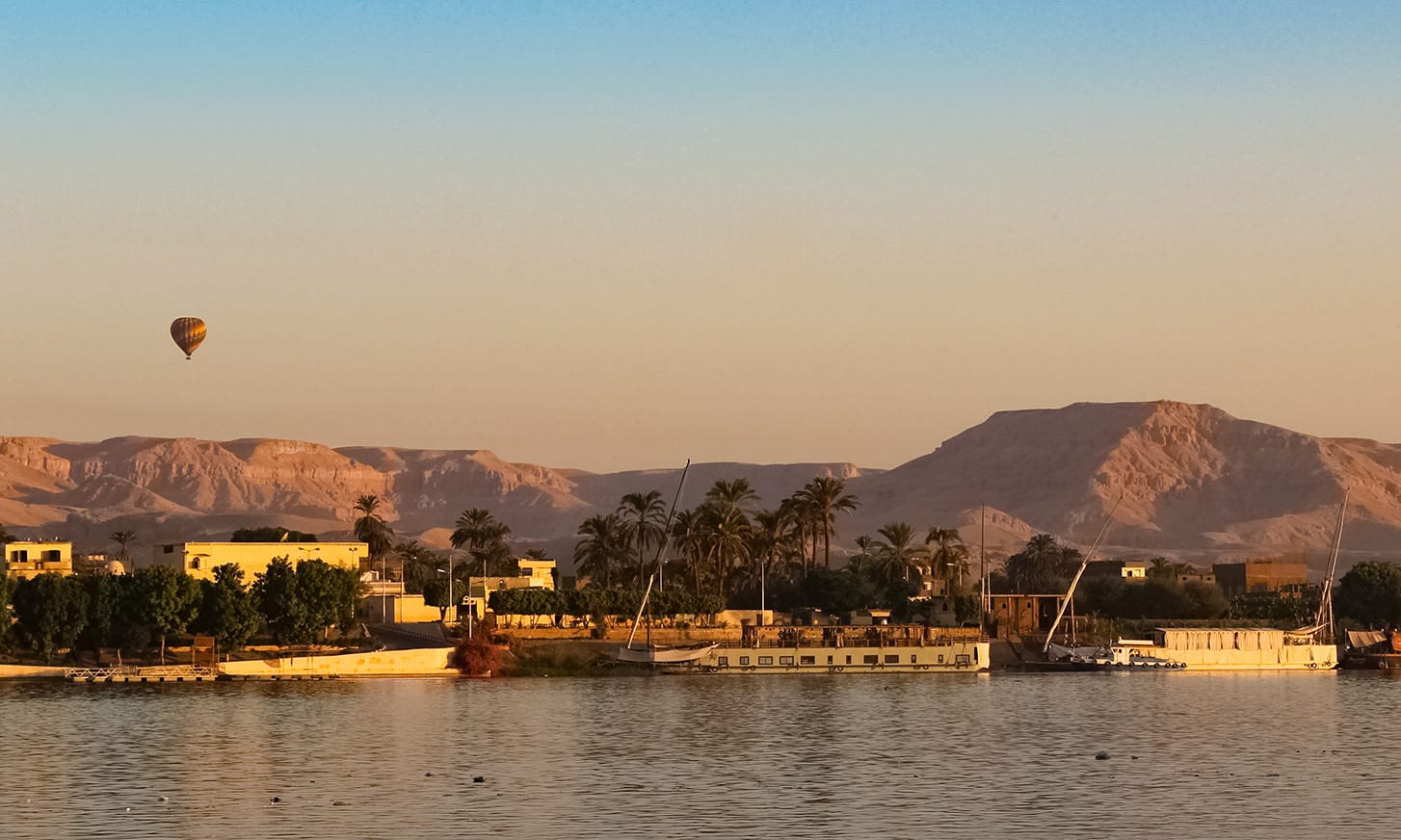
Outside, the landscape is almost severe. Pale limestone cliffs rise above a dry desert valley, and there is little to suggest the extraordinary world hidden beneath the ground.
Then you descend into a passageway.
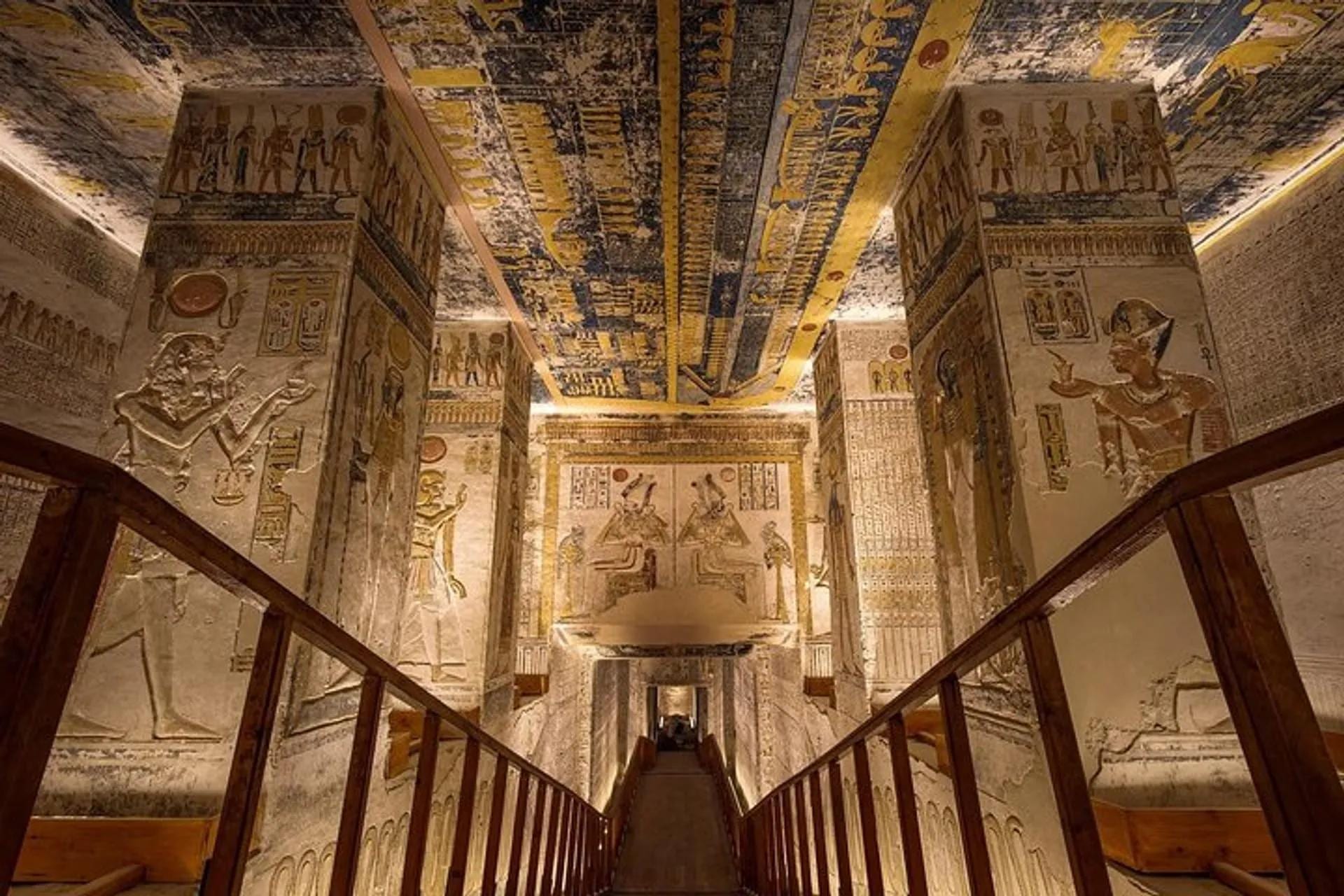
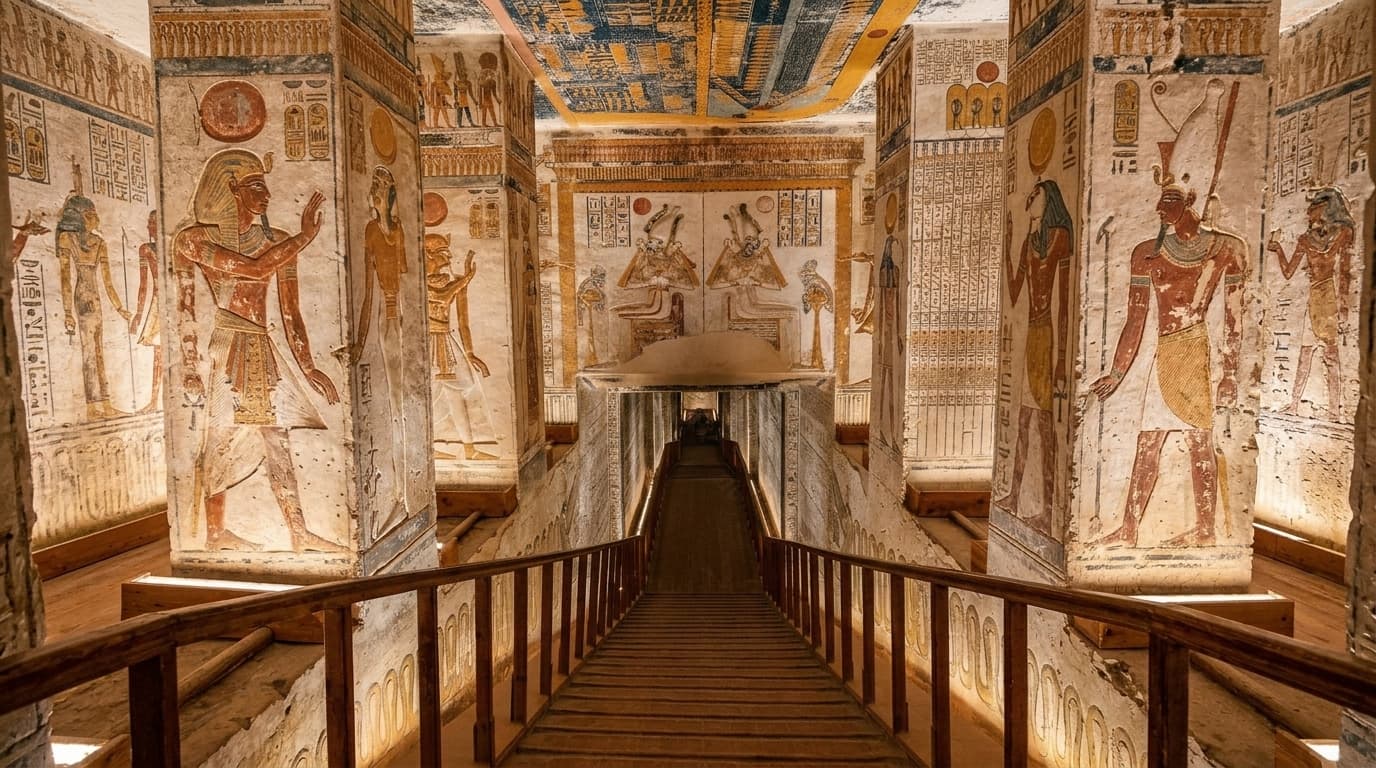
The walls begin to fill with color. Gods and goddesses appear beside hieroglyphic texts. The ceilings transform into scenes of the heavens. Ancient Egyptian beliefs about death, rebirth, and the journey of the sun unfold around you.
Some of these paintings have survived for more than three thousand years.
But before you reach that moment, you have a decision to make.
Which tombs should you visit, and which are worth paying extra for?
The Valley of the Kings has a standard entrance ticket, but some of its most famous tombs require separate admission.
Tutankhamun's tomb is probably the best known. Seti I's tomb is celebrated for its extraordinary decoration. The tomb of Ramesses V and Ramesses VI offers one of the valley's most impressive painted interiors.
Yet the most expensive option is not necessarily the best choice for every traveler.
This guide explains how Valley of the Kings tickets work, what makes the principal tombs different, and how to plan a visit that suits your interests, time, and budget.
What Is the Valley of the Kings?
The Valley of the Kings is a royal burial ground on the West Bank of the Nile at Luxor, part of ancient Thebes.
During Egypt's New Kingdom, many pharaohs and other members of the royal family were buried in tombs cut deep into the limestone hills.
The site is particularly associated with rulers of the Eighteenth, Nineteenth, and Twentieth Dynasties.
Unlike the monumental pyramids built by earlier kings, these royal tombs were largely concealed within the desert landscape.
Their interiors, however, could be astonishingly elaborate.
Walls were decorated with religious texts and images intended to help the deceased king navigate the afterlife and achieve rebirth.
The Valley of the Kings is part of the UNESCO World Heritage property of Ancient Thebes with its Necropolis.
Today, it is one of the most important archaeological sites in Egypt and a highlight of almost every serious Luxor itinerary.
How Do Valley of the Kings Tickets Work?
The ticket system can seem confusing at first because not every tomb is covered by the same admission.
There are two main categories.
1. The Standard Entrance Ticket
The standard ticket generally allows entry to three eligible tombs from the selection open under the regular admission system.
You do not automatically receive access to every tomb in the valley.
You choose from those currently available for standard admission.
The selection may change because tombs are periodically closed for conservation, maintenance, research, or visitor management.
This is important.
A tomb mentioned in a guidebook or online itinerary may not be open on the day you visit.
2. Special Tomb Tickets
Certain tombs require separate tickets.
These commonly include:
KV62 — Tutankhamun
KV17 — Seti I
KV9 — Ramesses V and Ramesses VI
The exact ticket categories, prices, and availability should always be checked against current official information.
Special tomb admission is generally additional to the standard ticket rather than a replacement for it.
If you want to visit three regular tombs and one special tomb, you should plan for both types of admission.
Which Tombs Are Worth Visiting? A Quick Comparison
Tomb | Main attraction | Best suited to |
|---|---|---|
KV62 — Tutankhamun | Historic discovery, royal mummy, famous burial | First-time visitors and history enthusiasts |
KV17 — Seti I | Exceptional reliefs and detailed decoration | Serious archaeology and art enthusiasts |
KV9 — Ramesses V–VI | Magnificent astronomical ceilings and painted chambers | Travelers who love ancient Egyptian art |
KV2 — Ramesses IV | Colorful decoration and accessible layout | First-time visitors |
KV11 — Ramesses III | Long corridors and varied religious scenes | Visitors interested in royal tomb architecture |
KV6 — Ramesses IX | Rich painted passages and ceilings | Travelers seeking impressive standard-ticket options |
The regular tombs listed above are examples of commonly visited tombs, not a guarantee that all will be open when you arrive.
Tutankhamun's Tomb (KV62): Is It Worth the Extra Ticket?
Few archaeological discoveries have captured the world's imagination like the tomb of Tutankhamun.
In 1922, Howard Carter and his team discovered the young king's burial in the Valley of the Kings.
The extraordinary collection of objects found inside transformed public interest in ancient Egypt.
Tutankhamun became one of the most recognizable names in archaeology.
But there is something visitors should understand before buying the ticket.
Tutankhamun's tomb is relatively small compared with many other royal tombs in the valley.
Its fame comes primarily from the remarkable discovery and burial assemblage, not from having the longest corridors or most extensive wall decoration.
What Will You See Inside?
The burial chamber contains painted scenes associated with the king's funeral and journey into the afterlife.
Tutankhamun's mummy has also been displayed within the tomb, subject to conservation and site arrangements.
The famous golden funerary mask and much of the tomb's extraordinary collection are museum objects, not items you should expect to see inside the burial chamber.
Who Should Visit Tutankhamun's Tomb?
It is particularly worthwhile for travelers fascinated by the discovery of the tomb, the young king's life, and the history of modern Egyptology.
Standing in the actual burial place is a powerful experience.
However, if your main interest is seeing the most elaborate paintings and monumental corridors, other tombs may impress you more visually.
Our Recommendation
Visit Tutankhamun's tomb if its history genuinely interests you.
Do not buy the additional ticket expecting the largest or most beautifully decorated tomb in the valley.
Its significance is historical and emotional rather than architectural scale.
Seti I's Tomb (KV17): The Masterpiece of the Valley
For many Egyptologists and experienced visitors, the tomb of Seti I is among the most extraordinary royal tombs ever created.
Discovered in modern times by Giovanni Battista Belzoni in 1817, KV17 is renowned for its elaborate decorative program.
The tomb extends deep into the rock, with corridors and chambers containing exceptional reliefs and religious scenes.
Seti I ruled during the Nineteenth Dynasty and was the father of Ramesses II.
His tomb reflects a period of extraordinary artistic achievement.
What Makes Seti I's Tomb Special?
The decoration is exceptionally detailed.
Scenes from ancient Egyptian funerary texts cover walls and ceilings, combining fine craftsmanship with complex religious symbolism.
The tomb is especially admired for the quality of its carved and painted reliefs.
In places, the artistry feels almost impossibly precise.
For travelers interested in ancient Egyptian religion, royal ideology, or monumental painting, the experience can be exceptional.
Is Seti I Worth the Higher Ticket Price?
For a serious archaeology enthusiast, it may be one of the best additional purchases in Luxor.
But value is personal.
Someone visiting the Valley of the Kings for the first time with limited time or a tight budget may be completely satisfied with three well-chosen standard tombs.
Seti I becomes particularly worthwhile when you want to study the artistic and religious complexity of New Kingdom royal burials.
Our Recommendation
If your budget allows one premium archaeological experience and you are passionate about ancient Egyptian art, Seti I deserves strong consideration.
Check current admission, access conditions, and any restrictions before making it the centerpiece of your visit.
Ramesses V and Ramesses VI (KV9): The Tomb of the Heavens
If you love dramatic painted ceilings, KV9 may become the highlight of your visit.
The tomb is associated with two rulers of the Twentieth Dynasty: Ramesses V and Ramesses VI.
It is particularly famous for its extraordinary astronomical decoration.
As you move through the tomb, the ceiling becomes an immense visual representation of the heavens and the sun's nightly journey.
The colors, scale, and composition can be breathtaking.
What Makes KV9 Different?
Where Tutankhamun's tomb is historically famous and Seti I's is admired for exceptional artistic detail, KV9 offers a powerful sense of visual scale.
Its corridors and chambers contain religious texts and astronomical imagery that illustrate ancient Egyptian ideas about the cosmos.
The decorated ceilings are among the main reasons visitors choose to pay for the additional ticket.
Is KV9 Worth Paying Extra For?
For many first-time visitors, yes.
If you want an additional tomb that delivers an immediate visual impact, KV9 is a strong candidate.
It is also an excellent choice for travelers interested in the symbolism of the night sky and the journey of the sun god.
Our Recommendation
If you can add only one special tomb and your priority is spectacular painted decoration, KV9 deserves serious consideration.
It often provides a particularly satisfying balance between visual impact and historical interest.
The Best Standard-Ticket Tombs to Consider
A common mistake is assuming that the standard ticket gives access only to less interesting tombs.
That is not true.
Several regular-admission tombs offer extraordinary decoration and memorable architecture.
The key is choosing carefully from those open on the day of your visit.
Ramesses IV (KV2)
The tomb of Ramesses IV is a strong option for first-time visitors.
It features long decorated passages and a striking burial chamber.
Its colorful scenes provide a useful introduction to New Kingdom royal funerary traditions.
The layout can also make it easier to appreciate the overall structure of a royal tomb.
Ramesses III (KV11)
Ramesses III's tomb is notable for its extensive corridors and varied decorative scenes.
It is a fascinating example of royal tomb design during the Twentieth Dynasty.
The tomb also offers insight into the religious and symbolic programs used to prepare a king for the afterlife.
Ramesses IX (KV6)
The tomb of Ramesses IX is another excellent candidate when open.
Its painted corridors and religious scenes make it a rewarding visit.
For travelers who want to appreciate the artistry of royal tomb decoration without purchasing every special ticket, KV6 can be a strong choice.
How Should You Choose Your Three Standard Tombs?
Do not simply enter the first three open tombs you encounter.
Ask which are currently available and consider their differences.
Ideally, choose a combination that offers variety in layout, decorative style, and historical period.
A knowledgeable Egyptologist can help you make that decision based on the tombs open on the day.
This is one of the practical advantages of visiting the Valley of the Kings with a professional guide.
Are the Most Expensive Tombs Always the Best?
No.
A higher ticket price may reflect conservation requirements, restricted visitor numbers, or the special significance of a particular tomb.
It does not necessarily mean the experience will be more enjoyable for every visitor.
Someone fascinated by Howard Carter's discovery may find Tutankhamun's small burial chamber deeply moving.
A visitor passionate about artistic detail may prefer Seti I.
Someone who simply wants to see spectacular paintings may be happiest with KV9 and three carefully chosen standard tombs.
There is no single ranking that works for everyone.
The best tomb is the one that connects with your interests.
How Many Tombs Should You Visit?
For most first-time visitors, three standard tombs provide an excellent introduction.
Adding one special tomb can make the experience even richer.
However, visiting too many tombs in succession can become tiring.
The passages may involve stairs, slopes, warm conditions, and enclosed spaces.
After several visits, the religious scenes can also begin to blur together unless you understand their differences.
For travelers with a strong interest in archaeology, additional tombs can be rewarding.
But the goal should be to appreciate what you see, not simply collect the maximum number of tomb entries.
Our Suggested Approach
First-time visitor: Three standard tombs, with an optional special tomb if the budget allows.
Ancient Egyptian art enthusiast: Three standard tombs plus KV9 or Seti I.
Tutankhamun enthusiast: Three standard tombs plus KV62.
Dedicated archaeology traveler: A carefully planned selection of standard and special tombs, allowing enough time to study their decoration.
These are recommendations, not fixed packages.
How Much Do Valley of the Kings Tickets Cost?
Ticket prices can change, and special tombs have separate admission rates.
The correct amount also depends on visitor category, including adult or student eligibility.
Rather than relying on an outdated online price, check the Egyptian Ministry of Tourism and Antiquities' official ticketing information for the date of your visit.
You should verify:
Standard Valley of the Kings admission.
Tutankhamun's tomb (KV62).
Seti I's tomb (KV17).
Ramesses V–VI (KV9).
Any applicable student reductions.
Payment procedures and additional restrictions.
If booking a guided tour, ask whether the standard admission is included and which special tomb tickets are optional extras.
A transparent quotation should distinguish these costs clearly.
Can You Buy Tickets at the Valley of the Kings?
Ticketing arrangements may include official on-site sales and electronic payment systems.
Procedures can change, so check the current official guidance before traveling.
If your tour operator is arranging admission, confirm whether tickets are purchased in advance or on arrival.
Do not assume that a guide can guarantee access to a specific tomb.
Openings, visitor limits, and conservation requirements remain under the control of the relevant authorities.
Are All Tombs Open Every Day?
No.
Tomb access can change.
Some tombs close temporarily for conservation work, maintenance, research, or visitor management.
This is one reason why a good Valley of the Kings itinerary should be flexible.
A guide can recommend alternatives when a preferred tomb is unavailable.
If visiting a particular tomb is essential to your trip, check its current status as close to your travel date as possible.
Can Your Egyptologist Guide Enter the Tombs With You?
This is a practical detail many visitors do not discover until they arrive.
At the Valley of the Kings, licensed guides generally provide explanations outside the tombs rather than conducting full guided commentary inside the burial chambers, in accordance with site rules.
This helps manage visitor movement and protect the tomb environment.
A good guide will explain the historical context, religious imagery, and important details before you enter.
You can then explore the tomb with a better understanding of what you are seeing.
The exact site regulations should be respected at all times.
Photography Rules Inside the Tombs
Photography regulations have changed over time.
Personal photography without flash may be permitted in certain tombs under current rules, while restrictions can apply to equipment, commercial photography, or particular areas.
Do not assume that every tomb follows identical rules.
Flash photography should not be used where prohibited, and visitors must follow instructions from site staff.
If you are traveling with professional photographic equipment, ask about permits before arrival.
Protecting the tombs is more important than obtaining a particular photograph.
How Long Do You Need at the Valley of the Kings?
For most travelers, approximately two hours is a reasonable starting point for visiting three standard tombs.
If you add Tutankhamun, KV9, or Seti I, allow more time.
The total duration also depends on queues, weather, walking speed, and how long you spend inside each tomb.
A dedicated archaeology enthusiast may want considerably longer.
Remember that the Valley of the Kings is often combined with the Temple of Hatshepsut and the Colossi of Memnon on a West Bank tour.
Trying to visit every possible tomb while also completing a full Luxor sightseeing day can become exhausting.
What Is the Best Time to Visit?
Early morning is generally preferable, particularly in warmer months.
The Valley of the Kings lies in an exposed desert setting, and temperatures can rise considerably during the day.
During summer, the heat can be intense.
Early visits may also help you avoid some of the busiest periods, although group arrival patterns vary.
Winter is generally more comfortable for outdoor sightseeing, but the site can still be busy during popular travel periods.
Carry water, wear comfortable shoes, and plan for sun exposure.
What Should You Wear and Bring?
Comfort matters more than appearance when exploring royal tombs.
Wear lightweight clothing appropriate to the season and comfortable walking shoes with good grip.
Bring water, sunscreen, sunglasses, and a hat.
Some tombs involve descending sloped corridors or stairs.
Visitors who are uncomfortable in enclosed spaces should consider this before choosing which tombs to enter.
If you have mobility limitations, discuss the specific tomb layouts and access conditions with your guide or tour operator.
Accessibility varies significantly.
Is the Valley of the Kings Suitable for Children?
Yes, many children enjoy the Valley of the Kings, particularly the colorful paintings and stories of pharaohs.
However, parents should consider the heat, walking distances, and enclosed passages.
Younger children may become tired after several tomb visits.
For families, three carefully selected tombs may be more enjoyable than trying to see every available option.
A private tour can provide more flexibility for rest breaks and adjusting the schedule.
Can You Visit the Valley of the Kings Without a Guide?
Yes.
Visitors can explore the site independently, subject to normal admission rules.
However, the tomb decorations are not always easy to understand without historical context.
The images represent complex religious texts, divine figures, and ideas about the afterlife.
A qualified Egyptologist can explain these concepts before you enter and help you choose the most rewarding tombs.
For travelers who want more than photographs, that context can transform the experience.
Valley of the Kings vs Valley of the Queens
These are two separate archaeological sites on Luxor's West Bank.
The Valley of the Kings is primarily associated with royal burials, especially New Kingdom pharaohs.
The Valley of the Queens contains tombs of royal women, princes, and other members of the royal family.
One of its most celebrated monuments is the tomb of Queen Nefertari, renowned for its exquisite painted decoration.
Nefertari's tomb is not part of the Valley of the Kings ticket.
Access arrangements, conservation restrictions, and ticketing for the Valley of the Queens must be checked separately.
If you are particularly interested in royal tomb painting, it may be worth considering both sites as part of a more specialized Luxor itinerary.
Common Mistakes to Avoid
Assuming the Standard Ticket Includes Every Tomb
It does not. Special tombs require separate admission.
Buying Tutankhamun's Ticket for the Wrong Reason
The tomb is historically extraordinary, but it is not the largest or most extensively decorated.
Choosing Tombs Without Checking Which Are Open
Access changes, and a flexible plan is essential.
Visiting Too Many Tombs in One Morning
More entries do not always mean a better experience.
Ignoring the Heat
The exposed desert environment can be physically demanding.
Booking a Tour Without Checking Ticket Inclusions
Confirm whether standard admission and special tomb tickets are included or excluded.
Planning Your Valley of the Kings Visit With Luxor Booking Tours
The Valley of the Kings is one of those places where expert interpretation makes a genuine difference.
At Luxor Booking Tours, we arrange private Luxor sightseeing experiences with professional Egyptologist guides and coordinated transport.
A typical West Bank visit can combine the Valley of the Kings, the Temple of Hatshepsut, and the Colossi of Memnon.
For travelers with a deeper interest in archaeology, the itinerary can be discussed in advance to allow additional time at the tombs or consider other West Bank sites.
We believe the best visit is not simply the one with the longest list of stops.
It is the one that allows you to understand the history, appreciate the artwork, and explore at a comfortable pace.
Explore our Private Luxor West Bank Tours or contact Luxor Booking Tours to plan a visit tailored to your interests.
Frequently Asked Questions About Valley of the Kings Tickets
How many tombs are included in the standard ticket?
The standard ticket generally permits entry to three eligible tombs from the selection open under regular admission.
Is Tutankhamun's tomb included in the standard ticket?
No. Tutankhamun's tomb (KV62) generally requires a separate admission ticket.
Is Seti I's tomb worth the extra money?
For travelers interested in ancient Egyptian art and religious decoration, Seti I's tomb is among the most remarkable experiences in the valley.
Which tomb has the best paintings?
Seti I and Ramesses V–VI are particularly celebrated for their decoration, but several standard-ticket tombs also contain impressive painted scenes.
Can I visit all the tombs in one day?
Not all tombs are open to visitors, and attempting to see too many can be tiring. A carefully chosen selection usually provides a better experience.
Can I take photographs inside the tombs?
Photography rules vary and may change. Follow current site regulations, including restrictions on flash and professional equipment.
Do I need a guide for the Valley of the Kings?
A guide is not universally required, but a qualified Egyptologist can help explain the history and symbolism of the tombs.
How long should I spend at the Valley of the Kings?
Approximately two hours is a useful starting point for three standard tombs, with additional time for special tombs or a more detailed visit.
Is the Valley of the Kings included in Nile cruise excursions?
Many Nile cruise itineraries include the Valley of the Kings as part of Luxor West Bank sightseeing, but ticket inclusions and special tombs vary by package.
What is the best tomb for a first-time visitor?
There is no single best tomb. A combination of three open standard tombs provides an excellent introduction, with KV9 or Tutankhamun as possible additions depending on your interests.
Final Thoughts: Choose the Tombs, Not Just the Tickets
The Valley of the Kings is not a place where the most expensive ticket automatically creates the best experience.
Its real value lies in understanding what these extraordinary burial chambers meant to the people who created them.
Tutankhamun's tomb tells one of archaeology's most famous stories.
Seti I's tomb reveals the astonishing artistic achievements of the New Kingdom.
The tomb of Ramesses V and Ramesses VI surrounds visitors with a magnificent vision of the ancient Egyptian cosmos.
And several standard-admission tombs offer remarkable paintings and architecture without requiring an additional ticket.
Choose according to your interests, allow enough time to appreciate the details, and remember that the paintings were never intended simply as decoration.
They were part of a profound attempt to understand death, eternity, and the possibility of rebirth.
That is what makes the Valley of the Kings unforgettable.
الرحلات المرتبطة
استكشف الرحلات اليومية والبرامج السياحية والنايل كروز المرتبطة بهذا الدليل.
يبدأ من $95
USD / شخص
البر الغربي بالأقصر | جولة خاصة في وادي الملوك
اكتشف المقابر الملكية المزينة بالرسوم في وادي الملوك، ومعبد حتشبسوت على المنحدر الصخري، وتمثالي ممنون في جولة خاصة مع مرشد مصري خبير.
 6 ساعات
 يومياً
 جولة إرشادية خاصة
يبدأ من $135
USD / شخص
البر الشرقي والغربي بالأقصر | جولة خاصة ليوم كامل
اكتشف معالم البر الشرقي والغربي الشهيرة في الأقصر مع عالم مصريات خاص. استكشف وادي الملوك ومعبد حتشبسوت والكرنك ومعبد الأقصر، مع انتقالات فندقية خاصة ووقت للاستمتاع بالمعالم القديمة.
- يوم كامل (7-8 ساعات)
- يومياً
- جولة إرشادية خاصة