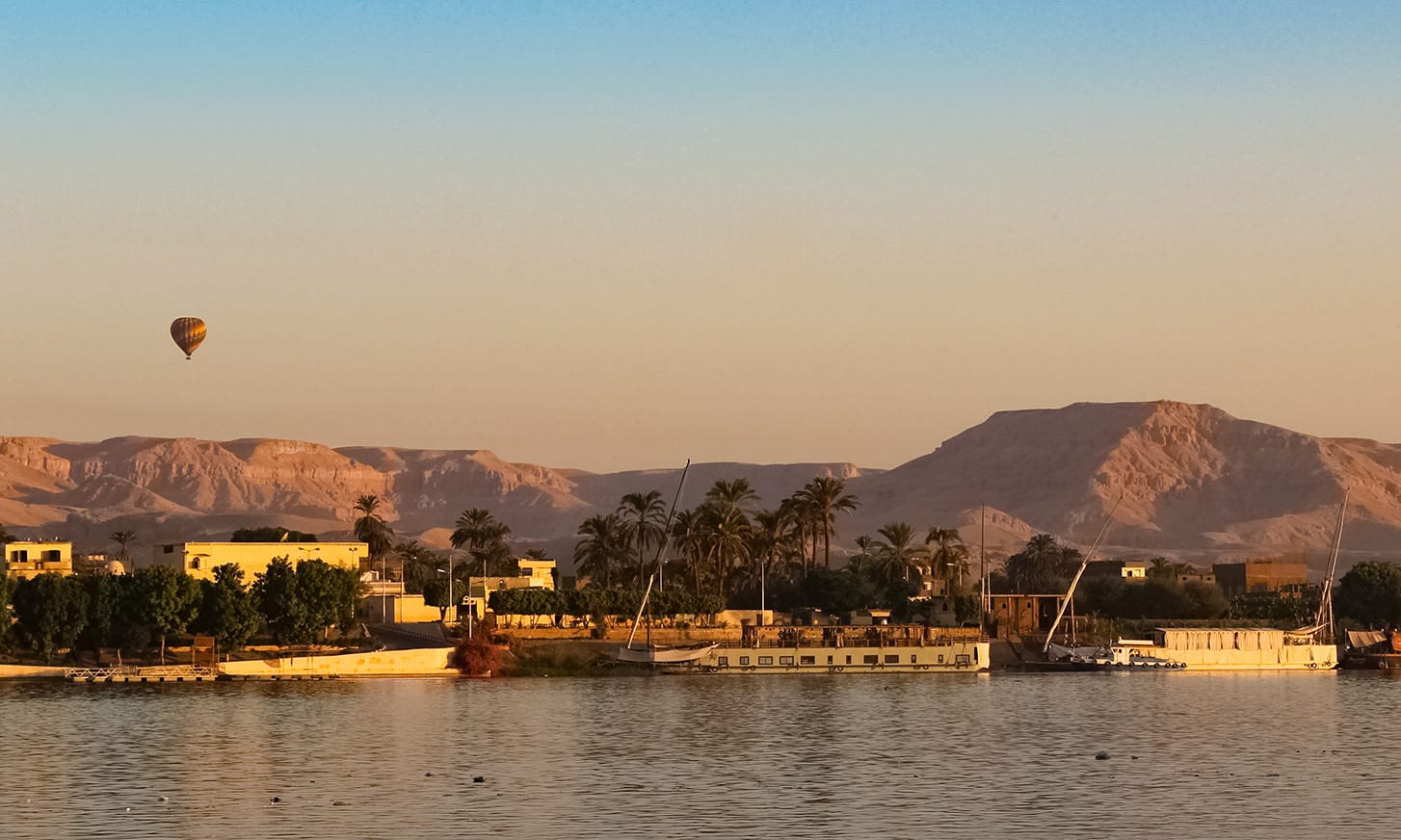








Picture yourself standing on the sun deck of a Nile cruise ship as the afternoon light settles over the river. Palm groves line the banks, small boats move between villages, and the desert rises beyond the narrow strip of cultivated land.
Ahead lie some of Egypt's greatest archaeological treasures: the temples of Karnak and Edfu, the royal tombs of Luxor, the remarkable riverside sanctuary of Kom Ombo, and the island setting of Philae.
For many travelers, a Nile cruise is the most memorable part of an Egypt holiday.
But when you begin comparing itineraries, one question quickly appears.
Should you choose a four-day Nile cruise or a five-day Nile cruise?
At first, the answer seems obvious. Five days sounds better than four. An extra night should mean more time to relax, more sailing, and perhaps more sightseeing.
In practice, the difference is more complicated.
The most common four-day itinerary travels from Aswan to Luxor over three nights, while a common five-day itinerary travels from Luxor to Aswan over four nights.
Both can include many of the same major archaeological sites.
What changes is the direction of travel, the way sightseeing is distributed, the amount of time spent aboard, and how the cruise fits into your wider Egypt journey.
This guide explains the differences so you can choose based on your travel plans rather than simply counting the nights.
First, Understand What Four Days and Five Days Actually Mean
Cruise descriptions can be confusing because operators commonly advertise trips by both days and nights.
A four-day Nile cruise usually means four calendar days and three nights aboard.
A five-day Nile cruise usually means five calendar days and four nights aboard.
That does not mean you will spend four or five complete days sailing.
On embarkation day, you may board around lunchtime or later, depending on the ship and itinerary.
On disembarkation day, breakfast and checkout may be followed by a transfer, with limited or no additional time aboard.
Sightseeing is also integrated into the schedule.
A cruise day may involve a morning temple visit, an afternoon of sailing, and an evening stop at another destination.
The actual experience is therefore determined by the detailed program, not just the advertised duration.
Before booking, check the embarkation and disembarkation arrangements, not merely the number of nights.
The Main Difference: Aswan to Luxor vs Luxor to Aswan
For conventional Nile cruise ships, two itinerary patterns are especially common.
The shorter route often operates from Aswan to Luxor over four days and three nights.
The longer route often operates from Luxor to Aswan over five days and four nights.
These are common industry patterns rather than fixed rules for every vessel.
Some ships operate different schedules, and dahabiyas may follow longer or more flexible programs.
The two conventional routes cover the same broad stretch of the Nile, but they begin and end in different cities.
This distinction matters if you are flying into Egypt through Cairo, connecting to a domestic flight, visiting Abu Simbel, or planning additional days in Luxor.
A cruise is not an isolated purchase. It is part of your complete travel route.
4-Day vs 5-Day Nile Cruise: Quick Comparison
Feature | 4-Day Nile Cruise | 5-Day Nile Cruise |
|---|---|---|
Typical duration | 4 days / 3 nights | 5 days / 4 nights |
Common direction | Aswan to Luxor | Luxor to Aswan |
Starting city | Aswan | Luxor |
Ending city | Luxor | Aswan |
Major temples | Usually similar core sites | Usually similar core sites |
Pace | More concentrated | Often more spread out |
Time aboard | Three nights | Four nights |
Best for | Tighter schedules | Travelers wanting an additional night |
Budget | Often lower total cost | Often higher total cost |
Ideal onward route | Continue from Luxor | Continue from Aswan |
The table is a planning guide. The exact sightseeing schedule and included services depend on the cruise operator and departure.
What Does a Typical 4-Day Nile Cruise Look Like?
A four-day Nile cruise from Aswan to Luxor can be an excellent choice for travelers who want to experience the river and visit its principal archaeological sites without committing an additional night.
Here is an illustrative itinerary.
Day 1: Arrive in Aswan and Board Your Cruise
Your journey begins in Aswan, one of Egypt's most scenic cities.
Depending on your arrival time and the vessel's schedule, you may visit the Temple of Philae, reached by a separate motorboat transfer.
The temple's island setting is particularly beautiful, and its history offers a fascinating introduction to ancient Egyptian religious traditions.
Some programs also include the Aswan High Dam or the Unfinished Obelisk.
After sightseeing, you board the cruise, settle into your cabin, and enjoy your first evening on the Nile.
The order of visits can vary. On some departures, excursions are scheduled after embarkation; on others, they may be arranged before boarding.
Day 2: Sailing to Kom Ombo and Edfu
The second day typically combines sailing with temple visits.
At Kom Ombo, you explore a distinctive temple complex associated with Sobek and Horus the Elder.
Its unusual double arrangement makes it different from many other Egyptian temples.
The cruise then continues toward Edfu, where you may visit the Temple of Horus, one of the country's best-preserved ancient sanctuaries.
Depending on the sailing schedule, Edfu may be visited on the second or third day.
The time between stops is part of the pleasure of the journey.
From the deck, you can watch river villages, agricultural landscapes, and local boats pass by.
Day 3: Arrive in Luxor and Explore the East Bank
As the cruise approaches Luxor, the landscape begins to reveal the historic setting of ancient Thebes.
Many itineraries include Karnak Temple and Luxor Temple, although the order and timing vary.
Karnak is a vast complex developed over centuries, with monumental columns, pylons, and sacred precincts.
Luxor Temple provides another perspective on the ceremonial life of ancient Egypt.
You spend your final night aboard, usually docked in the Luxor area.
Day 4: Luxor West Bank and Disembarkation
The final day often includes visits to the Valley of the Kings, the Temple of Hatshepsut, and the Colossi of Memnon.
These sites reveal the funerary traditions and royal architecture of Egypt's New Kingdom.
Some operators schedule the West Bank excursion before disembarkation, while others arrange it as a separate post-checkout service.
This detail is especially important if you have an onward flight or transfer.
Do not book a tight connection without confirming the exact end time of your cruise program.
What Does a Typical 5-Day Nile Cruise Look Like?
A five-day Nile cruise from Luxor to Aswan generally provides four nights aboard and a slightly different distribution of sightseeing.
Here is a representative itinerary.
Day 1: Embark in Luxor and Explore the East Bank
Your cruise begins in Luxor.
Depending on the schedule, you may visit Karnak Temple and Luxor Temple before or after embarkation.
Karnak is one of the most impressive archaeological sites in Egypt, particularly its Great Hypostyle Hall.
Luxor Temple is closely connected with the religious and ceremonial history of ancient Thebes.
After sightseeing, you return to the ship for dinner and your first night aboard.
Day 2: Discover Luxor's West Bank
The second day commonly focuses on the West Bank.
You visit the Valley of the Kings, where royal tombs preserve extraordinary painted scenes.
The Temple of Hatshepsut is another highlight, with its terraces set against the cliffs of Deir el-Bahari.
The Colossi of Memnon are often included as a brief stop.
Later, the ship may begin sailing toward Edfu, passing through the Esna area according to its operating schedule.
For travelers who want to add a sunrise hot air balloon flight over Luxor, this is often the day to investigate.
However, balloon availability depends on weather, aviation permissions, the ship's schedule, and the specific pickup arrangements.
It should never be assumed to be included.
Day 3: Edfu and Kom Ombo
The third day often includes visits to Edfu and Kom Ombo.
At Edfu, the Temple of Horus provides an excellent opportunity to explore a remarkably preserved ancient Egyptian temple.
Kom Ombo offers a very different experience, with its riverside location and unusual double sanctuary.
The ship continues toward Aswan, with time to enjoy the scenery between stops.
Day 4: Explore Aswan
Aswan offers a distinctive atmosphere, shaped by the Nile's islands, granite formations, and Nubian heritage.
Many itineraries include Philae Temple and selected additional attractions.
Depending on the program, you may have time for an optional Nubian village visit or a felucca experience.
Some travelers use this day for an Abu Simbel excursion, but this requires careful coordination.
Abu Simbel is not automatically included in standard Nile cruise programs, and a long road journey may replace other sightseeing or leisure time.
Confirm exactly how the excursion fits into the schedule.
Day 5: Breakfast and Disembarkation in Aswan
After your final night aboard, the cruise concludes in Aswan.
Depending on your wider itinerary, you may continue to a hotel, take a domestic flight to Cairo, or arrange onward travel.
As with the four-day route, the exact checkout time matters.
If you plan to fly home or connect internationally on the same day, allow sufficient time for transfers and airport procedures.
Do You See More Temples on a 5-Day Nile Cruise?
Not necessarily.
This is one of the most important points to understand.
A typical four-day Aswan-to-Luxor cruise and a five-day Luxor-to-Aswan cruise may include essentially the same major archaeological attractions.
Both often cover Karnak, Luxor Temple, the Valley of the Kings, Hatshepsut's Temple, Edfu, Kom Ombo, and Philae.
The additional night does not automatically add another major temple.
Instead, it may provide a more comfortable distribution of the existing visits, additional time in a destination, or more leisure time aboard.
However, this depends on the actual ship's program.
Some five-day cruises include more sightseeing, while some four-day cruises offer substantial excursions despite their shorter duration.
Always compare the full list of included visits rather than assuming that the longer cruise is more comprehensive.
Which Cruise Offers More Time to Relax?
A five-day cruise generally provides an extra night aboard.
That can make the experience feel more leisurely, especially if the sightseeing is spread across more days.
You may have more opportunities to enjoy the sun deck, swimming pool, or quiet moments watching the river.
But this is not guaranteed.
Some five-day itineraries have busy sightseeing schedules, early departures, or optional excursions that occupy much of the available time.
A four-day cruise can also feel relaxed if the operator organizes visits efficiently.
The best way to judge the pace is to look at the daily program.
Count the excursions, road transfers, early starts, and hours actually available aboard.
A well-planned itinerary is more important than an extra calendar day.
Is a 4-Day Nile Cruise Too Short?
For many travelers, no.
Four days and three nights can provide a rewarding introduction to Nile cruising.
You experience several nights aboard, sail between major destinations, and visit important archaeological sites.
It is particularly suitable when your overall Egypt holiday is limited to a week or ten days and you want to include Cairo as well.
However, a four-day cruise may feel rushed if you prefer long mornings, extended temple visits, or significant free time.
It may also be less suitable if your flight arrives late on the first day or departs early on the final day.
The advertised duration only works well when your transport arrangements align with the cruise schedule.
Is a 5-Day Nile Cruise Worth the Extra Night?
It often is, provided the extra night serves a purpose.
A five-day cruise may be preferable if you enjoy the experience of being aboard a river ship, appreciate a less concentrated itinerary, or want more time to explore Luxor and Aswan.
It can also be useful for travelers who want to combine guided excursions with time for relaxation.
But an additional night is not automatically worth paying for if your schedule is tight or the itinerary does not offer a meaningful difference.
For some travelers, the better use of that night might be an extra hotel stay in Luxor, a visit to Abu Simbel, or more time in Cairo.
The right decision depends on the complete holiday.
How Does Your Cairo Itinerary Affect the Choice?
If you are visiting Cairo before or after your Nile cruise, the direction of travel becomes especially important.
Consider two possible journeys.
Option A: Cairo → Aswan → Luxor → Cairo
You begin with the pyramids and museums of Cairo.
Then you fly to Aswan, board a four-day cruise, and sail north to Luxor.
After disembarkation, you may spend additional time exploring Luxor before returning to Cairo.
This route can be attractive if you want to finish the cruise in Luxor or continue toward the Red Sea.
Option B: Cairo → Luxor → Aswan → Cairo
You begin in Cairo, fly to Luxor, and board a five-day cruise.
After visiting Luxor's archaeological sites, you sail south toward Aswan.
You finish the journey in Aswan and return to Cairo by air or another suitable transport arrangement.
This route can work particularly well if you want to conclude your cruise in the calmer surroundings of Aswan.
Neither route is universally better.
The best one depends on flight availability, hotel plans, sailing days, and the experiences you want before and after the cruise.
What About Abu Simbel?
Abu Simbel is one of Egypt's most remarkable archaeological destinations.
The temples were built during the reign of Ramesses II and relocated during the twentieth century to protect them from the rising waters of Lake Nasser.
They are located south of Aswan, not directly along the standard Luxor-to-Aswan cruise route.
This means that visiting Abu Simbel usually requires a separate excursion from Aswan.
A road trip commonly involves several hours of travel in each direction, with an early departure.
Some itineraries can accommodate the excursion before embarkation, after disembarkation, or during a suitable day in Aswan.
However, the timing must be checked carefully.
A traveler taking a four-day cruise from Aswan may find it convenient to arrive one day earlier and visit Abu Simbel before boarding.
Someone taking a five-day cruise ending in Aswan might prefer to stay an additional night after disembarkation.
Both arrangements can work.
The mistake is assuming that Abu Simbel can always be added without affecting other plans.
Can You Add a Luxor Hot Air Balloon Ride?
A sunrise balloon flight over Luxor's West Bank is one of the region's most memorable optional experiences.
On a five-day cruise departing from Luxor, the second morning may offer an opportunity to arrange a flight before West Bank sightseeing.
On a four-day cruise ending in Luxor, a balloon ride may be more convenient if you stay an additional night after the cruise.
However, balloon flights depend on weather conditions, aviation permissions, operating schedules, and transfer arrangements.
They are not guaranteed simply because you are in Luxor.
If a balloon flight is important to your holiday, discuss it before finalizing the cruise dates.
Which Cruise Is Better for Families?
Families often benefit from choosing the itinerary that minimizes unnecessary travel pressure.
A five-day cruise may provide an additional night to settle into the vessel and enjoy its facilities.
However, a four-day cruise may be more practical for families combining Egypt with other destinations or traveling during school holidays.
Consider the children's ages, cabin arrangements, excursion duration, and tolerance for early starts.
Some archaeological sites involve significant walking, stairs, uneven surfaces, and exposure to the sun.
A good family itinerary should balance sightseeing with rest.
Also confirm the cruise operator's child pricing, cabin occupancy rules, and any minimum-age restrictions for optional activities.
Which Is Better for Couples and Honeymooners?
Couples often appreciate the extra night of a five-day cruise, especially when staying aboard a luxury vessel.
More time on the river can mean additional opportunities for relaxed meals, sunset views, and enjoying the ship.
But the overall experience depends more on the quality of the vessel and cabin than on the duration alone.
A beautiful four-day cruise aboard a premium ship may be more enjoyable than a longer journey on a vessel that does not meet your expectations.
If privacy and atmosphere are priorities, you may also want to compare conventional Nile cruises with smaller dahabiya vessels.
The right choice is the one that matches your preferred travel style.
Which Is Better for Solo Travelers?
Both durations can work well for solo travelers.
A four-day cruise offers a structured introduction to Upper Egypt without requiring a long commitment.
A five-day cruise provides more time aboard and may create additional opportunities to meet fellow travelers.
However, solo travelers should pay particular attention to cabin pricing.
Cruise rates are often advertised per person based on two people sharing a cabin.
A traveler occupying a cabin alone may be charged a single supplement.
Also confirm whether sightseeing is shared with other guests or arranged privately.
The difference between a shared cruise and a private guided itinerary should be clear before booking.
How Much Does a 4-Day vs 5-Day Nile Cruise Cost?
There is no universal price difference.
A five-day cruise generally includes an additional night of accommodation and meals, which can increase the total cost.
However, the vessel category, season, cabin type, and included services often have a greater influence on price than the extra night itself.
A luxury four-day cruise can cost more than a standard five-day cruise.
Likewise, a high-end dahabiya may have a completely different pricing structure.
When comparing quotations, check:
The exact vessel and cabin category.
Whether meals are included.
The number of nights aboard.
Entrance fees and guided excursions.
Airport and hotel transfers.
Optional activities such as Abu Simbel or hot air balloon flights.
Single supplements and child pricing.
Cancellation conditions and payment deadlines.
Compare the total cost of the complete itinerary, not just the advertised cruise rate.
Which Direction Has Better Scenery?
Both directions travel through the same extraordinary stretch of the Nile.
You will see agricultural landscapes, villages, palm groves, river islands, and the contrast between fertile land and surrounding desert.
The scenery itself is not inherently better when traveling north or south.
What changes is the order in which you encounter destinations and how the sailing schedule aligns with daylight.
For example, one itinerary may include more daytime sailing between particular stops, while another may spend longer docked overnight.
If river scenery is one of your main priorities, ask for the actual sailing schedule.
A cruise with more daylight sailing may be more appealing than one that spends much of its time at the dock, regardless of direction.
A Common Booking Mistake: Choosing the Cruise Before Checking Flights
One of the easiest ways to complicate an Egypt holiday is to book a Nile cruise without first checking how you will reach the departure city.
Cruise ships usually operate on fixed sailing days.
A vessel departing Luxor on a particular weekday may not offer the same itinerary every day.
If your international flight arrives in Cairo on the wrong date, you may need additional hotel nights or a different cruise.
The same issue applies to departure flights.
Finishing a cruise in Aswan does not automatically mean you can connect comfortably with an international flight from Cairo that afternoon.
Domestic flight schedules can change, and airport transfers require time.
The most efficient planning sequence is usually:
Decide which Egyptian destinations you want to visit.
Check suitable Nile cruise sailing dates.
Select the cruise direction and duration.
Coordinate domestic flights and hotels.
Add optional excursions around the confirmed schedule.
This avoids trying to force the entire holiday around a cruise booked in isolation.
Our Recommendation: Choose the Route Before the Number of Nights
At Luxor Booking Tours, we recommend looking at the complete Egypt itinerary before deciding between four and five days.
If you have limited time and want to finish in Luxor, a four-day Aswan-to-Luxor cruise may be ideal.
If you want an additional night aboard and prefer to travel from Luxor toward Aswan, a five-day cruise may be the better fit.
But the final decision should also consider the vessel, sailing dates, included excursions, and your onward plans.
A well-matched four-day cruise can be more rewarding than a poorly coordinated five-day itinerary.
The goal is not to spend the maximum number of nights aboard.
It is to enjoy the Nile without unnecessary logistical pressure.
Planning Your Nile Cruise With Luxor Booking Tours
Luxor Booking Tours helps travelers compare Nile cruise options and integrate them into complete Egypt journeys.
Whether you prefer a standard, deluxe, or luxury cruise ship, or are considering a smaller dahabiya, the important details are the same: a suitable vessel, a practical route, clear inclusions, and coordinated travel arrangements.
We can help you explore options between Luxor and Aswan, understand the differences between sailing programs, and combine your cruise with Cairo, Abu Simbel, private sightseeing, or other destinations.
Rather than choosing solely from a headline price or number of nights, start with the experience you want.
Explore our Nile Cruises or contact Luxor Booking Tours to compare suitable departures and build the right itinerary for your Egypt holiday.
Frequently Asked Questions
Is a 4-day Nile cruise enough?
Yes, for many travelers. A four-day, three-night cruise can include the principal archaeological attractions between Aswan and Luxor. The exact itinerary and available leisure time depend on the ship.
Is a 5-day Nile cruise better than a 4-day cruise?
Not automatically. A five-day cruise includes an extra night, but may cover many of the same major sites. The best choice depends on route, schedule, vessel quality, and your wider travel plans.
Does a 5-day Nile cruise include more temples?
Sometimes, but not necessarily. Both common itineraries often include Karnak, the Valley of the Kings, Edfu, Kom Ombo, and Philae.
Which direction is better: Luxor to Aswan or Aswan to Luxor?
Neither is universally better. Choose the direction that fits your flights, hotels, optional excursions, and preferred travel sequence.
What is the difference between 4 days and 3 nights?
A four-day cruise usually means three overnight stays aboard, with embarkation on the first day and disembarkation on the fourth.
Is Abu Simbel included in Nile cruises?
Usually not as a standard inclusion. It is commonly arranged as a separate excursion from Aswan, subject to timing and availability.
Can I take a hot air balloon ride during a Nile cruise?
Sometimes. It depends on the cruise's Luxor schedule, weather conditions, aviation permissions, and the arrangements made with the operator.
Are Nile cruise excursions private?
Not always. Some packages use shared guiding, while others include private Egyptologist services. Confirm the arrangement before booking.
Is a 4-day Nile cruise cheaper?
Often in total, because it includes fewer nights, but vessel category, season, and inclusions can outweigh the duration difference.
When should I book a Nile cruise?
Booking early is advisable for popular vessels and busy travel periods, particularly if you need specific sailing dates, cabin categories, or private services.
Final Thoughts
Four days or five days?
The difference is not simply an extra night on the river.
It is the way your Nile journey fits into the rest of Egypt, the direction you travel, the time you spend exploring ancient sites, and the moments you have to enjoy the scenery between them.
A four-day cruise can be an excellent, efficient introduction to the Nile.
A five-day cruise can provide an additional opportunity to settle into life aboard and enjoy the journey.
Both can take you through some of the most extraordinary historical landscapes in the world.
Choose the itinerary that works with your plans, select the vessel carefully, and give yourself enough time to appreciate the experience.
The Nile deserves more than a rushed checklist of temples.
It deserves a journey that feels right from beginning to end.