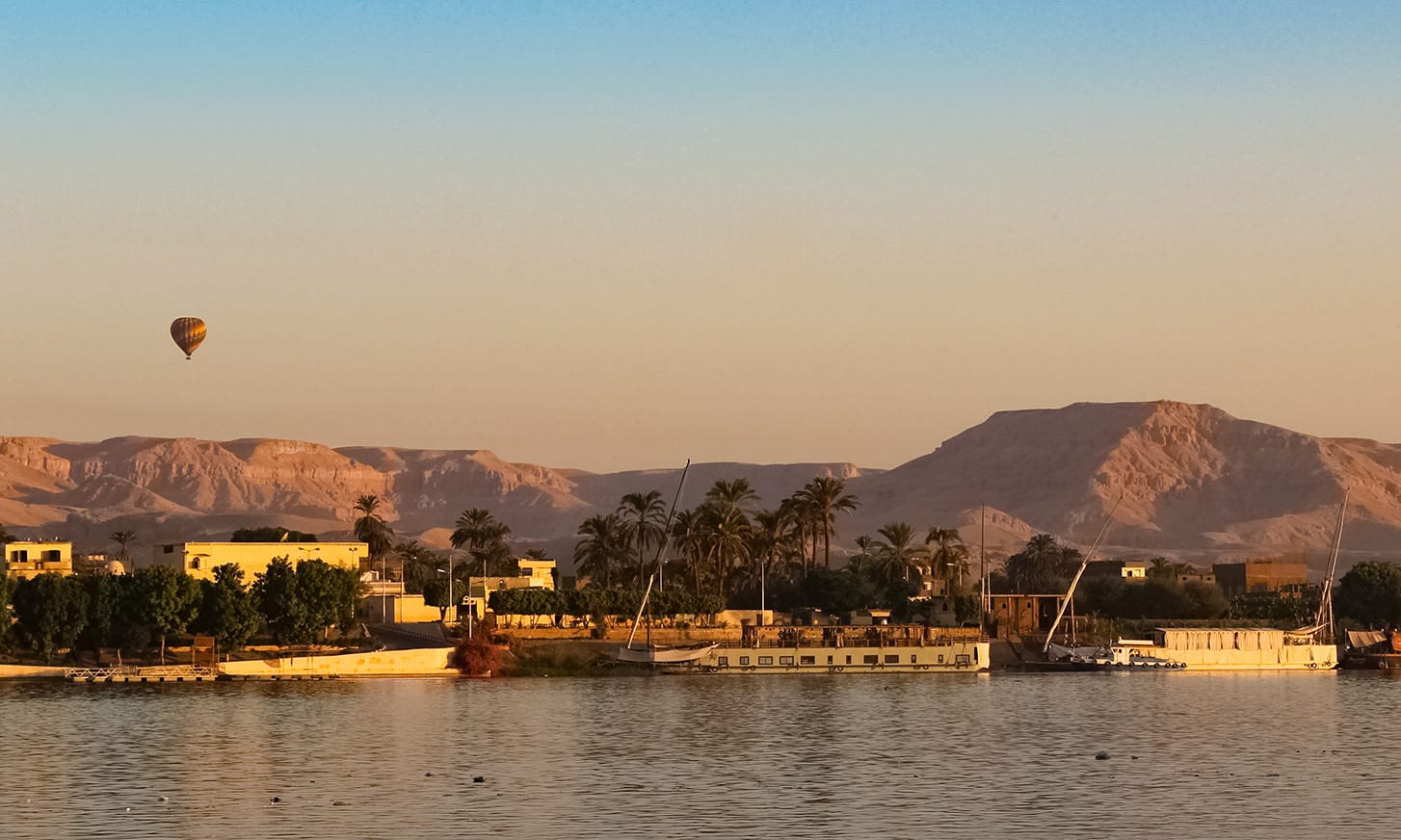








You have chosen Egypt. You have imagined sailing along the Nile, passing palm-lined villages, ancient temples, and stretches of farmland that seem almost unchanged by time.
Perhaps you have already decided between a four-day and five-day cruise. You may even have shortlisted a few ships.
Then comes a question that is easy to underestimate:
Which cabin should you book?
The answer can shape your entire experience.
A beautifully furnished cabin may be less enjoyable if it is close to a noisy service area. A higher-deck room may offer a more open outlook but require more movement through the ship. A spacious suite may be worth the extra cost for one traveler and unnecessary for another.
And on the Nile, where ships vary widely in age, layout, refurbishment, and onboard facilities, familiar hotel-room assumptions do not always apply.
The best Nile cruise cabin is not necessarily the most expensive.
It is the cabin that offers the right balance of location, comfort, view, privacy, and value for your particular journey.
This guide explains what to look for before booking, which questions to ask, and how to avoid the most common cabin-selection mistakes.
Why Cabin Choice Matters on a Nile Cruise
A Nile cruise is different from a conventional hotel stay.
Your accommodation moves with you between historic destinations, typically along the Luxor–Aswan route.
You may spend mornings exploring temples and archaeological sites, return to the ship for lunch, and enjoy the river scenery during the afternoon.
Your cabin becomes more than somewhere to sleep.
It is your private space between excursions.
It is where you rest after an early visit to the Valley of the Kings, prepare for dinner, and watch the changing landscape from your window.
But a Nile cruise ship is also a working vessel.
There are engines, generators, crew areas, restaurants, staircases, corridors, and sometimes entertainment spaces.
Cabin position affects how close you are to these areas.
That is why selecting the right cabin deserves as much attention as choosing the right cruise itinerary.
Nile Cruise Cabins at a Glance
Cabin type or location | Potential advantages | What to check |
|---|---|---|
Lower accommodation deck | May be conveniently located and more affordable | Window height, nearby machinery, stairs |
Middle accommodation deck | Often a practical balance of access and outlook | Position relative to restaurant and circulation areas |
Upper accommodation deck | May offer a more open river outlook | Proximity to sun deck, lounge, or entertainment |
Midship cabin | Often a good starting point for a quieter location | Nearby lifts, stairs, service spaces |
Bow or stern cabin | May offer a distinctive position or layout | Machinery, vibration, docking activity |
Standard cabin | Usually best value for most travelers | Size, bedding, bathroom, window type |
Suite | More space and potentially additional amenities | Actual floor plan and whether the upgrade is worthwhile |
Connecting or family cabin | May suit families traveling together | Guaranteed configuration and occupancy rules |
These are general planning considerations. Deck numbering, cabin categories, and layouts vary by vessel.
1. Understanding Nile Cruise Decks
One of the first decisions is whether to book a cabin on a lower, middle, or upper deck.
It sounds straightforward.
Higher decks are often assumed to be better because they may offer more expansive views.
But this is not always true.
Lower-Deck Cabins
A lower-deck cabin may be a practical choice for travelers who want to manage their budget.
Depending on the vessel, lower accommodation decks can still provide pleasant river views and comfortable rooms.
However, you should investigate the precise position.
Some lower-level cabins may be closer to machinery or have windows positioned differently from those on higher decks.
A cabin close to an engine or technical area may experience more vibration or noise.
This does not mean every lower-deck cabin is noisy.
It means the deck plan matters.
Middle-Deck Cabins
For many travelers, a well-positioned middle-deck cabin can offer an excellent balance.
You may be sufficiently removed from some machinery areas while avoiding the highest cabin-category prices.
Depending on the vessel, access to the restaurant, reception, or other facilities may also be convenient.
However, a middle-deck cabin directly beside a staircase or busy service area may be less peaceful than a lower-deck cabin in a quieter location.
The precise cabin position is more important than the deck label alone.
Upper-Deck Cabins
Upper-deck cabins are often marketed as more desirable.
They may provide a higher viewpoint across the Nile and surrounding landscape.
For travelers who enjoy watching the river from their room, this can be appealing.
But an upper deck is not automatically quiet.
A cabin beneath a sun deck, close to a lounge, or near an entertainment area may experience noise from footsteps, moving furniture, or evening activities.
Before paying extra, ask what is directly above and beside the cabin.
Our Recommendation
For most travelers, we would prioritize a well-positioned cabin away from major noise sources over simply booking the highest available deck.
If you value views and are considering an upper-deck supplement, confirm what the upgrade actually provides on that specific ship.
2. Which Cabin Has the Best Nile View?
One of the pleasures of a Nile cruise is watching the river landscape change.
You may pass green fields, small villages, river islands, fishing boats, and distant desert hills.
A cabin with a good window can make these moments especially enjoyable.
But there is an important detail many travelers overlook.
Not All Nile Cruise Windows Are the Same
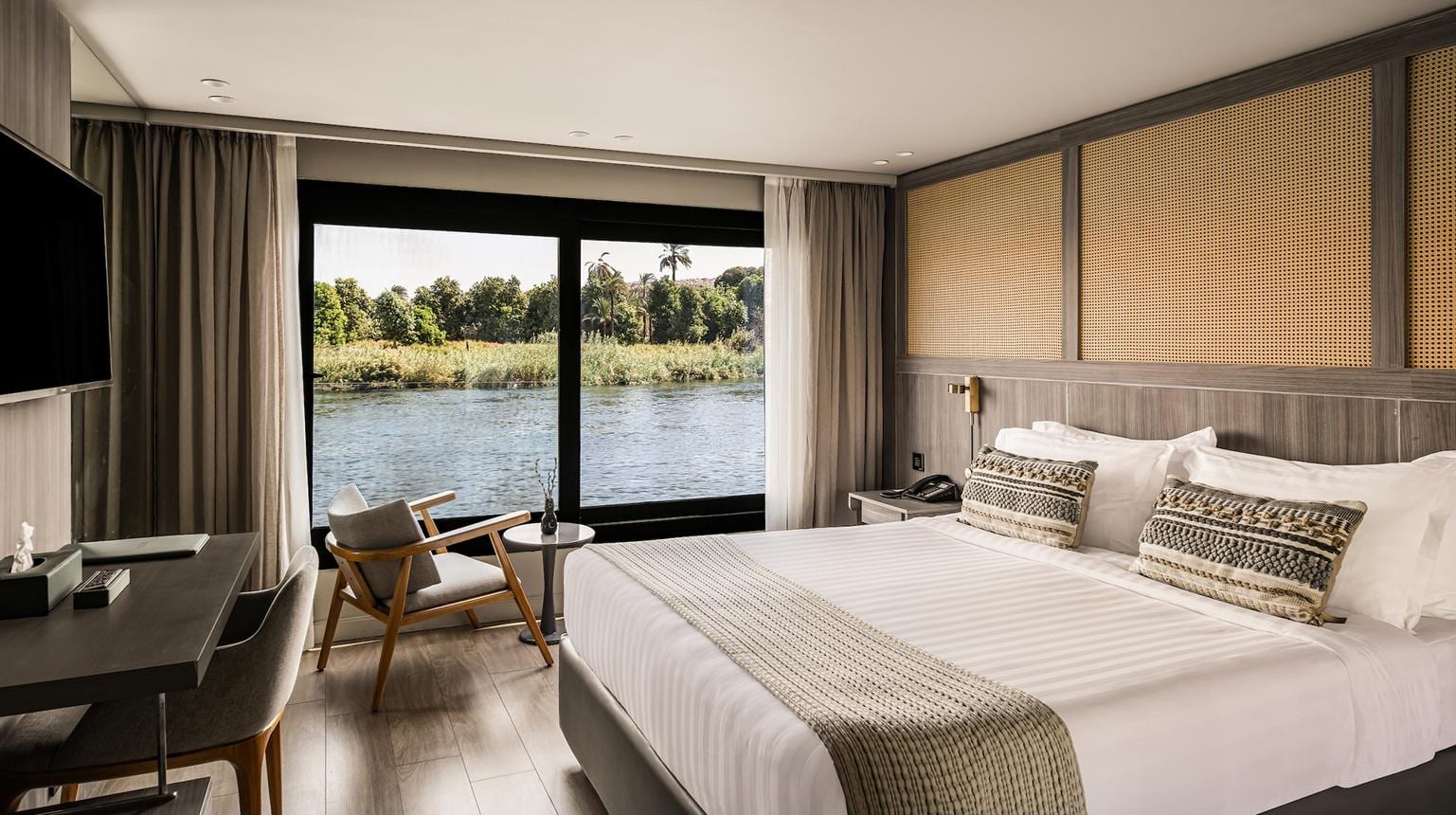
Cabins may feature fixed panoramic windows, smaller windows, opening windows, or other designs.
Some ships offer cabins with French-style balconies, while a limited number may have private outdoor balconies.
The terms used in marketing are not always consistent.
A photograph showing a large glass window does not prove that it opens.
And a French balcony generally does not mean you have a private outdoor terrace where you can sit.
Always ask for the exact window or balcony configuration.
Does Every Cabin Have a Nile View?
On many conventional Nile cruise vessels, guest cabins are arranged along the sides of the ship and look outward toward the river.
However, the quality of the view depends on the vessel's design, deck, window position, and current surroundings.
During sailing, the scenery may be beautiful.
When docked, another cruise ship may be moored directly alongside yours.
In that situation, your window may face the neighboring vessel rather than an uninterrupted Nile panorama.
This is a normal operational reality of Nile cruising.
Can You Guarantee a River View at All Times?
No responsible operator should promise uninterrupted views throughout the entire journey.
Ships may dock alongside one another, change berths, or remain at busy landing areas.
Even a premium cabin cannot guarantee that another vessel will never obstruct the view.
A good cabin can improve your outlook.
It cannot control the river's docking arrangements.
3. Where Are the Quietest Cabins on a Nile Cruise?
Noise is one of the most important factors to consider.
It is also one of the least visible when browsing cruise photographs.
A cabin can look beautiful online and still be poorly positioned for someone who is sensitive to sound.
Areas Worth Checking
Engine and generator areas: Some cabins may be more exposed to machinery noise or vibration.
Restaurants and kitchens: Early preparation, cleaning, and service activity can generate noise.
Staircases and lifts: Cabins near busy circulation areas may experience frequent footsteps and conversations.
Crew service areas: Storage, housekeeping, and operational access can create activity at different times.
Lounges and entertainment spaces: Music and evening programs may be audible in nearby cabins.
Sun decks: Furniture movement and footsteps may affect cabins directly below.
Bow and stern areas: Depending on the vessel, certain positions may be affected by equipment or docking operations.
Is Midship Always the Quietest?
A midship cabin is often a sensible starting point, but it is not a guarantee.
The quietest location depends on the ship's actual layout.
A midship cabin beside a busy staircase may be noisier than a cabin farther forward or aft.
The best approach is to review the deck plan and identify what surrounds your proposed cabin.
What if You Are a Light Sleeper?
Tell your tour operator before booking.
Ask whether a quieter cabin location can be requested.
If a specific cabin number is important, find out whether it can be confirmed or whether allocation remains at the cruise operator's discretion.
A request for a quiet cabin is not the same as a guaranteed assignment.
4. Do Nile Cruise Ships Have Balconies?
Some do, but many conventional Nile cruise cabins do not have private outdoor balconies.
This is an important distinction.
You may see a cabin advertised with a panoramic Nile view or large river-facing window.
That does not necessarily mean you can step outside.
Panoramic Window
A large window offering an outward view.
It may be fixed or openable, depending on the vessel.
French Balcony
Typically, full-height doors or windows with a protective railing.
This design may allow fresh air or a more open feeling, but it generally does not provide a usable outdoor seating area.
Private Balcony
A dedicated outdoor space accessible from the cabin.
These are less common on traditional Nile cruise ships and should be verified carefully.
Which Is Better?
For most travelers, a comfortable cabin with a large panoramic window is sufficient.
Much of the best river viewing happens from the ship's shared sun deck or lounge.
However, if having private outdoor space is important to you, confirm that the cabin genuinely includes a usable balcony.
Do not rely on the category name alone.
5. Standard Cabin vs Suite: Is the Upgrade Worth It?
Many Nile cruise vessels offer different accommodation categories.
A standard cabin may already provide everything needed for a comfortable journey.
A suite may offer additional space, a separate seating area, upgraded furnishings, or other amenities.
But the difference varies considerably between ships.
When a Standard Cabin Makes Sense
A standard cabin can be ideal if you plan to spend most of your time sightseeing, relaxing on the sun deck, or enjoying the vessel's shared facilities.
For a four-day or five-day itinerary, many travelers find a well-maintained standard cabin perfectly adequate.
The key is ensuring that the room is comfortable, clean, and appropriately located.
When a Suite May Be Worth It
A suite can be valuable if you prefer additional living space or plan to spend more time in your cabin.
It may also appeal to couples celebrating a special occasion or travelers who prioritize accommodation comfort.
However, do not assume that every suite includes a balcony, a significantly better view, or a separate bedroom.
Some suites are simply larger rooms with upgraded furnishings.
Questions to Ask Before Upgrading
How much larger is the suite?
Does it have a different window or balcony arrangement?
Is it in a quieter location?
Does it include additional amenities?
Is the price difference per person, per cabin, or per night?
A premium price should correspond to a benefit you genuinely value.
6. Does Cabin Size Matter?
Yes, particularly when traveling with more than one person.
Nile cruise cabins are often more compact than hotel rooms.
That does not necessarily make them uncomfortable, but it means efficient use of space matters.
A room that looks spacious in a professional photograph may feel different once two suitcases are open.
What to Check
Look for the cabin's approximate floor area, bed configuration, bathroom layout, and storage space.
If you are traveling with large luggage, ask whether there is sufficient room to store it comfortably.
For longer cruises or travelers who prefer more personal space, cabin size may be a significant consideration.
For a shorter itinerary, a compact but well-designed room may be entirely suitable.
7. Twin Beds or Double Bed?
Do not assume the bedding configuration from the photographs.
Some cruise cabins have twin beds that can be arranged together.
Others have fixed double beds or a specific configuration that cannot easily be changed.
A double cabin in cruise pricing often refers to two-person occupancy rather than guaranteeing one large bed.
If you are traveling as a couple and prefer a double bed, request it explicitly.
If you are friends sharing a cabin, confirm the twin-bed arrangement.
And if bedding is essential to your comfort, ask whether it can be guaranteed.
8. Which Nile Cruise Cabin Is Best for Families?
Family cabin planning requires more than choosing a room with a river view.
You need to understand the vessel's occupancy rules.
Some cabins accommodate two guests only.
Others may permit an additional bed for a child.
A few vessels may offer connecting cabins or larger family arrangements.
But availability varies.
Traveling With One Child
Ask whether the child can share the parents' cabin.
The answer may depend on the child's age, the cabin category, and the vessel's policy.
Traveling With Two Children
You may need two cabins or a larger accommodation category.
If connecting cabins are important, confirm whether the ship offers them and whether the arrangement can be guaranteed.
Traveling With a Baby
Ask whether a cot is available and whether the cabin has enough space for it.
Check the ship's child-age policy and onboard safety arrangements.
What About Child Discounts?
Children's rates vary between cruise operators.
A child discount does not necessarily mean a third guest can be accommodated in every cabin.
Pricing and occupancy are separate questions.
For an accurate family quotation, provide the children's exact dates of birth and the travel dates.
9. Which Cabin Is Best for Senior Travelers?
For older travelers, cabin location may be more important than the deck category.
A room that requires frequent use of stairs may be inconvenient, particularly if the vessel has limited lift access.
Some Nile cruise ships have lifts serving certain decks, but not necessarily every level.
A ship may also have steps between public areas or at boarding points.
What to Consider
Ask how many stairs separate the cabin from the restaurant, reception, and sun deck.
Confirm whether a lift is available and which levels it serves.
Check bathroom accessibility and whether the cabin has a walk-in shower or another arrangement.
If mobility is limited, request detailed information about boarding and disembarkation.
A higher-deck cabin is not necessarily the most comfortable option for a senior traveler.
Convenient access and suitable facilities may matter much more.
10. Are Nile Cruise Cabins Accessible for Wheelchair Users?
Accessibility varies significantly between vessels.
Some modern or refurbished ships may offer adapted cabins or accessibility features.
Others may have narrow corridors, steps, limited lift access, or bathrooms unsuitable for wheelchair use.
Do not assume that a vessel described as luxury is fully accessible.
Before booking, ask for precise information about cabin doors, bathroom access, lifts, boarding arrangements, and excursion transport.
If necessary, request current photographs and measurements.
Also consider the archaeological sites included in the itinerary.
Even when the ship is accessible, individual temples and tombs may present mobility challenges.
Accessibility should be assessed across the complete journey, not only the cabin.
11. Which Side of the Ship Has the Best View?
This is a common question.
Some travelers assume that one side of the ship offers better views when sailing from Luxor to Aswan, while the opposite side must be better in the other direction.
In reality, there is no universally superior side for the entire journey.
The Nile curves, the landscape changes, and the vessel may dock in different orientations.
Both sides can offer attractive views of villages, riverbanks, islands, and desert scenery.
Does the Sailing Direction Matter?
The direction affects the order of sightseeing and the overall itinerary, but it does not create a consistently better cabin side.
If you have a specific photographic interest, you can ask the operator about the ship's usual route.
However, it would be misleading to promise that one side will always provide better scenery.
Our Recommendation
Do not pay a substantial premium solely for port-side or starboard-side accommodation unless there is a verified vessel-specific reason.
Cabin condition, location, and comfort are usually more important.
12. What About Cabins Near the Sun Deck?
The sun deck is often one of the most enjoyable areas of a Nile cruise.
It provides open views of the river and may include seating, loungers, and a swimming pool.
But cabins located directly beneath or close to the sun deck may experience activity.
Early morning furniture movement, footsteps, and occasional events can affect nearby rooms.
This depends on the vessel's design and operating practices.
If you are a light sleeper, ask what is directly above your cabin.
A beautiful upper-deck location may be less appealing if it places you beneath a busy public area.
13. What About Cabins Near the Restaurant?
A cabin near the restaurant may offer convenient access.
But there can be trade-offs.
Food preparation, service, and cleaning may begin before guests arrive for breakfast.
If your cabin shares a wall, floor, or ceiling with a service area, some activity may be audible.
This is not necessarily a problem on every ship.
Good sound insulation and thoughtful layout can make a significant difference.
Still, the restaurant's location is worth checking before accepting a cabin assignment.
14. Do Nile Cruise Cabins Have Air Conditioning?
Air conditioning is a standard expectation on most conventional Nile cruise vessels marketed to international travelers.
However, systems differ.
Some ships provide individual temperature controls.
Others use centrally managed systems.
If you are particularly sensitive to heat or prefer a specific sleeping temperature, ask how the air conditioning works.
It is also worth checking recent reviews for comments about cooling performance and cabin maintenance.
Egypt can be very hot, particularly in Upper Egypt during summer.
Reliable air conditioning is an important part of onboard comfort.
15. Do Cabins Have Wi-Fi?
Wi-Fi arrangements vary.
Some vessels provide complimentary access in public areas.
Others offer cabin Wi-Fi, paid packages, or limited connectivity.
Even when Wi-Fi is advertised, connection quality may change along the river.
If you need reliable internet for work or other important reasons, ask about the vessel's actual service.
A local mobile data connection may provide a useful alternative in some areas, but coverage is not guaranteed throughout the journey.
Do not choose a cruise solely on a generic claim of free Wi-Fi without understanding what that includes.
16. How Important Is the Bathroom?
The bathroom is one of the most practical parts of a cabin, yet it is often overlooked.
Check whether the room has a shower, bathtub, or combined arrangement.
Ask about the available space, especially if you have mobility requirements.
For families, confirm whether the facilities are suitable for young children.
For older travelers, a walk-in shower may be preferable to stepping into a bathtub.
A beautifully decorated cabin is not necessarily comfortable if the bathroom does not meet your needs.
17. What Does a Luxury Nile Cruise Cabin Actually Mean?
The term luxury is widely used in Nile cruise marketing.
But there is no single universal standard applied consistently across every vessel.
One ship may emphasize elegant décor and personalized service.
Another may offer larger cabins, more sophisticated dining, or better onboard facilities.
A third may have impressive public spaces but relatively modest standard cabins.
Look Beyond the Category Label
Review the actual cabin photographs, floor area, bathroom, window configuration, and recent refurbishment history.
Consider the vessel's overall maintenance and service reputation.
Ask whether the photographs show the exact cabin category you are booking.
A well-maintained deluxe cabin may offer a better experience than an older room marketed under a more prestigious category.
The label alone is not enough.
18. Standard, Deluxe, Luxury, and Ultra-Luxury: What Changes?
Nile cruise operators and travel agencies often organize vessels into categories such as Standard, Deluxe, Luxury, and Ultra-Luxury.
These categories can be useful when comparing broad levels of comfort.
However, they are commercial classifications rather than a single universal cabin-rating system.
Category | What travelers may expect | What still needs checking |
|---|---|---|
Standard | Essential accommodation and onboard services | Maintenance, cabin size, air conditioning |
Deluxe | More refined décor or facilities | Actual cabin condition and layout |
Luxury | Higher service expectations and potentially upgraded accommodation | Suite differences, public spaces, refurbishment |
Ultra-Luxury | Premium positioning and more personalized experience | Exact inclusions, cabin features, service standards |
A ship's category does not automatically tell you which cabin is best.
You still need to compare the specific vessel and room.
19. Is a Dahabiya Cabin Different?
Yes, often significantly.
A dahabiya is a smaller traditional-style Nile sailing vessel.
Its accommodation is usually more intimate than that of a conventional Nile cruise ship.
Cabin numbers are limited, and layouts vary widely.
Some dahabiyas have relatively compact cabins.
Others offer spacious suites, distinctive windows, or private outdoor areas.
What Makes Dahabiya Cabins Appealing?
The smaller vessel can create a quieter and more personal atmosphere.
For travelers who value slow travel and intimacy, this may be especially attractive.
However, a dahabiya does not automatically provide more cabin space or better facilities than a conventional cruise ship.
What Should You Check?
Ask about cabin dimensions, air conditioning, bathroom facilities, window design, and proximity to the deck or shared areas.
Also confirm whether the vessel has any age or accessibility restrictions.
Because dahabiyas are smaller, individual cabin differences may be particularly important.
20. Should You Pay Extra for an Upper-Deck Cabin?
Sometimes, but not automatically.
An upper-deck supplement may be worthwhile if the specific vessel offers a noticeably better outlook or a more desirable cabin arrangement.
But if the upgrade simply moves you one level higher without improving the room's size, layout, or comfort, the extra cost may offer limited value.
Before upgrading, compare the exact benefits.
Ask These Questions
Is the cabin larger?
Does it have a better window or balcony?
Is it farther from noise sources?
Is it more convenient for the facilities I use?
Is the supplement charged per person or per cabin?
If the answers do not reveal a meaningful advantage, a well-positioned standard cabin may be the smarter choice.
21. How to Read a Nile Cruise Deck Plan
A deck plan is one of the most useful documents you can request before booking.
It shows the arrangement of cabins and public spaces.
But it needs to be interpreted carefully.
Start by identifying the proposed cabin category and its deck.
Then locate the restaurant, lounge, reception, stairs, lifts, crew areas, and sun deck.
Look at what is beside, above, and below the cabin.
A room may appear well positioned on one deck but sit directly beneath a busy public space on the level above.
Also check whether the deck plan identifies specific cabin numbers or only general categories.
If you are paying for a particular location, ask whether that exact cabin can be guaranteed.
22. Can You Choose Your Exact Cabin Number?
This depends on the cruise operator and booking arrangement.
Some reservations may confirm a specific cabin number.
Others confirm only the cabin category, with the final room assigned closer to departure.
Even where a cabin number is initially indicated, operational changes may occasionally occur under the supplier's terms.
If the exact location is important, ask whether it is guaranteed in writing.
For travelers with accessibility needs, this is especially important.
A cabin preference and a confirmed cabin allocation are not the same thing.
23. Does Cabin Location Affect Motion or Seasickness?
The Nile is a river, not an open sea, and conventional Nile cruises generally involve much gentler movement than ocean voyages.
However, individual sensitivity varies.
Some travelers may notice vibration, movement, or changes in sensation during sailing or docking.
A cabin near the vessel's center may be a reasonable starting point for travelers concerned about motion, but it does not guarantee the absence of discomfort.
If you are prone to motion sickness, discuss suitable precautions with a healthcare professional before traveling.
Do not assume that every traveler will feel exactly the same on the river.
24. What Happens When Nile Cruise Ships Dock Together?
This is one of the most useful details to understand before your first Nile cruise.
At busy docking locations, several cruise vessels may moor alongside one another.
Passengers may sometimes cross through another vessel to reach the landing area, following the crew's arrangements.
This can temporarily affect privacy and views from some cabins.
You might open your curtains and see another ship beside you.
This does not necessarily mean you were assigned a poor cabin.
It is part of the operating environment of many Nile cruise docking areas.
How Can You Manage This?
Choose a cabin with a good overall layout rather than expecting an uninterrupted river panorama at every moment.
Enjoy the sun deck when the vessel is sailing.
And remember that the most beautiful Nile scenery is often experienced during the journey itself, not while docked.
25. Seven Questions to Ask Before Booking Your Cabin
Before confirming a Nile cruise, ask your operator:
1. What is the exact ship name?
Avoid booking solely by a broad category such as five-star Nile cruise.
2. What cabin category am I receiving?
Confirm whether it is standard, deluxe, suite, or another named category.
3. On which deck will the cabin be located?
Ask whether the deck is confirmed or only requested.
4. What is the window or balcony arrangement?
Clarify whether the window opens and whether any balcony is genuinely usable.
5. Can you provide current cabin photographs and a deck plan?
Marketing photographs should represent the booked category.
6. Are there any known noise concerns near this cabin?
Ask about machinery, public areas, and service spaces.
7. Is the cabin allocation guaranteed in writing?
This is particularly important when paying a supplement or requesting accessibility features.
A good operator should be able to explain what is confirmed and what remains subject to availability.
26. Our Cabin Recommendations for Different Travelers
For First-Time Nile Cruise Guests
Choose a well-maintained standard or deluxe cabin in a convenient, relatively quiet location.
Prioritize comfort and ship quality over the highest deck.
For Couples
Consider a cabin with a pleasant window and confirmed double-bed arrangement.
A suite may be worthwhile for a special occasion, but only if it offers meaningful additional comfort.
For Families
Prioritize occupancy, connecting-room availability, and access to facilities.
Confirm children's rates and cabin arrangements before paying.
For Senior Travelers
Choose convenient access to the restaurant and reception.
Confirm lifts, stairs, bathroom layout, and boarding arrangements.
For Light Sleepers
Request a cabin away from machinery, entertainment spaces, and busy service areas.
Ask for a deck plan and understand whether the request can be guaranteed.
For Photography Lovers
A large window can be appealing, but remember that the sun deck often provides more flexible viewing angles.
Do not assume one side of the vessel is consistently better.
For Luxury Travelers
Compare actual suite layouts, refurbishment, service standards, and onboard facilities rather than relying only on the word luxury.
27. Choosing the Right Cabin With Luxor Booking Tours
At Luxor Booking Tours, we believe the right Nile cruise starts with the right questions.
A cruise itinerary may look excellent on paper, but the cabin and vessel should also suit your expectations.
We help travelers compare Nile cruise options based on sailing dates, route, cabin category, comfort level, and travel preferences.
Whether you are looking for a comfortable standard cruise, a deluxe vessel, a premium suite, or a more intimate dahabiya experience, we aim to explain the differences clearly before booking.
If you are traveling as a family, celebrating a special occasion, or have specific accessibility requirements, these details should be discussed from the beginning.
Explore our Nile Cruise options or contact Luxor Booking Tours for help selecting the right vessel and cabin for your journey between Luxor and Aswan.
Frequently Asked Questions
What is the best cabin on a Nile cruise?
For many travelers, a well-positioned cabin away from major noise sources offers the best balance of comfort and value. The ideal choice depends on the specific ship.
Is an upper-deck cabin better on a Nile cruise?
Not always. Upper decks may offer a more open outlook, but cabin position and proximity to public areas are equally important.
Which deck is the quietest on a Nile cruise?
There is no universal answer. Review the vessel's deck plan and avoid cabins near machinery, entertainment areas, and busy service spaces.
Do Nile cruise cabins have balconies?
Some do, but many have fixed panoramic windows or French-style balconies rather than private outdoor seating areas.
Can you open the windows on a Nile cruise?
It depends on the vessel and cabin design. Some windows are fixed, while others may open.
Are all Nile cruise cabins river-facing?
Many conventional Nile cruise cabins face outward, but views can be obstructed when ships dock alongside one another.
Which side of the ship has the best view?
Neither side is consistently superior throughout the Luxor–Aswan journey.
Are Nile cruise cabins small?
They are often more compact than hotel rooms, but size varies considerably by ship and category.
Can three people share a Nile cruise cabin?
Some cabins permit an additional guest or child, but occupancy rules vary. Confirm the exact arrangement.
Is a Nile cruise suite worth the extra money?
It may be if you value additional space or specific amenities. Compare the actual suite features before upgrading.
Do Nile cruise cabins have air conditioning?
Most conventional Nile cruise vessels serving international travelers offer air-conditioned cabins, but control systems and performance vary.
Do Nile cruise ships have Wi-Fi in cabins?
Some do. Others provide access only in public areas or offer limited connectivity.
Can I choose my exact cabin number?
Sometimes. Ask whether the operator confirms specific cabin numbers or only cabin categories.
Are Nile cruise ships suitable for wheelchair users?
Accessibility varies. Confirm the specific vessel's cabin, lift, bathroom, and boarding arrangements before booking.
Are dahabiya cabins more comfortable than Nile cruise cabins?
Not necessarily. Dahabiya accommodation can be intimate and attractive, but cabin size and facilities differ by vessel.
Final Thoughts: The Best Cabin Is the One That Fits You
The Nile has inspired travelers for centuries.
Its scenery is part of the magic of an Egypt journey, but so is the comfort of returning to your cabin after a day exploring ancient temples and royal tombs.
Choosing the right accommodation does not require booking the most expensive suite or insisting on the highest deck.
It requires understanding the ship.
Look at the cabin's actual location, window design, size, bedding, and proximity to public areas.
Ask the questions that matter to you.
And remember that a well-chosen cabin can make a good cruise feel considerably more enjoyable.
Because the best Nile cruise experience is not defined by a category label.
It is defined by how comfortably you experience the journey.