





The first thing you notice is the scale.
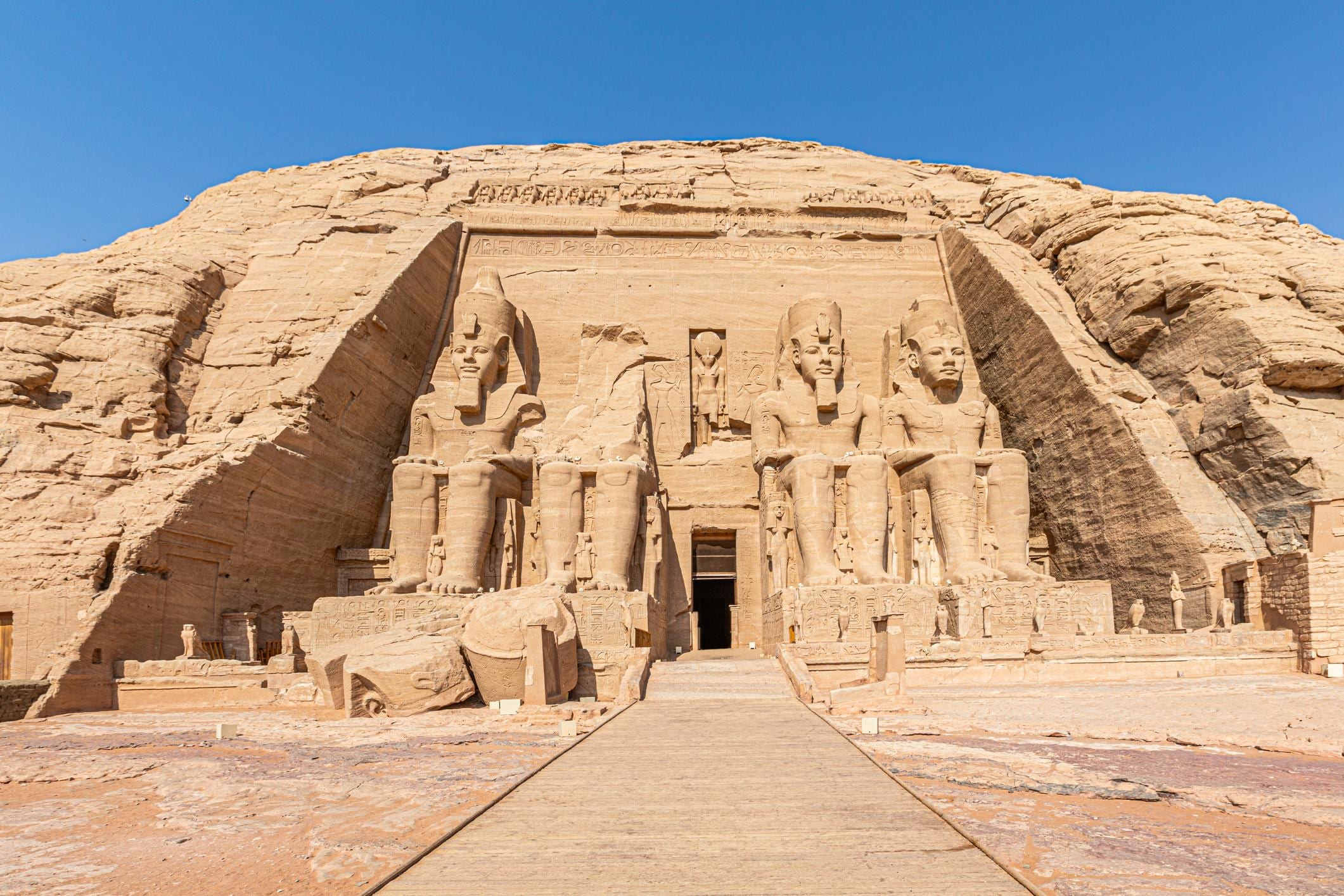
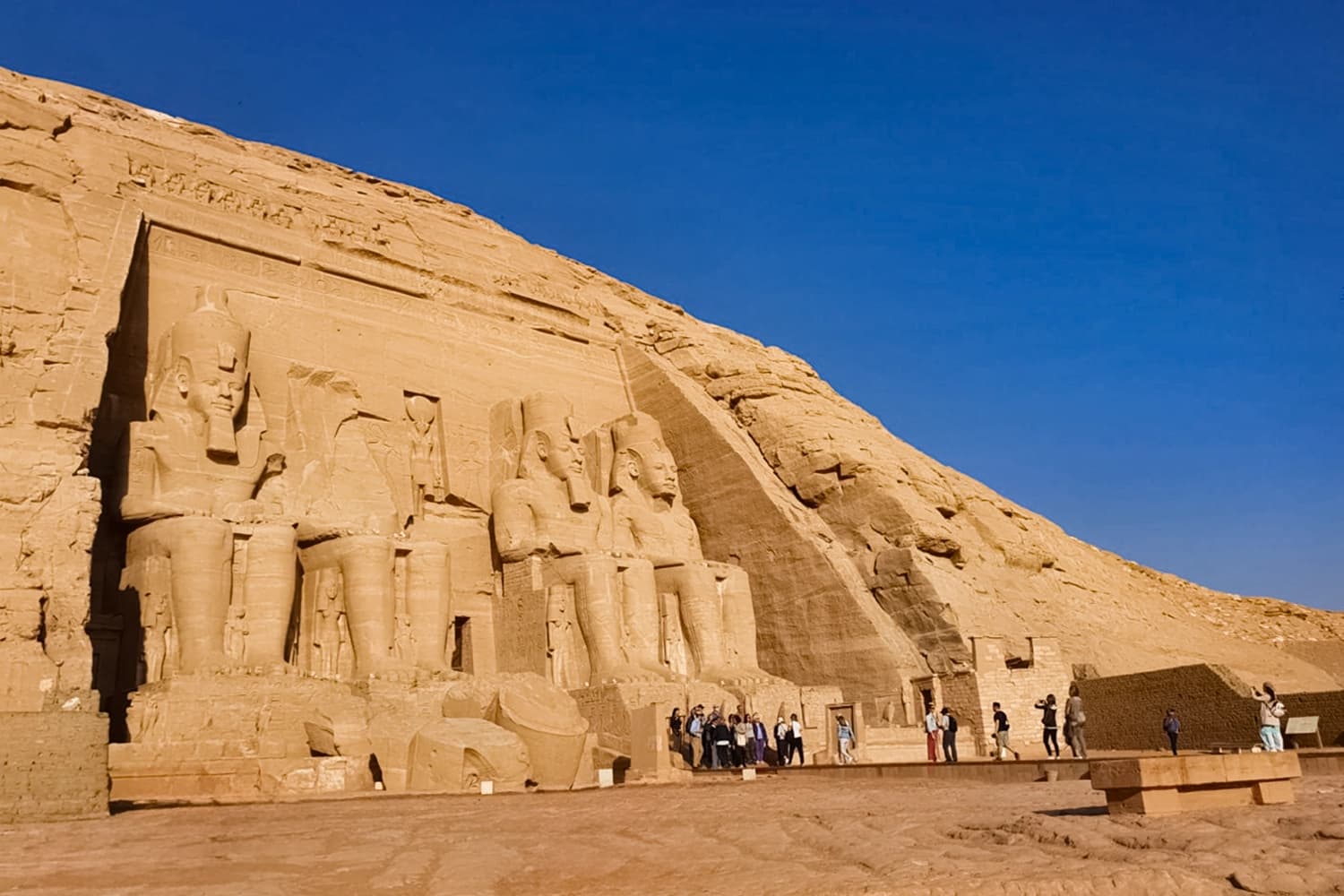
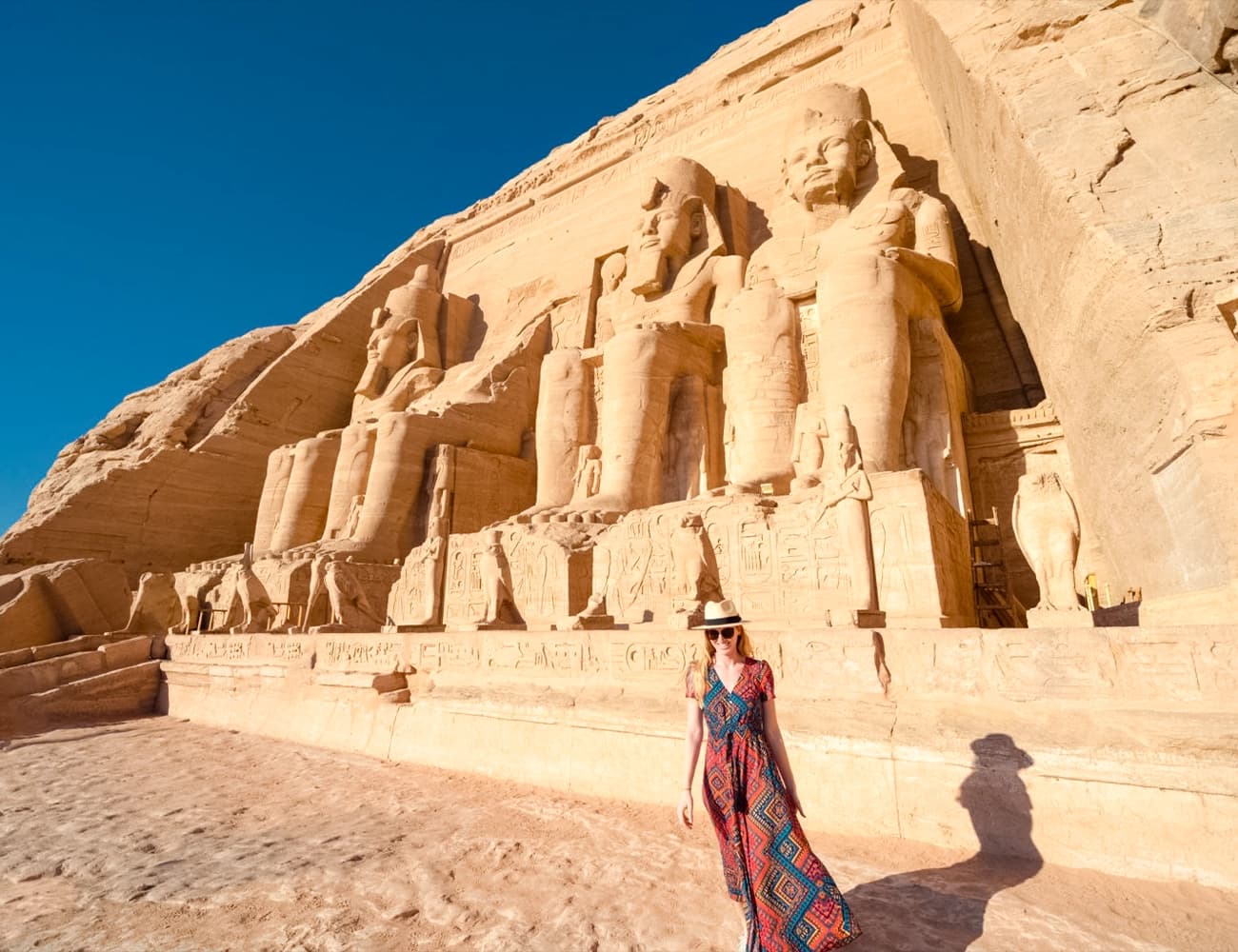
Four colossal statues of Ramesses II sit against a vast rock-cut façade, looking out across the landscape near Lake Nasser. Their faces have endured for more than three thousand years, and even from a distance, they seem impossibly large.
Then you walk closer.
The temple entrance becomes visible between the statues. Inside, towering pillars lead toward chambers decorated with scenes of royal power, religious devotion, and military triumph.
It is difficult to imagine a more dramatic introduction to ancient Egypt.
Yet reaching Abu Simbel requires a little more planning than visiting the temples of Luxor or Aswan.
The complex stands in southern Nubia, far from Egypt's principal cities. Most visitors travel from Aswan, either by road through the desert or by taking a short domestic flight when suitable services are operating.
Both options can work well. But they offer different experiences, involve different costs, and create different logistical challenges.
If Abu Simbel is on your Egypt itinerary, this guide will help you understand the journey, choose the most practical transport option, and make the most of your time at the temples.
Where Is Abu Simbel?
Abu Simbel is located in southern Egypt, near the western shore of Lake Nasser, approximately 280–300 kilometers by road from Aswan, depending on the starting point and route.
It is much closer to the Sudanese border than to Egypt's better-known tourist centers.
The journey passes through a largely desert landscape, which is one reason Abu Simbel feels so different from the temples along the Nile Valley.
There are two principal temples at the site.
The Great Temple was built by Ramesses II during the Nineteenth Dynasty and is famous for its monumental seated statues.
The smaller temple was dedicated to the goddess Hathor and to Queen Nefertari, Ramesses II's Great Royal Wife.
Although visitors often refer to the complex simply as Abu Simbel Temple, both monuments form part of the experience.
Why Is Abu Simbel Worth Visiting?
Egypt has extraordinary archaeological sites, but Abu Simbel occupies a special place among them.
The Great Temple was carved directly into the rock during the reign of Ramesses II, one of ancient Egypt's most celebrated pharaohs.
Its façade is dominated by four enormous seated figures of the king.
Inside, the main hall is lined with statues and decorated with reliefs celebrating royal authority and religious devotion.
The smaller temple is equally significant.
Its façade features statues of Nefertari alongside Ramesses II, an unusually prominent representation of a royal wife.
The complex is also famous for its modern history.
During the construction of the Aswan High Dam, the rising waters of Lake Nasser threatened to submerge the original temples.
An international rescue operation, supported by UNESCO, dismantled and relocated the monuments to higher ground.
The project became one of the most remarkable achievements in archaeological conservation.
Today, Abu Simbel is part of the UNESCO World Heritage property known as the Nubian Monuments from Abu Simbel to Philae.
For many travelers, the site is worth visiting not only for its ancient architecture but also for the extraordinary story of how it was saved.
Abu Simbel from Aswan: Road vs Plane at a Glance
Feature | By Road | By Plane |
|---|---|---|
Travel time | Approximately 3–4 hours each way | Approximately 40–45 minutes in the air |
Departure | Often very early morning | Depends on scheduled flights |
Total excursion | Often 9–11 hours, sometimes longer | Depends on flight times and airport procedures |
Cost | Usually more economical | Often more expensive |
Flexibility | Greater with a private vehicle, subject to road rules | Limited by airline schedules |
Comfort | Long desert drive | Less driving, but airport procedures |
Best suited to | Most visitors, families, private groups | Travelers prioritizing reduced road time |
Main consideration | Long journey | Flight availability and connections |
The flight duration is only the time spent in the air. The complete air excursion also includes airport check-in, transfers, waiting time, and the return flight.
For this reason, flying does not always save as much time as the headline flight duration suggests.
Option 1: Visiting Abu Simbel by Private Road Tour
For many visitors, a private road tour from Aswan is the most practical option.
The route crosses the desert south of the city, passing through long stretches of open landscape before reaching Abu Simbel.
The drive generally takes around three to four hours each way, depending on road conditions, checkpoints, and the exact pickup location.
Most day trips begin early.
An early departure helps visitors reach the temples before the strongest heat of the day and leaves sufficient time for the return journey.
What Does a Typical Private Road Tour Look Like?
A representative schedule might be:
4:00 AM — Hotel Pickup in Aswan
Your driver meets you at your accommodation. The exact departure time depends on operating permissions, road arrangements, and the planned arrival at the temples.
4:00–7:30 AM — Desert Journey
Travel south in an air-conditioned vehicle, with a rest stop where practical.
The road passes through an expansive desert landscape that offers a very different view of Egypt from the Nile Valley.
7:30–8:00 AM — Arrival at Abu Simbel
Arrival time depends on the departure and actual road conditions.
8:00–10:00 AM — Temple Visit
Explore the Great Temple of Ramesses II and the smaller Temple of Hathor and Nefertari.
Allow time for photographs, historical explanations, and appreciating the extraordinary scale of the monuments.
10:00 AM — Return Toward Aswan
Begin the return journey, with breaks as needed.
1:30–2:30 PM — Arrival in Aswan
Return to your hotel or another agreed location.
This is an illustrative schedule, not a guaranteed timetable. Actual operating times must be confirmed for the travel date.
Why Choose a Private Vehicle?
A private excursion offers several advantages.
You travel with your own party rather than sharing the vehicle with unrelated guests.
Pickup can be coordinated with your hotel or cruise arrangements.
You can request reasonable comfort stops and discuss the preferred pace of the visit in advance.
For couples, families, and travelers who value personal space, these details can make a long journey much more comfortable.
However, private transport does not mean unrestricted freedom to depart at any hour.
Road access, security procedures, and local operating requirements still apply.
A reputable operator should confirm the applicable arrangements before departure.
Option 2: Visiting Abu Simbel by Shared Group Tour
Shared excursions are another common way to reach Abu Simbel from Aswan.
Travelers usually join a minibus or larger vehicle with other guests.
The journey follows essentially the same desert road as a private tour.
The main difference is the operating format.
Pickup arrangements may involve multiple hotels, and the group usually follows a fixed schedule.
Advantages of a Shared Tour
A shared excursion can be more economical, especially for solo travelers.
It may also appeal to visitors who enjoy meeting other people during the journey.
Disadvantages to Consider
The schedule is generally less flexible.
There may be additional pickup stops, and the group must follow the agreed departure and return times.
Some excursions provide transportation only, while others include a guide and entrance tickets.
This distinction is important.
A low advertised price may not include the same services as a fully guided private excursion.
Before booking, confirm the vehicle, group size, guiding arrangements, admission tickets, and total duration.
Option 3: Flying from Aswan to Abu Simbel
Flying is an alternative for travelers who prefer to avoid the long road journey.
When flights are operating, the journey between Aswan and Abu Simbel takes approximately 40–45 minutes in the air.
That sounds considerably faster than driving.
But the complete excursion involves more than the flight itself.
You need to reach Aswan Airport, complete check-in and security procedures, fly to Abu Simbel, transfer to the temple complex, and repeat the process for the return journey.
The practical value of flying depends heavily on the available schedule.
Are Flights Available Every Day?
Flight schedules can vary by season, airline, and demand.
A route may appear in published schedules without offering suitable seats or convenient same-day return connections on your chosen date.
Do not assume that flights operate daily or that a morning departure automatically has a convenient return.
Before choosing the air option, confirm both flights, the time available at the temples, airport transfers, and the cancellation conditions.
Is Flying Worth the Extra Cost?
It can be.
For travelers who find long road journeys uncomfortable, a suitable flight schedule may make the visit considerably easier.
It may also be attractive for travelers with limited time.
However, flying is not always the most efficient choice.
If the flight schedule involves long waits or inconvenient connections, a private road excursion may be simpler.
The correct comparison is not forty-five minutes versus three and a half hours.
It is the total door-to-door journey.
Which Is Better: Private Road Tour or Flight?
For most travelers staying in Aswan, a private road tour is a strong choice.
It offers predictable logistics, direct hotel pickup, and the opportunity to coordinate the entire excursion with one operator.
It is also generally more economical than arranging flights and airport transfers.
Flying becomes more attractive when a suitable schedule exists and reducing road time is a priority.
If you are traveling with elderly family members, young children, or someone who finds extended car journeys difficult, the air option may deserve consideration.
But a short flight does not automatically eliminate fatigue, particularly when early check-in and waiting time are involved.
The best choice depends on your physical comfort, budget, travel date, and wider itinerary.
How Much Time Do You Need at Abu Simbel?
Most visitors should allow approximately two hours to explore the main temple complex.
This gives you time to visit both temples, admire the façades, and appreciate the interiors.
Travelers with a strong interest in archaeology or photography may prefer longer.
The Great Temple deserves more than a quick look at the statues outside.
Its interior includes a monumental hall, decorated chambers, and a sanctuary with religious significance.
The smaller temple is also worth careful attention.
If you are visiting with an Egyptologist, allow time for explanations before entering and for discussing the historical scenes.
Access rules for guiding inside particular areas may vary, so follow the instructions of site authorities.
A visit that is too rushed can undermine the value of traveling such a long distance.
Abu Simbel Entrance Tickets and Opening Hours
According to the Egyptian Ministry of Tourism and Antiquities, Abu Simbel's published visiting hours are generally 6:00 AM to 5:00 PM.
The Ministry's published admission information lists a regular foreign adult ticket at EGP 750, with a reduced student category of EGP 375.
Special admission rates apply on the principal solar alignment dates, February 22 and October 22.
These are published reference rates, not a guarantee of the amount charged on your future travel date.
Ticket prices, fees, opening arrangements, and payment procedures may change.
Always check the official archaeological-site information before departure.
Also confirm whether your tour quotation includes the entrance ticket.
Some packages include admission, while others quote transportation and guiding separately.
The Famous Abu Simbel Sun Alignment
One of Abu Simbel's most remarkable architectural features is the alignment of the Great Temple's inner sanctuary with the rising sun.
On approximately February 22 and October 22, sunlight penetrates deep into the temple and illuminates selected sanctuary statues.
The event attracts significant attention and can bring larger crowds.
For travelers interested in witnessing the phenomenon, advance planning is essential.
Special opening arrangements, higher admission rates, and limited viewing conditions may apply.
It is also important to understand that the event is affected by weather, crowds, and access arrangements.
Booking a visit on the correct date does not guarantee an unobstructed view of the sunlight inside the sanctuary.
If witnessing the alignment is your primary reason for visiting, discuss the specific arrangements with your operator well in advance.
What Is the Best Time of Day to Visit Abu Simbel?
Morning is generally preferable, particularly during warmer months.
The site is exposed, and temperatures can become uncomfortable later in the day.
Early arrival can make walking between the entrance and the temples more pleasant.
However, many road tours leave Aswan at similar times, so an early visit does not necessarily mean avoiding all crowds.
Flight arrivals and organized groups can also influence visitor numbers.
If crowd avoidance is especially important, ask about the expected arrival pattern on your chosen date.
The best timing balances temperature, transport availability, and the amount of time you want at the temples.
What Is the Best Season to Visit Abu Simbel?
Abu Simbel can be visited throughout the year, but southern Egypt experiences significant seasonal temperature differences.
October to April
These months are generally more comfortable for outdoor sightseeing.
Winter mornings may be cool, while daytime temperatures are usually more manageable than in summer.
This is a popular period for Egypt travel.
May and September
Conditions can be hot, particularly during the middle of the day.
An early visit is especially helpful.
June to August
Summer temperatures in southern Egypt can be extreme.
The exposed walking areas around the temple complex can feel particularly demanding.
Visitors should plan carefully, carry sufficient water, use sun protection, and avoid unnecessary time outdoors during the hottest hours.
The long road journey also makes reliable vehicle air conditioning important.
Can You Visit Abu Simbel During a Nile Cruise?
Yes, but the timing needs careful attention.
Most conventional Nile cruises operate between Luxor and Aswan.
Abu Simbel lies considerably farther south and is not a standard sailing stop on that route.
For this reason, an Abu Simbel excursion is usually arranged separately from Aswan.
Before a 4-Day Cruise from Aswan to Luxor
If your cruise begins in Aswan, one practical option is to arrive a day early.
You can stay overnight in Aswan, visit Abu Simbel the following morning, and coordinate embarkation according to the ship's schedule.
Alternatively, you may visit Abu Simbel on an earlier day and enjoy a more relaxed embarkation.
The exact arrangement depends on the cruise's boarding time and included Aswan sightseeing.
After a 5-Day Cruise from Luxor to Aswan
If your cruise ends in Aswan, consider staying an additional night.
This can provide time for an Abu Simbel excursion without creating pressure around disembarkation and onward flights.
Some cruise programs may offer Abu Simbel as an optional excursion during the Aswan portion of the itinerary.
However, the excursion must fit the actual sailing schedule.
Do not assume it can be added without affecting other included activities.
Can You Visit Abu Simbel from Luxor in One Day?
It is possible, but it is a much longer journey.
Luxor is substantially farther from Abu Simbel than Aswan.
A same-day road excursion can involve many hours of driving and a very early departure.
For most travelers, especially those already planning to visit Aswan, it is more sensible to arrange Abu Simbel from Aswan.
If your holiday is based entirely in Luxor, discuss whether an overnight stay or a revised itinerary would make the journey more comfortable.
Trying to include Abu Simbel as a rushed addition to an already busy Luxor schedule is rarely the best way to experience the site.
Is Abu Simbel Suitable for Families With Children?
Yes, many families visit Abu Simbel successfully.
The temples are visually impressive, and older children may particularly enjoy the enormous statues and the story of the monuments' relocation.
However, parents should consider the journey itself.
A road excursion involves several hours in the vehicle each way, often beginning before sunrise.
For younger children, this may be tiring.
Choose a suitable vehicle, confirm seat arrangements, bring water and snacks, and allow for rest stops where possible.
The exposed walking areas also require sun protection.
A private tour may be more comfortable for families because the arrangements can be tailored to their needs within the applicable operating rules.
Is Abu Simbel Worth Visiting for Solo Travelers?
Absolutely, particularly for travelers interested in ancient Egyptian history.
A shared group excursion can offer an economical and straightforward way to visit.
A private excursion may appeal to solo travelers who prefer a dedicated vehicle and personalized arrangements.
The main consideration is cost.
A private vehicle has operating expenses that are not divided among multiple paying travelers when booked by one person.
For this reason, private tours can be relatively expensive for solo guests.
Compare the complete services included rather than focusing only on the advertised per-person rate.
What Should You Bring for an Abu Simbel Day Trip?
A little preparation makes the journey more comfortable.
Bring your passport or required identification, comfortable walking shoes, and clothing suitable for the weather.
Sun protection is particularly important.
A hat, sunglasses, sunscreen, and sufficient drinking water are useful throughout the year.
For an early departure, a light layer may be helpful during cooler months.
If your hotel offers breakfast boxes, ask about arranging one the evening before.
Carry any personal medication you may need, and confirm whether the vehicle has space for your belongings.
Photography rules can change, particularly inside the temples, so follow the instructions displayed at the site.
Common Mistakes to Avoid
Booking a Flight Without Checking the Return
A short outbound flight is not useful if the return schedule does not allow a practical temple visit.
Always confirm the complete journey.
Assuming the Entrance Ticket Is Included
Transport-only excursions and fully guided tours can have different inclusions.
Check before paying.
Scheduling Abu Simbel Too Close to an International Flight
A long road journey can be affected by delays.
Avoid relying on an overly tight connection.
Trying to Combine Too Many Attractions
Abu Simbel is already a substantial excursion from Aswan.
Adding multiple other sightseeing stops on the same day may make the experience unnecessarily exhausting.
Choosing the Cheapest Tour Without Comparing Services
A low price may exclude guiding, tickets, or other arrangements.
Compare what you receive, not just what you pay.
Ignoring the Weather
The exposed site can become extremely hot.
Season and time of day should influence your plans.
Planning Your Abu Simbel Tour With Luxor Booking Tours
A successful Abu Simbel excursion begins with practical planning.
At Luxor Booking Tours, we help travelers coordinate private excursions from Aswan with suitable transport, clear pickup arrangements, and sightseeing plans that fit their wider Egypt itinerary.
Whether you are staying at an Aswan hotel, joining a Nile cruise, or planning a multi-city Egypt holiday, the important details are the same: reliable transport, realistic timing, clear inclusions, and enough time to appreciate the temples.
For travelers considering flights, availability and schedules must be checked for the actual travel date before confirming arrangements.
We can also help coordinate Abu Simbel with other experiences in Aswan, including Philae Temple, Nile activities, and onward journeys toward Luxor.
Explore our Aswan Day Tours or contact Luxor Booking Tours to arrange a private Abu Simbel excursion suited to your travel dates.
Frequently Asked Questions About Abu Simbel from Aswan
How far is Abu Simbel from Aswan?
Abu Simbel is approximately 280–300 kilometers from Aswan by road, depending on the starting point and route.
How long does it take to drive from Aswan to Abu Simbel?
The journey usually takes around three to four hours each way, depending on road conditions, checkpoints, and stops.
Can you fly from Aswan to Abu Simbel?
Flights may be available on selected dates. The flight itself takes approximately 40–45 minutes, but schedules and availability must be confirmed.
Is it better to drive or fly to Abu Simbel?
Driving is generally more straightforward and economical. Flying can reduce road time when suitable flights are operating.
How much time do you need at Abu Simbel?
Allow approximately two hours for a comfortable visit to both temples, with additional time if you have a particular interest in archaeology or photography.
Can you visit Abu Simbel in one day from Aswan?
Yes. Many visitors take a same-day road excursion from Aswan, leaving early and returning in the afternoon.
Is Abu Simbel included in a Nile cruise?
Usually not as a standard stop. It is commonly arranged as an optional excursion from Aswan.
What are the Abu Simbel opening hours?
The Egyptian Ministry of Tourism and Antiquities publishes general visiting hours of 6:00 AM to 5:00 PM. Special events and operational changes may affect access.
Is Abu Simbel worth the long journey?
For travelers interested in ancient Egyptian history and monumental architecture, Abu Simbel is one of the country's most remarkable archaeological experiences.
Can you visit Abu Simbel without a guide?
Visitors can generally explore the site independently, subject to current access rules. A qualified guide can provide valuable historical context and assist with the overall excursion arrangements.
Final Thoughts: Is the Journey to Abu Simbel Worth It?
Abu Simbel is not a monument you happen to pass on the way to somewhere else.
It requires a deliberate journey into southern Egypt.
You leave the familiar landscapes of Aswan, travel across the desert, and arrive at a place where ancient architecture and modern conservation history meet on an extraordinary scale.
Whether you choose the road or a flight, the reward is the same: standing before two remarkable temples that have survived for millennia and were rescued for future generations.
The best way to visit is not necessarily the fastest or the cheapest.
It is the one that gives you a comfortable journey, sufficient time at the site, and the freedom to appreciate what makes Abu Simbel exceptional.
Plan the logistics carefully, and let the temples be the highlight of the day.
الرحلات المرتبطة
استكشف الرحلات اليومية والبرامج السياحية والنايل كروز المرتبطة بهذا الدليل.
يبدأ من $655
USD / شخص
رحلة يومية إلى أبو سمبل من أسوان بالطائرة
اجعل رحلتك إلى أبو سمبل سهلة. استقل الطائرة من أسوان صباحاً وحلّق إلى أبو سمبل. اقضِ الصباح في الاستمتاع بمشاهدة المقابر المنحوتة في الصخر المذهلة على ضفاف بحيرة ناصر.
 يوم كامل
 عند الطلب
 جولة إرشادية خاصة
يبدأ من $548
USD / شخص
جولة أبو سمبل مع المبيت من أسوان
أسوان · أبو سمبل
انطلق بالسيارة من أسوان وبت في أبو سمبل: عرض الصوت والضوء في المساء وزيارة هادئة بصحبة مرشد إلى المعابد في صباح اليوم التالي.
- يومان / ليلة واحدة
- مجموعة خاصة
يبدأ من $1,020
USD / شخص
جولة أسوان وأبو سمبل والأقصر لمدة يومين من القاهرة
القاهرة · أسوان · الأقصر
رحلة خاصة لمدة يومين من القاهرة جواً: أسوان وأبو سمبل والبر الشرقي والغربي في الأقصر مع مرشد متخصص في علم المصريات، تشمل الفندق والطيران.
- يومان / ليلة واحدة
- مجموعة خاصة
يبدأ من $720
USD / شخص
جولة أسوان وأبو سمبل لمدة يومين من الأقصر بالقطار
الأقصر · أسوان · أبو سمبل
رحلة خاصة لمدة يومين من الأقصر بالقطار: معبد فيلة في أسوان، والسد العالي، والمسلة الناقصة، وجولة بالفلوكة، ثم أبو سمبل عند شروق الشمس.
- يومان / ليلة واحدة
- مجموعة خاصة