







There is a moment on the Nile that travelers often remember long after returning home.
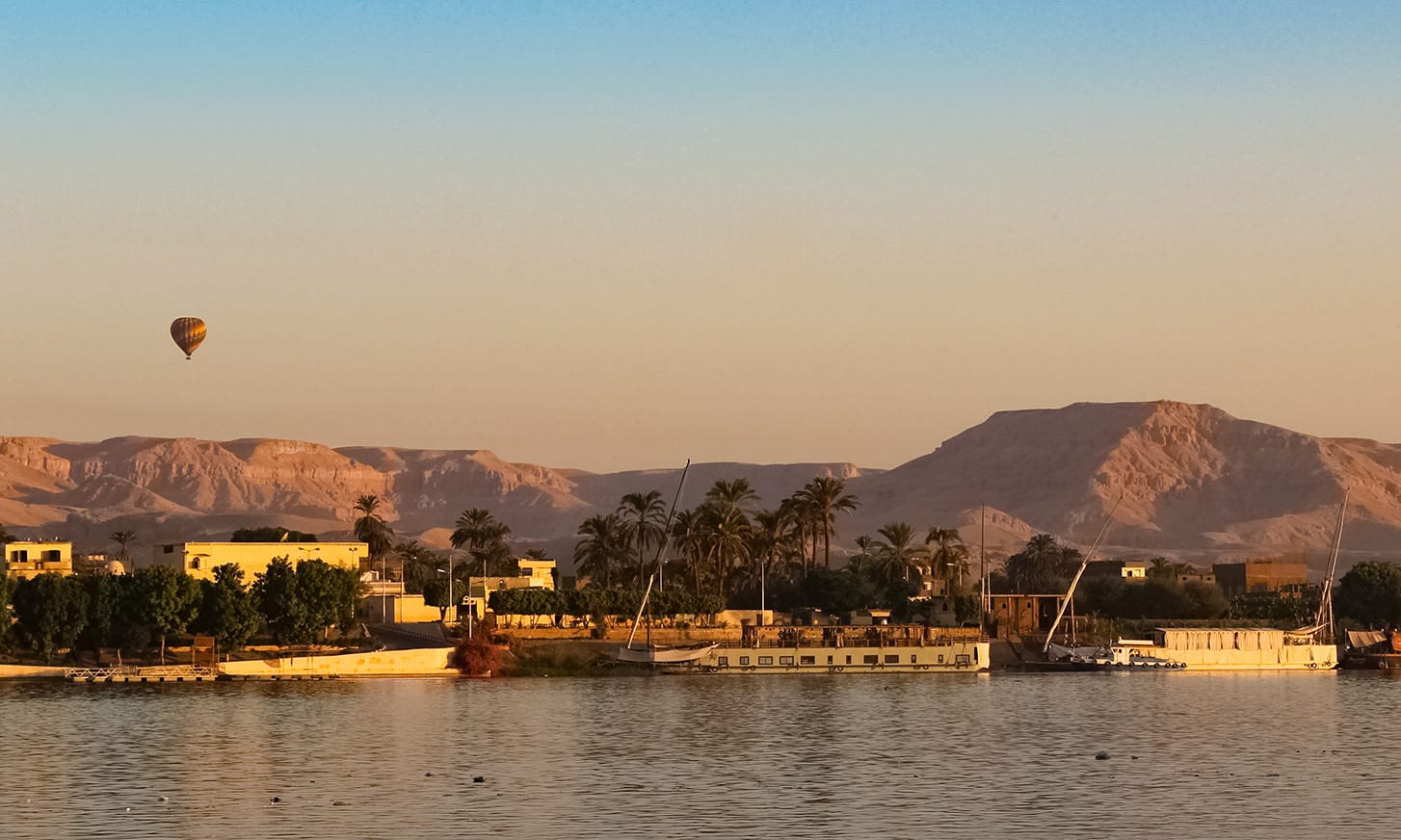
The river turns golden in the late afternoon. Palm trees and small villages line the banks. A fisherman guides his boat across the water, while somewhere in the distance, the desert rises beyond the cultivated fields.
You are traveling through a landscape that has connected Egyptian communities for thousands of years.
But how you experience that journey depends enormously on the vessel you choose.
Some travelers watch the scenery from the spacious sun deck of a five-star Nile cruise ship, with a swimming pool, restaurant, and a full program of guided excursions.
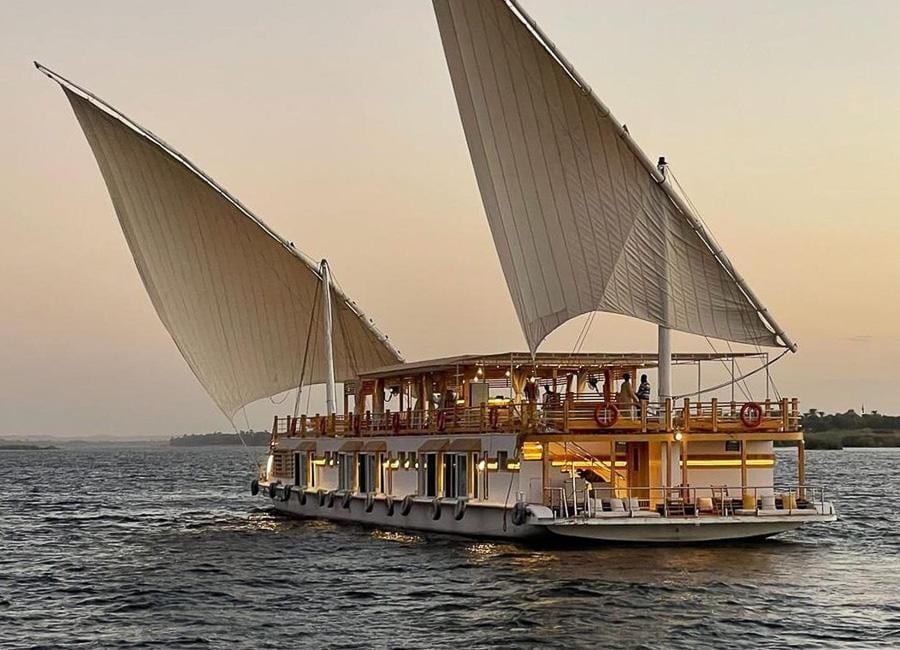
Others prefer a dahabiya: a smaller, traditional-style sailing vessel with fewer guests, an intimate atmosphere, and a different rhythm of life on the river.
Both can be wonderful ways to discover Egypt.
They are not, however, interchangeable experiences.
If you are planning a Nile journey between Luxor and Aswan, understanding the differences between a dahabiya and a conventional Nile cruise ship can help you make one of the most important decisions of your trip.
This guide looks beyond the photographs and marketing descriptions to explain what actually changes when you choose one over the other.
What Is a Dahabiya Nile Cruise?
A dahabiya is a traditional-style Nile sailing vessel, generally smaller than a conventional cruise ship and designed to accommodate a limited number of guests.
The name comes from the Arabic word associated with gold, reflecting the historic elegance of these vessels.
Dahabiyas became especially associated with leisurely Nile travel during the nineteenth century, when wealthy travelers and explorers journeyed through Egypt aboard private sailing boats.
Modern dahabiyas draw inspiration from that tradition, although today's vessels may feature contemporary cabins, air conditioning, private bathrooms, and carefully designed hospitality services.
Most have a broad upper deck where guests can dine, relax, read, or watch the changing scenery.
Their defining characteristic is their scale.
Rather than accommodating dozens or more than a hundred passengers, many dahabiyas host a much smaller group, sometimes around eight to twenty guests, depending on the vessel.
That difference influences almost every aspect of the journey.
A dahabiya is not simply a smaller cruise ship. It is a different style of Nile travel.
Does a Dahabiya Actually Sail?
This is an important question, and one that deserves a clear answer.
Many dahabiyas are designed to use sails when wind and river conditions allow. However, they do not necessarily travel under sail throughout the journey.
Some use engines or assistance from a separate tugboat, particularly when conditions are unsuitable for sailing or when the itinerary requires it.
The exact propulsion arrangements vary by vessel.
If sailing under wind power is important to you, ask the operator how the particular dahabiya normally travels rather than assuming the entire journey will be wind-powered.
What Is a Traditional Nile Cruise Ship?
A conventional Nile cruise ship is a larger, motor-powered vessel offering accommodation, meals, and organized sightseeing between the major archaeological destinations of Upper Egypt.
These ships are often described as floating hotels.
Depending on the category, facilities may include a restaurant, lounge, bar, sun deck, swimming pool, spa facilities, and a range of cabins or suites.
The atmosphere is generally more structured than on a dahabiya.
Meals are served according to a schedule, excursions are organized around the sailing program, and guests share public spaces with a larger number of travelers.
That does not automatically make the experience crowded or impersonal.
A well-operated luxury Nile cruise can offer attentive service, comfortable accommodation, excellent dining, and knowledgeable guiding.
For travelers who appreciate established hotel-style facilities, a larger vessel may be exactly the right choice.
Dahabiya vs Nile Cruise: The Main Differences at a Glance
Feature | Dahabiya | Traditional Nile Cruise Ship |
|---|---|---|
Vessel size | Small, intimate | Larger, hotel-style |
Guest numbers | Usually limited | Often dozens or more |
Atmosphere | Quiet, personal, relaxed | Social, structured, lively |
Sailing style | Sail-assisted, engine or tug depending on vessel | Motor-powered |
Facilities | Usually fewer shared amenities | Often pool, restaurant, lounges |
Dining | Often intimate, sometimes communal | Scheduled restaurant service |
Sightseeing | May include smaller river stops | Usually follows established routes |
Privacy | Greater sense of exclusivity | Depends on ship and cabin |
Cost | Often higher per person for comparable quality | Wider range of price categories |
Best suited to | Couples, small groups, slow-travel enthusiasts | Families, first-time visitors, travelers wanting more facilities |
These are general distinctions, not guarantees. Individual vessels can differ considerably.
A premium small cruise ship may feel more exclusive than a poorly managed dahabiya, while a luxury dahabiya can offer accommodation and service that rival high-end hotels.
The quality of the actual vessel matters just as much as its category.
1. Atmosphere: Intimate Sailing or Floating Hotel?
Perhaps the greatest difference is the atmosphere aboard.
On a dahabiya, the smaller number of guests creates a more personal environment.
You may recognize everyone at breakfast, share conversations over dinner, and spend long stretches of the afternoon enjoying the river without the activity of a large public lounge.
The upper deck often becomes the center of life aboard.
Guests read, take photographs, watch the riverbanks, or simply enjoy the passing scenery.
For couples celebrating a special occasion, travelers seeking quiet, or friends booking an entire vessel, this can be especially appealing.
A conventional cruise ship offers a different kind of enjoyment.
There may be a wider choice of spaces to relax, opportunities to meet other travelers, organized entertainment, and the convenience of familiar hotel-style facilities.
Some people enjoy that energy.
Others prefer a quieter setting.
Neither preference is more sophisticated than the other.
The question is how you want your evenings and sailing hours to feel.
2. Cabins and Comfort: Is a Dahabiya More Luxurious?
Not necessarily.
The word dahabiya describes the vessel style, not a guaranteed standard of luxury.
Some dahabiyas offer beautifully furnished cabins, elegant bathrooms, quality bedding, and spacious suites.
Others are simpler, with compact accommodation and fewer amenities.
The same is true of conventional Nile cruises.
A standard cruise ship and a high-end luxury ship can provide very different levels of comfort.
Before booking either option, look carefully at the actual cabin category.
What to Check Before Choosing a Cabin
Cabin size: Compare the published floor area rather than relying on photographs taken with wide-angle lenses.
Window type: Some cabins have large panoramic windows; others have smaller windows or different viewing arrangements.
Deck location: Consider proximity to engines, public areas, dining rooms, and service spaces.
Bathroom facilities: Check whether the cabin has a walk-in shower, bathtub, or other features important to you.
Air conditioning: Essential during much of the Egyptian year, particularly in the hotter months.
Private outdoor space: Do not assume that a photograph of the upper deck means your cabin has a private balcony.
For travelers who prioritize room size, a luxury Nile cruise suite may offer more space than a typical dahabiya cabin.
For others, the character of a beautifully designed small vessel may be more appealing than having additional square meters.
3. The Sailing Experience: Why the River Feels Different
One of the pleasures of a Nile journey is the time spent between archaeological sites.
The scenery changes gradually.
You pass agricultural land, villages, islands, palm groves, and stretches of desert where the contrast between green riverbanks and dry hills becomes especially striking.
On a dahabiya, the smaller vessel and open-deck environment can create a particularly close connection with that landscape.
Depending on the itinerary, there may be opportunities to stop near smaller communities or quieter stretches of river.
A traditional cruise ship offers the same magnificent Nile scenery, often from a higher and more spacious sun deck.
The experience can be extremely comfortable, especially when the ship provides shaded seating, refreshments, and a swimming pool.
However, larger vessels generally operate within more established docking and sailing arrangements.
The important distinction is not whether one sees a more beautiful Nile.
Both travel through an extraordinary landscape.
The difference lies in how the vessel moves through it and how you spend the time between destinations.
4. Sightseeing: Will You Visit the Same Temples?
This is where many travelers become confused.
Both dahabiyas and conventional Nile cruise ships can include the principal archaeological attractions between Luxor and Aswan.
Common highlights include:
Karnak Temple, Luxor
One of the largest and most important temple complexes of ancient Egypt, developed over many centuries.
Its Great Hypostyle Hall, monumental pylons, and sacred precincts make it an essential stop for travelers interested in Egyptian history.
Valley of the Kings
Located on Luxor's West Bank, this royal burial ground contains richly decorated tombs of New Kingdom pharaohs.
Standard admission does not necessarily include every tomb, so special-entry tickets should be checked separately.
Temple of Edfu
Dedicated to Horus, Edfu is among the best-preserved ancient temples in Egypt.
Its monumental entrance and extensive inscriptions offer valuable insight into religious traditions during the Ptolemaic period.
Temple of Kom Ombo
This unusual temple overlooks the Nile and is associated principally with Sobek and Horus the Elder.
Its symmetrical arrangement and distinctive reliefs make it a fascinating stop.
Philae Temple, Aswan
Reached by a separate boat transfer, Philae stands on an island and is closely associated with the goddess Isis.
Its setting makes it one of the most memorable archaeological visits in Upper Egypt.
These sites can appear in both types of itinerary.
The differences usually involve the exact timing, number of stops, guide arrangements, and whether additional visits are included.
Does a Dahabiya Visit Places Larger Ships Cannot?
Some dahabiya itineraries include smaller river islands, villages, or archaeological sites that are not part of the standard program of larger cruise ships.
This can be a meaningful advantage for travelers interested in local landscapes and experiences beyond the principal monuments.
But it is not universal.
A dahabiya advertised with a conventional Luxor-to-Aswan itinerary may offer essentially the same major sightseeing stops as a larger ship.
Likewise, a well-designed private shore program can improve the experience aboard a conventional cruise.
Always compare the day-by-day itineraries, not just the names of the vessels.
5. Private vs Shared Experiences: What Are You Actually Booking?
This is one of the most important distinctions in Nile cruise planning.
Booking a cabin on a dahabiya does not automatically mean you have booked a private boat.
You may be sharing the vessel with other guests, just as you would on a conventional cruise ship.
A fully private dahabiya charter is a different arrangement, usually involving exclusive use of the entire vessel for your group.
Similarly, a conventional Nile cruise package may include shared sightseeing excursions or private guided excursions, depending on the operator and package.
The words luxury, boutique, and exclusive are not substitutes for clear service descriptions.
Before confirming, ask:
Will other guests be aboard?
Is sightseeing private or shared?
Will we have a dedicated Egyptologist guide?
Are transfers arranged privately?
Are meals served at shared tables?
Can the entire dahabiya be chartered exclusively?
For couples, families, or travelers celebrating a special occasion, these answers can make a substantial difference to the experience.
6. Dining: A Personal Table or a Full Restaurant?
Food is an important part of spending several nights on the Nile.
On a dahabiya, dining is often a relatively intimate experience.
Meals may be served on the upper deck or in a shared dining area, with menus influenced by Egyptian cuisine and the vessel's hospitality style.
Because there are fewer guests, the experience can feel more personal.
However, a small kitchen may offer less variety than a larger cruise ship restaurant.
On conventional Nile cruises, meals are commonly served buffet-style or through set menus, depending on the vessel.
Larger ships may provide more choices, which can be useful for families or travelers with varied preferences.
Neither arrangement guarantees better food.
Kitchen quality, ingredient standards, menu planning, and service matter more than vessel size.
If you have dietary requirements, including vegetarian, vegan, gluten-free, or allergy-related needs, notify the operator before booking and obtain confirmation that the vessel can accommodate them.
7. Facilities: Pool, Spa, Wi-Fi and Entertainment
A larger Nile cruise ship often has an advantage when it comes to onboard facilities.
Depending on the category, you may find a swimming pool, shaded sun deck, lounge, bar, spa treatments, or evening entertainment.
These facilities can be especially valuable when traveling with children or spending several afternoons aboard.
A dahabiya generally emphasizes the experience of the river rather than a long list of hotel amenities.
Its appeal may lie in a comfortable deck, attractive dining area, and intimate hospitality.
Some premium dahabiyas have additional luxury features, but facilities vary considerably.
Wi-Fi is another detail worth checking.
Internet connectivity aboard either type of vessel may be inconsistent in certain stretches of the Nile.
If you need reliable access for work, ask about the onboard connection and consider arranging your own mobile data as a backup.
8. Is a Dahabiya Better for Couples and Honeymoons?
For many couples, a dahabiya is an attractive choice.
The smaller scale, slower atmosphere, and scenic sailing environment can create a romantic setting.
A private charter may be particularly appealing for a honeymoon, anniversary, or special celebration.
But there are exceptions.
Some couples prefer a luxury Nile cruise ship with a spacious suite, swimming pool, spa facilities, and a wider range of services.
Others may prioritize the sightseeing itinerary over the vessel itself.
For a honeymoon, consider what you want from the time between excursions.
If you imagine quiet evenings, personal service, and uninterrupted river views, a dahabiya deserves serious consideration.
If you prefer a full-service hotel environment with more facilities, a luxury cruise ship may be a better match.
9. Which Is Better for Families With Children?
A conventional Nile cruise ship can be a practical choice for families.
Larger vessels may offer more cabin configurations, additional facilities, and a broader dining selection.
A swimming pool can also make downtime more enjoyable, subject to the vessel's safety rules and supervision requirements.
A dahabiya can work beautifully for families too, particularly when booking an entire vessel.
However, parents should carefully check the suitability of the accommodation and deck arrangements.
Important questions include minimum ages, available family cabins, railings, access to stairs, child supervision, and whether the vessel can provide suitable meals.
A small boat is not automatically safer or more suitable for young children simply because it has fewer guests.
For multigenerational groups, accessibility is equally important.
Many vessels, both large and small, have stairs and limited facilities for travelers with reduced mobility.
Confirm specific accessibility requirements before making a reservation.
10. Dahabiya vs Nile Cruise Prices: Which Costs More?
Dahabiyas often cost more per person than standard Nile cruise ships, especially when comparing similar durations.
The reasons are largely operational.
A small vessel has fewer cabins over which to distribute crew, maintenance, catering, and operating costs.
A premium dahabiya may also include a higher staff-to-guest ratio, more personalized service, or a specialized itinerary.
Conventional Nile cruise ships generally offer a broader range of price categories, from standard vessels to high-end luxury ships.
But price comparisons can be misleading unless the inclusions are identical.
Compare the Full Package, Not Just the Cabin Rate
Check whether the quotation includes:
Accommodation: The exact cabin category and number of nights.
Meals: Full board, half board, or another arrangement.
Sightseeing: Which temples are included and whether entrance tickets are covered.
Guiding: Private Egyptologist or shared group guide.
Transfers: Airport, hotel, and sightseeing transport.
Optional excursions: Abu Simbel, hot air balloon rides, Nubian village visits, or special tomb tickets.
Additional charges: Drinks, gratuities, single supplements, and any other fees.
A lower-priced cruise can become more expensive after optional services are added.
Conversely, a premium dahabiya may offer good overall value when the package includes services that would otherwise be charged separately.
There is no reliable universal price difference. Rates depend on the vessel, season, cabin category, sailing date, and inclusions.
11. Four Days or Five Days: Does the Vessel Type Change the Route?
Most conventional Nile cruise itineraries between Luxor and Aswan follow established sailing patterns.
A common arrangement is a four-day, three-night cruise from Aswan to Luxor, or a five-day, four-night cruise from Luxor to Aswan.
These are common patterns, not universal rules.
Dahabiya journeys may operate over different durations, sometimes allowing more time for sailing and additional stops.
The direction also matters.
A journey from Luxor to Aswan is not necessarily the same experience as traveling in the opposite direction, even when the main archaeological attractions are similar.
When comparing options, consider the number of actual sailing hours, sightseeing schedule, overnight stops, and departure days.
Do not assume that a longer itinerary automatically includes more attractions.
Sometimes the additional time is simply what makes the journey more comfortable.
12. When Is the Best Time to Take a Nile Cruise?
The Nile can be visited throughout the year, but seasonal conditions influence the experience.
October to April
These months are generally popular for Nile cruising because temperatures are more comfortable for outdoor sightseeing.
Winter days can be pleasant, although mornings and evenings on the deck may be cool.
Peak travel periods can bring higher demand for popular vessels.
May and September
These months can offer attractive opportunities for travelers comfortable with warmer weather.
However, sightseeing in Upper Egypt may become physically demanding during hotter parts of the day.
June to August
Summer in Luxor and Aswan can be extremely hot, with daytime temperatures frequently exceeding 40°C (104°F).
A Nile cruise is still possible, but air conditioning, shaded areas, early sightseeing, and realistic pacing become especially important.
For travelers who want to spend long afternoons outdoors on a dahabiya deck, the cooler season is generally more appealing.
The best month depends on your tolerance for heat, preferred travel dates, and budget.
13. Is a Dahabiya Worth the Extra Money?
For the right traveler, absolutely.
But the value is not simply in paying more for a smaller vessel.
A dahabiya may be worth the premium when you genuinely appreciate the intimacy, limited guest numbers, scenic sailing atmosphere, and opportunities for a more personalized journey.
If those details matter to you, the difference can be substantial.
However, if your main priorities are comfortable accommodation, visiting the major temples, enjoying a swimming pool, and having a wider choice of onboard facilities, a good conventional Nile cruise may provide better value.
The best purchase is the one that matches your priorities.
Paying extra for an atmosphere you do not particularly care about is not a better travel decision.
14. How to Choose the Right Nile Experience for Your Travel Style
Choose a Dahabiya If You...
Prefer a smaller, quieter vessel with fewer fellow guests.
Enjoy spending time on deck watching the river rather than participating in organized entertainment.
Value personal service and intimate surroundings.
Are considering a private charter for a family, friends, or a special celebration.
Want to explore whether a slower itinerary with additional river stops is available.
Choose a Traditional Nile Cruise If You...
Prefer a hotel-style experience with more onboard facilities.
Enjoy meeting other travelers.
Want a wider selection of cabin categories and price points.
Are traveling with family members who may appreciate a swimming pool or larger public spaces.
Prefer an established sailing schedule that fits a wider Egypt itinerary.
Consider a Luxury Nile Cruise If You Want Both Comfort and Premium Service
There is also a middle ground.
A high-quality luxury Nile cruise ship may combine spacious accommodation, attentive hospitality, excellent dining, and well-organized sightseeing.
It may not offer the same intimate sailing atmosphere as a dahabiya, but it can be an excellent choice for travelers seeking refined comfort.
This is why comparing actual vessels is more useful than comparing labels alone.
15. Questions to Ask Before Booking Any Nile Cruise
Before paying a deposit, request clear answers to the following:
What is the exact vessel name, category, and cabin type?
How many nights are included, and what are the confirmed sailing dates?
Which archaeological visits are included?
Are entrance tickets included or paid separately?
Will sightseeing be private or shared?
Which meals and beverages are included?
Are airport and hotel transfers included?
Are there additional charges for special tombs or optional excursions?
What are the cancellation and payment conditions?
What happens if the vessel or sailing schedule changes?
For dahabiyas, also ask whether the boat is shared or privately chartered, how propulsion is handled, and which smaller stops are included.
A professional tour operator should be able to explain these details clearly before confirmation.
Planning Your Nile Cruise With Luxor Booking Tours
Choosing the right Nile cruise should begin with understanding the traveler, not simply presenting a list of vessels.
At Luxor Booking Tours, our approach is to match the journey to your preferred level of comfort, travel style, budget, and wider Egypt itinerary.
Some guests are looking for a peaceful dahabiya experience with a small number of fellow travelers.
Others want a five-star cruise ship with spacious facilities and a structured program of visits between Luxor and Aswan.
Families, honeymooners, solo travelers, and private groups may all need different arrangements.
We can help you compare suitable options, understand what is included, and coordinate your Nile journey with private sightseeing, airport transfers, and additional destinations across Egypt.
For travelers considering a special occasion or a more personalized journey, we can also discuss suitable private arrangements, subject to vessel availability.
Explore our Nile Cruises and Dahabiya experiences, or contact Luxor Booking Tours to find the journey that fits your travel plans.
Frequently Asked Questions About Dahabiyas and Nile Cruises
What is the main difference between a dahabiya and a Nile cruise?
A dahabiya is generally a smaller, traditional-style sailing vessel with fewer guests and a more intimate atmosphere. A conventional Nile cruise ship is larger and usually offers more hotel-style facilities.
Is a dahabiya more luxurious than a Nile cruise?
Not automatically. Both types range in quality. Some dahabiyas are exceptionally luxurious, while high-end conventional cruise ships can offer larger suites and more facilities.
Are dahabiya cruises private?
Not necessarily. You can book an individual cabin on a shared dahabiya or, where available, charter an entire vessel privately.
Do dahabiyas visit the Valley of the Kings and Karnak?
Many dahabiya itineraries include Luxor's major archaeological attractions, but exact inclusions vary. Always check the confirmed program.
Does a dahabiya sail without an engine?
Not always. Dahabiyas may use sails, engines, or assistance from a tugboat depending on the vessel and sailing conditions.
Is a dahabiya better for a honeymoon?
It can be an excellent option for couples who appreciate privacy, quiet surroundings, and an intimate atmosphere. A luxury Nile cruise ship may suit couples who prefer more facilities.
Are dahabiyas suitable for children?
Some are, but parents should confirm minimum ages, cabin arrangements, safety features, and onboard facilities before booking.
Which is cheaper: a dahabiya or a Nile cruise ship?
Standard Nile cruise ships are often less expensive per person. Premium dahabiyas can cost more because of their smaller capacity and operating model, although actual rates vary.
How many days should I spend on a Nile cruise?
Three to four nights is common for conventional itineraries, while some dahabiya journeys are longer. Choose according to your available time and desired pace.
Can I combine a Nile cruise with Cairo and Abu Simbel?
Yes. A Nile cruise can form part of a wider Egypt itinerary including Cairo, Giza, Abu Simbel, and other destinations. Transport and excursion arrangements should be coordinated with the sailing schedule.
Final Thoughts: Two Beautiful Ways to Discover the Nile
The Nile does not belong to one style of traveler.
Some people fall in love with the intimacy of a dahabiya: the quiet deck, the small group of guests, and the sense of watching the river unfold at its own pace.
Others find everything they want aboard a luxury cruise ship, where comfortable accommodation, professional hospitality, and well-organized sightseeing make the journey effortless.
Both experiences offer something remarkable.
You will travel through the landscapes of Upper Egypt, visit monuments that have survived for thousands of years, and discover why the Nile remains central to the country's identity.
The real question is not whether a dahabiya is better than a Nile cruise ship.
It is which experience will make your journey through Egypt feel exactly right for you.
And that is a decision worth making carefully.