







Luxor Solar Eclipse 2027: The Complete Travel & Viewing Guide
On August 2, 2027, something extraordinary will happen above the ancient city of Luxor.
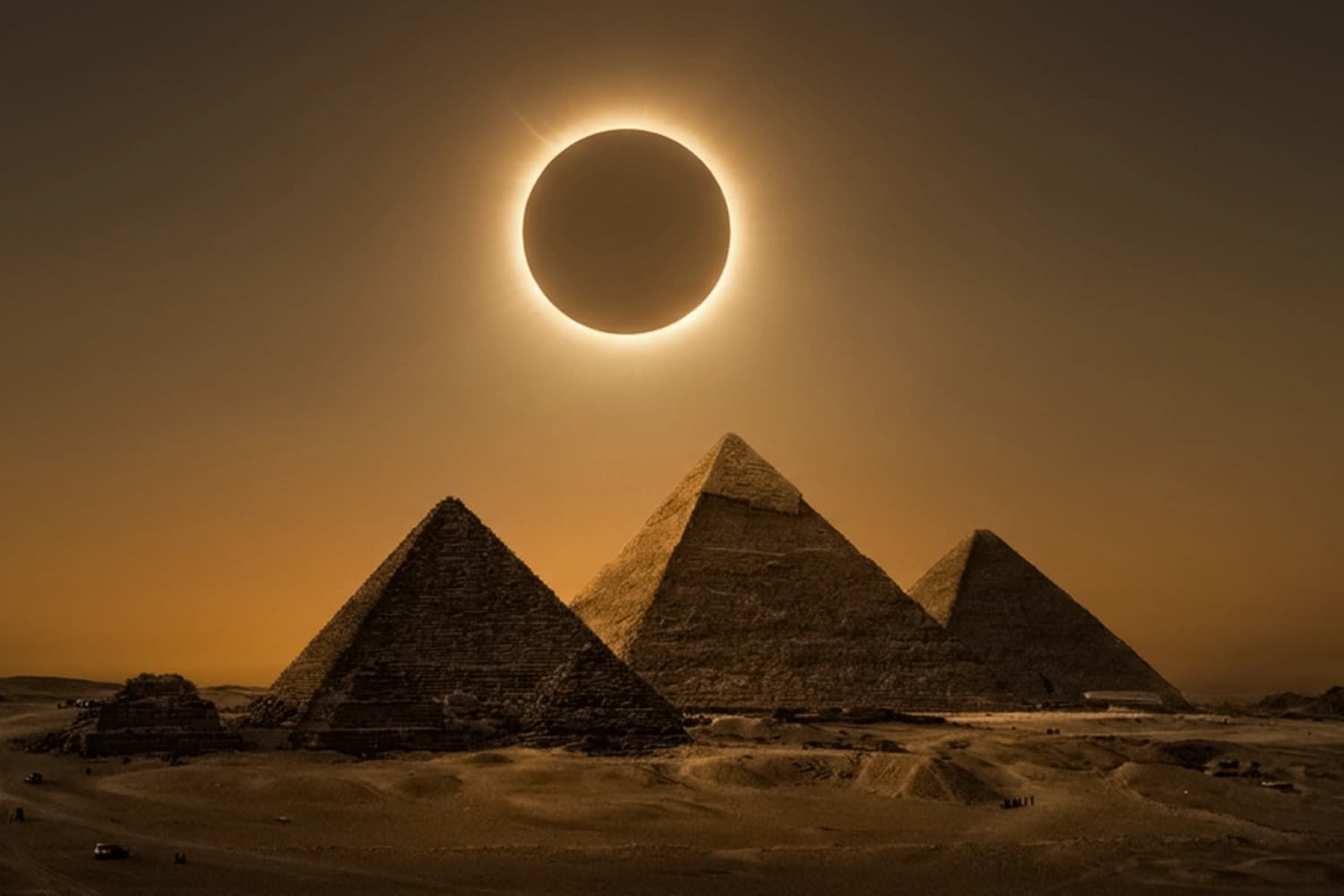
For a little over six minutes, the Moon will completely cover the Sun. The familiar brightness of an Egyptian summer afternoon will give way to an unusual twilight, the Sun’s outer atmosphere will become visible, and one of the world’s greatest archaeological landscapes will experience a total solar eclipse.
For travelers who have always dreamed of witnessing totality, Luxor offers a remarkable combination: an exceptionally long eclipse, a typically dry summer climate, and the opportunity to explore some of the most important surviving monuments of ancient Egypt.
But this is not an ordinary sightseeing trip. The eclipse happens at a precise time, in the middle of the Egyptian summer, and the quality of the experience will depend on decisions made well before arrival.
This guide explains what will happen, when to watch, where to consider viewing the eclipse, and how to organize a journey that makes the most of both the astronomical event and the destination.
When Is the Total Solar Eclipse in Luxor?
The eclipse will take place on Monday, August 2, 2027.
Luxor lies within the path of totality, the relatively narrow geographical corridor where observers can see the Moon completely cover the Sun.
The entire eclipse, including its partial phases, will last approximately two hours and 46 minutes in Luxor. The period of complete darkness, known as totality, will last approximately six minutes and 22 seconds.
Luxor Eclipse 2027: Local Viewing Times
Eclipse phase | Approximate local time |
Partial eclipse begins | 11:40 AM |
Totality begins | 1:02 PM |
Maximum eclipse | 1:05 PM |
Totality ends | 1:08 PM |
Partial eclipse ends | 2:26 PM |
All times are local Egyptian summer time (EEST, UTC+3). Exact contact times depend on your viewing coordinates and should be reconfirmed before the event.
These times reveal one of the most important practical considerations: the eclipse will reach totality during the hottest part of the day.
Visitors should therefore plan their viewing arrangements around shade, hydration, comfortable seating, and sufficient time to reach their chosen location.
Why the 2027 Eclipse Is So Special
Not every solar eclipse offers the same experience.
Some locations see only a partial eclipse, where the Moon covers part of the Sun but daylight never disappears completely. Others experience totality for only a minute or two.
Luxor will enjoy more than six minutes of totality, an unusually long opportunity to observe one of nature’s most dramatic astronomical events.
The greatest eclipse will occur in southern Egypt, east of Luxor, making Upper Egypt one of the most significant regions along the eclipse path.
The duration matters because totality is not simply a moment when the sky becomes darker.
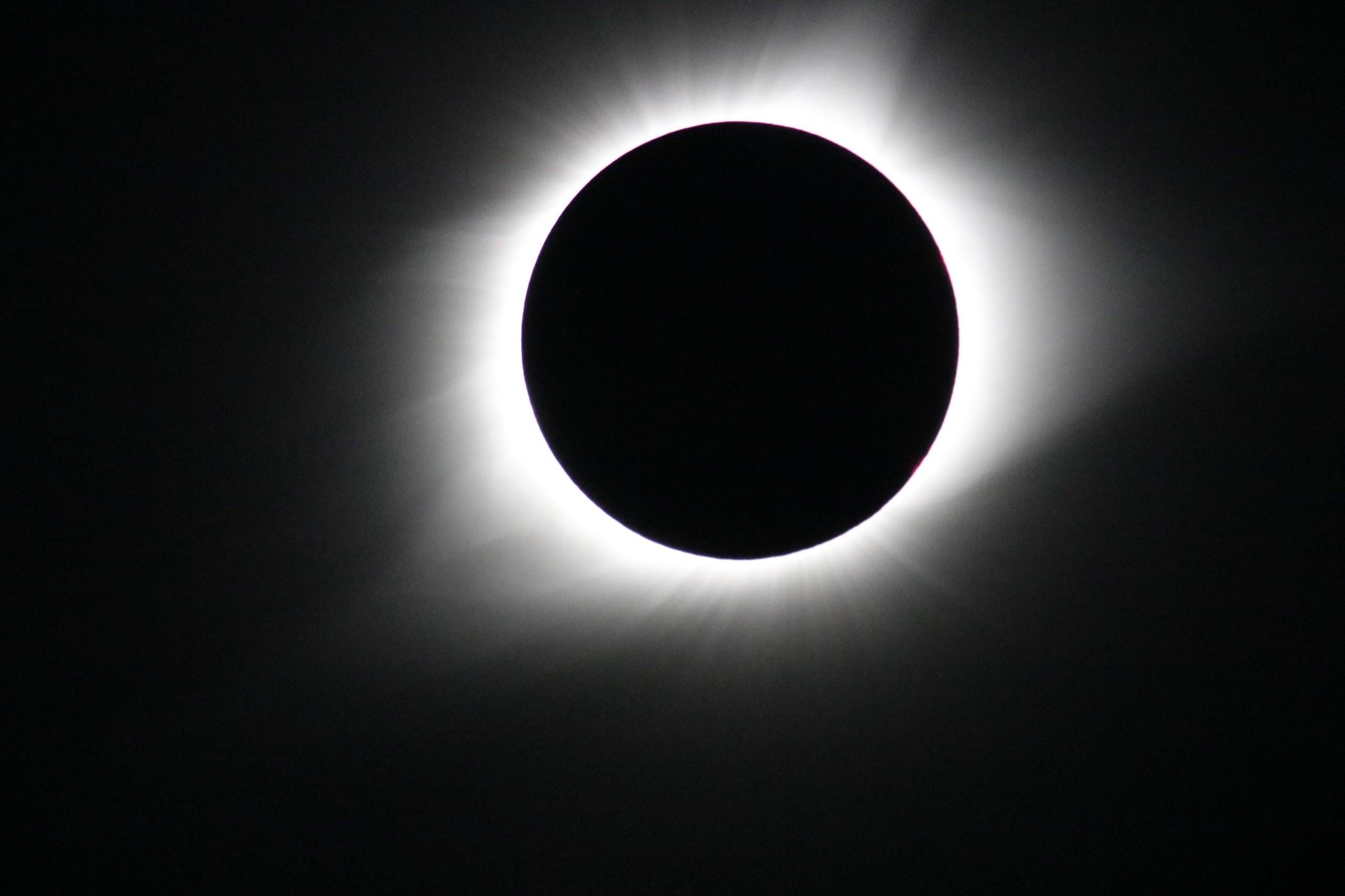
During those minutes, observers may see the solar corona surrounding the black silhouette of the Moon. The light changes rapidly, the horizon may resemble a distant sunset, and the atmosphere can take on an appearance unlike an ordinary day or night.
For first-time eclipse travelers, the experience can be surprisingly difficult to describe afterward.
And for experienced eclipse chasers, six minutes is a substantial viewing opportunity.
Why Luxor Is One of the Most Compelling Places to Watch
There are several destinations along the path of the August 2027 eclipse. Luxor stands out for reasons that extend beyond astronomy.
An Exceptional Historical Setting
Luxor occupies the site of ancient Thebes, once one of the most influential cities of ancient Egypt.
On the East Bank of the Nile, Karnak Temple and Luxor Temple preserve monumental architecture associated with the religious and ceremonial life of the pharaohs.
Across the river, the West Bank contains the Valley of the Kings, the Temple of Hatshepsut, and other extraordinary archaeological sites.
The opportunity to witness a total solar eclipse in a landscape so closely associated with ancient Egyptian history gives the journey a distinctive character.
The historical connection should not be exaggerated: there is no basis for claiming that the ancient Egyptians predicted this particular eclipse or built these monuments specifically for it.
What makes the setting remarkable is the contrast between a modern, precisely calculated astronomical event and a civilization that placed the Sun at the center of much of its religious imagery.
Favorable Historical Cloud Conditions
August in Luxor is typically extremely dry, and historical satellite records indicate very low average cloud cover.
That makes Luxor an attractive candidate for eclipse observation.
However, low historical cloud cover is not a guarantee of clear skies on August 2, 2027. Dust, haze, and unexpected weather conditions can still affect visibility.
Travelers should choose a viewing arrangement that accounts for local conditions rather than assuming perfect visibility is guaranteed.
A Complete Destination Beyond the Eclipse
An eclipse lasts only a few hours, and totality lasts minutes.
A journey to Egypt can offer much more.
Visitors can explore ancient temples, discover the royal tombs of the West Bank, enjoy the Nile, and continue south to Aswan or north to Cairo.
This makes Luxor particularly appealing to travelers who want the eclipse to be the centerpiece of a meaningful Egyptian holiday rather than the only purpose of their journey.
Where Should You Watch the Eclipse in Luxor?
Choosing a viewing location is one of the most important decisions you will make.
The best location is not necessarily the most famous monument or the place that looks most impressive in photographs.
For this particular eclipse, the Sun will be very high in the sky, approximately 82 degrees above the horizon at maximum. That means observers need a clear view high overhead rather than an unobstructed view toward the horizon.
Comfort, access, permitted use, and crowd management may be more important than a dramatic foreground.
Karnak Temple: An Extraordinary Setting, Subject to Access
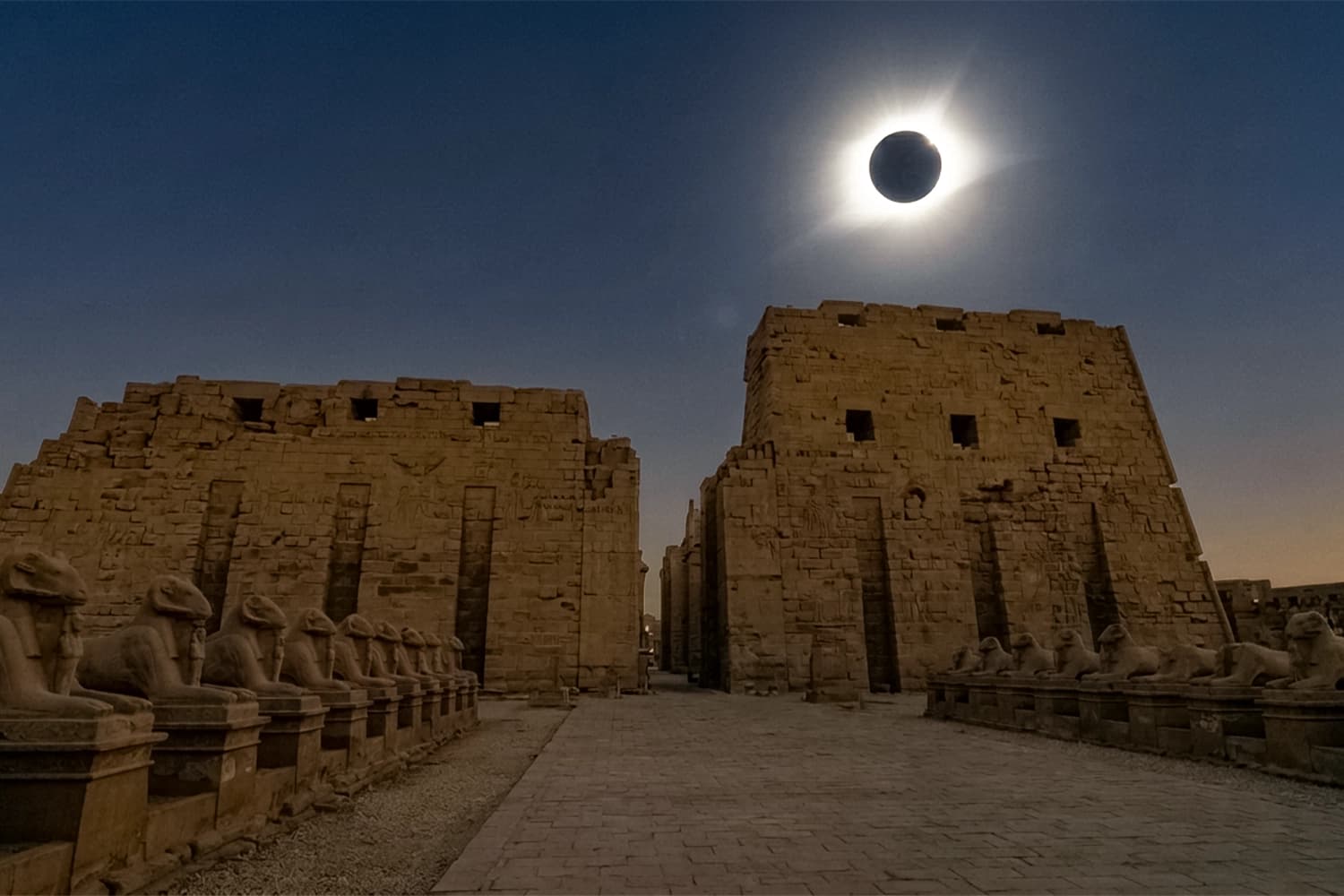
Karnak is one of the most evocative locations associated with the 2027 eclipse.
Its towering columns, open courtyards, and ancient religious significance make it a compelling setting.
However, visitors should not assume that ordinary admission will automatically permit eclipse viewing inside the complex.
Special arrangements, visitor capacity, security procedures, photography permissions, and access restrictions may apply.
Any tour advertising a guaranteed Karnak eclipse experience should clearly confirm that the necessary permissions and admission arrangements have been secured.
Private Hotels and Dedicated Viewing Areas
For travelers prioritizing comfort, a properly arranged hotel viewing area or dedicated private venue may be a better option.
Potential advantages include access to shade, seating, refreshments, restrooms, and a more controlled environment.
The essential questions are whether the location has a clear view of the Sun, whether the venue permits eclipse observation, and whether the arrangement is confirmed for the event.
A hotel reservation alone does not guarantee access to a rooftop, terrace, or special viewing area.
The Nile and West Bank
Some travelers may prefer a quieter location away from the busiest archaeological sites.
Selected Nile-side venues or private properties on the West Bank may offer a more relaxed atmosphere, provided the viewing position and permissions are suitable.
A Nile cruise or boat should not automatically be considered an ideal viewing platform. Movement, shade structures, positioning, and operating restrictions can all affect the experience.
For any proposed location, ask for confirmation of the exact viewing arrangement rather than relying on a general description.
What Will You Actually Experience During Totality?
A total solar eclipse unfolds gradually.
At first, the change is subtle. Through appropriate solar viewing glasses, the Moon appears to take a small bite from the Sun.
Over the following hour, the Moon moves farther across the solar disk.
The sunlight remains surprisingly strong for much of the partial phase, which is why looking directly at the Sun remains dangerous even when most of it is covered.
As totality approaches, the surroundings may begin to look noticeably different. Shadows can appear unusually sharp, the quality of daylight changes, and the landscape may take on muted colors.
Then, when the Moon completely covers the Sun, the scene changes dramatically.
The solar corona—the Sun’s outer atmosphere—becomes visible around the dark lunar disk. Bright planets or stars may become visible, depending on sky conditions.
The experience lasts only a few minutes.
When the first bright portion of the Sun reappears, totality is over, and proper solar eye protection becomes essential again.
For many observers, the most memorable part is not a single photograph. It is the sudden transformation of the familiar world around them.
How to Watch the 2027 Eclipse Safely
Eye safety must be part of every eclipse travel plan.
During the partial phases, looking directly at the Sun without appropriate protection can cause serious and potentially permanent eye injury.
Use eclipse glasses or handheld solar viewers that comply with the ISO 12312-2 international standard. Ordinary sunglasses, even very dark ones, are not sufficient.
Only during the brief period of complete totality—when the Moon fully covers the Sun’s bright face—may observers look directly at the eclipse without solar viewing glasses.
As soon as any bright part of the Sun reappears, protective eyewear must be used again.
Cameras, telescopes, and binoculars require special solar filters fitted correctly to the front of the optical equipment. Eclipse glasses worn on your face do not make it safe to look through an unfiltered camera or telescope.
Children should be supervised, and all solar viewing equipment should be inspected for damage before use.
Travelers interested in photographing the eclipse should prepare their equipment and procedures well in advance rather than experimenting during totality.
The August Heat: An Essential Part of Your Planning
Luxor in August is extremely hot.
This is not a minor inconvenience to address after booking accommodation. It is a central factor in planning the eclipse day.
Because totality occurs shortly after 1 PM, visitors may be outside during a period of intense heat.
A comfortable viewing plan should include reliable access to shade before and after totality, drinking water, suitable clothing, sun protection, and opportunities to rest in an air-conditioned environment.
Visitors should be particularly careful with children, older travelers, and anyone who may be more vulnerable to heat-related illness.
We recommend keeping the eclipse day largely free from demanding archaeological sightseeing.
Trying to visit the Valley of the Kings, Karnak, Luxor Temple, and a remote viewing location in the same day creates unnecessary pressure around an event that cannot be delayed.
The eclipse should be the priority.
How Many Days Should You Spend in Luxor?
For travelers coming specifically for the eclipse, arriving in Luxor on August 2 is a significant risk.
Flight delays, road conditions, unexpected changes, or late check-in could compromise the entire purpose of the trip.
A more sensible approach is to arrive at least one or two days before the event.
A Suggested Four-Day Luxor Eclipse Experience
Day 1 — Arrival in Luxor
Arrive in Luxor, transfer to your hotel, and settle in. Depending on arrival time, enjoy a relaxed evening overlooking the Nile.
Day 2 — Discover Ancient Thebes
Explore selected highlights of Luxor with a private Egyptologist guide. Karnak Temple, Luxor Temple, or the West Bank can be arranged according to your interests and the summer conditions.
Day 3 — Monday, August 2: Eclipse Day
Enjoy a relaxed morning before transferring to your prearranged viewing location. Arrive well before the partial eclipse begins, with time for safety instructions and preparation.
Experience the total solar eclipse shortly after 1 PM, then return to your hotel for rest. Keep the evening flexible.
Day 4 — Further Exploration or Departure
Continue sightseeing, visit another part of Luxor, or travel onward to Aswan or Cairo.
This is an illustrative itinerary, not a statement that any particular viewing venue or admission has already been confirmed.
Should You Combine the Eclipse With a Nile Cruise?
A Nile cruise can be a rewarding addition to an eclipse journey, but the sailing schedule needs careful attention.
Most conventional Nile cruises operate on fixed departure days, and the itinerary may not align with the eclipse date or a suitable viewing location.
A cruise that happens to be sailing on August 2 does not necessarily provide an appropriate eclipse observation experience.
For travelers who want both, it may be preferable to arrange the eclipse in Luxor first and enjoy a Nile cruise before or afterward.
The exact sequence should depend on confirmed sailing dates, accommodation availability, and the viewing arrangements.
When Should You Book Your Luxor Eclipse Trip?
For an event with a fixed date and international interest, early planning is advisable.
Accommodation in desirable locations, experienced guides, private transport, and specialized viewing arrangements may become more difficult to secure as the event approaches.
However, booking early should not mean accepting unclear conditions.
Before paying a deposit, confirm what is included, what remains subject to availability, the cancellation terms, and whether any special viewing permissions have actually been secured.
If a viewing venue has not yet been finalized, the operator should say so clearly.
The most important part of an eclipse package is not an impressive itinerary. It is a reliable and transparent plan for the day of the event.
Planning Your Luxor Solar Eclipse 2027 Journey With Luxor Booking Tours
At Luxor Booking Tours, we believe a journey built around a rare astronomical event deserves the same attention to detail as a carefully designed private Egypt itinerary.
Our approach is to combine the eclipse with the experiences that make Luxor worth visiting in its own right: its extraordinary temples, royal tombs, Nile landscapes, and the expertise of local Egyptologist guides.
Travelers can request a tailored itinerary based on their preferred accommodation, length of stay, private sightseeing interests, and onward travel plans.
Eclipse viewing arrangements, venue access, and any special admission requirements must be confirmed individually and are subject to availability and applicable permissions.
Explore our Luxor Solar Eclipse 2027 package or contact our team to discuss a private itinerary designed around August 2, 2027.
Frequently Asked Questions About the Luxor Eclipse 2027
Will the 2027 solar eclipse be total in Luxor?
Yes. Luxor lies within the path of totality on August 2, 2027. The Moon will completely cover the Sun for approximately six minutes and 22 seconds in the city.
What time will the eclipse happen in Luxor?
The partial eclipse is expected to begin around 11:40 AM. Totality will begin around 1:02 PM, with maximum eclipse near 1:05 PM. The partial eclipse will end around 2:26 PM, local Egyptian summer time.
Is Luxor one of the best places to see the 2027 eclipse?
Luxor is one of the most attractive destinations because of its long duration of totality, historically low August cloud cover, and exceptional cultural attractions. Actual viewing conditions cannot be guaranteed.
Can I watch the eclipse from Karnak Temple?
Potentially, but access must be confirmed. Special entry arrangements, security rules, capacity limits, or event-specific permissions may apply. Do not assume ordinary sightseeing admission includes guaranteed eclipse viewing.
Will it be completely dark during the eclipse?
During totality, daylight will diminish dramatically and the sky may resemble twilight. It will not necessarily become as dark as midnight, and conditions will vary with the atmosphere and surroundings.
Is it safe to watch the eclipse without glasses?
Only during complete totality, when the Sun’s bright face is entirely covered. Eclipse glasses or suitable solar viewers are essential whenever any bright part of the Sun remains visible.
How hot will Luxor be in August?
August is one of Luxor’s hottest months, with daytime temperatures often exceeding 40°C (104°F). Travelers should plan for intense heat, especially around the midday eclipse.
Can I combine the eclipse with Cairo, Aswan, or a Nile cruise?
Yes. A multi-destination Egypt itinerary can be organized around the eclipse date, with Luxor as the central stop. Domestic transport and cruise schedules should be coordinated carefully.
Final Thoughts: Six Minutes Worth Planning a Journey Around
On August 2, 2027, Luxor will offer a rare opportunity to experience one of nature’s most remarkable events in a setting shaped by thousands of years of history.
The eclipse itself will be brief, but the journey surrounding it can be much richer.
With the right viewing arrangements, sensible summer planning, and time to explore the city, a visit to Luxor can become far more than an astronomical excursion.
It can be a memorable encounter with both the ancient world and the natural universe above it.
For travelers considering the journey, the most important advice is simple: plan early, confirm the details, and give the eclipse the attention it deserves.
الرحلات المرتبطة
استكشف الرحلات اليومية والبرامج السياحية والنايل كروز المرتبطة بهذا الدليل.
يبدأ من $9,999
USD / شخص
خلوة كسوف 2027 في الأقصر 8 أيام
الأقصر
رحلة كسوف لمدة 8 أيام / 7 ليالٍ في الأقصر تستضيفها عالمة الفلك كاتي صوفيا، مصممة حول الكسوف الكلي للشمس في 2 أغسطس 2027، مع زيارات للمعابد وجلسات تأمل يومية وقراءات شخصية لخريطة الميلاد.
- 8 أيام / 7 ليالٍ
- خلوة جماعية
يبدأ من $14,999
USD / شخص
جولة كسوف الشمس 2027: من القاهرة إلى أسوان
القاهرة · الغردقة · الأقصر · أسوان
رحلة إرشادية لمدة 10 أيام من القاهرة إلى أسوان مع مشاهدة خاصة للكسوف الكلي للشمس في 2 أغسطس 2027 في معبد الكرنك بالأقصر.
- 10 أيام / 9 ليالٍ
- مجموعة خاصة