







Yoga & Wellness Retreats in Egypt: A Complete Guide to the Nile, Temples & Mindful Travel
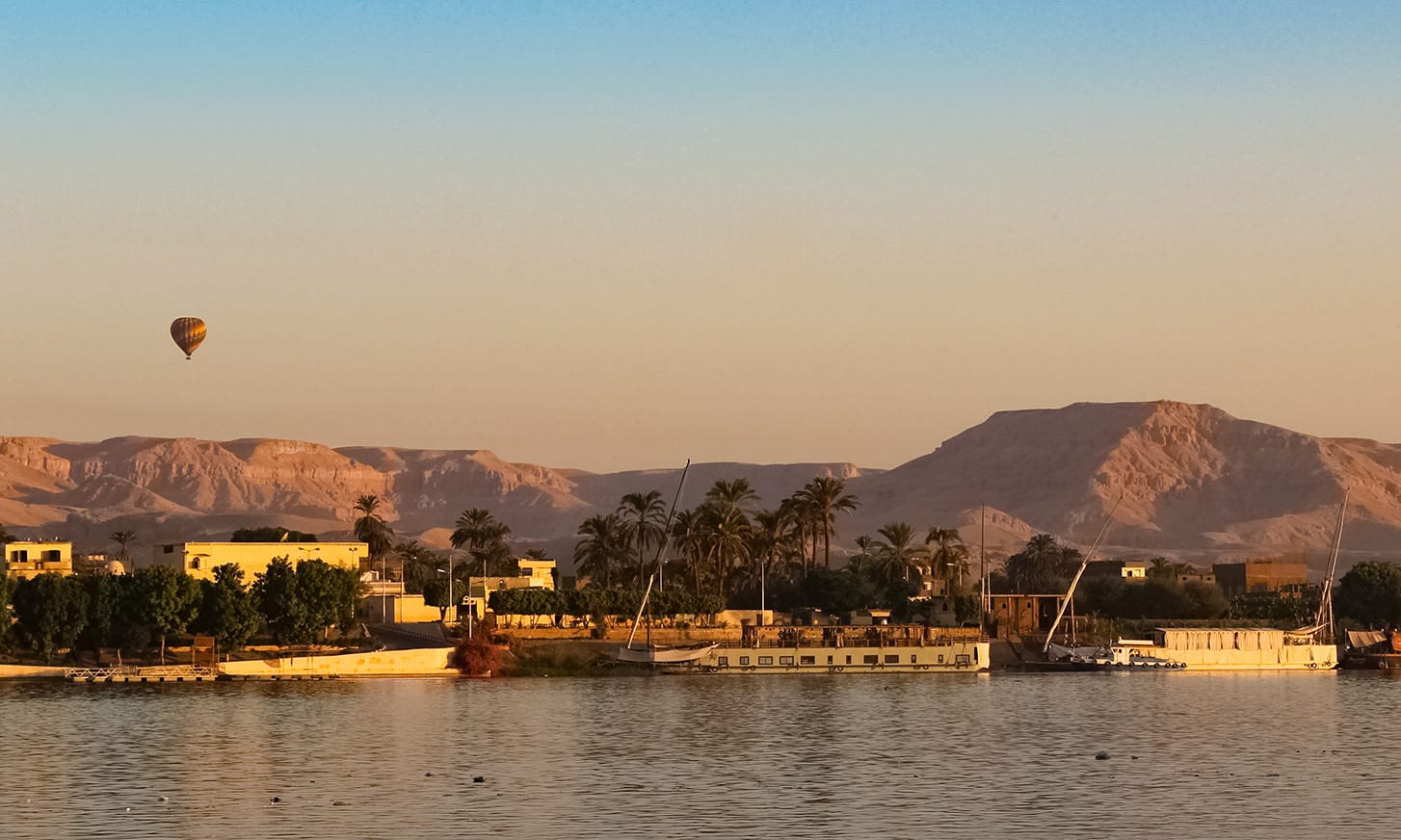
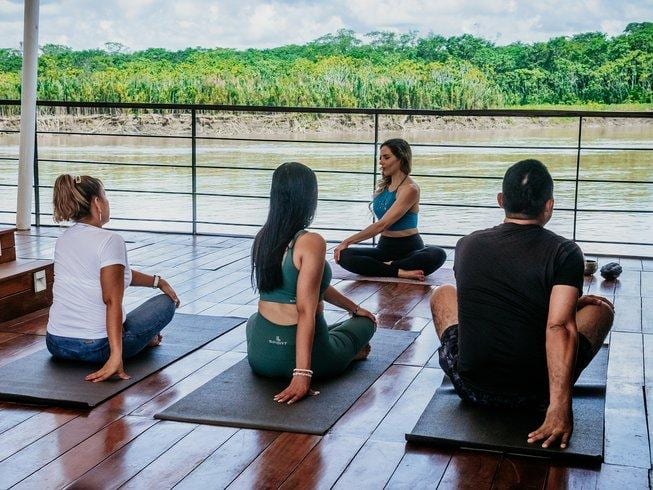
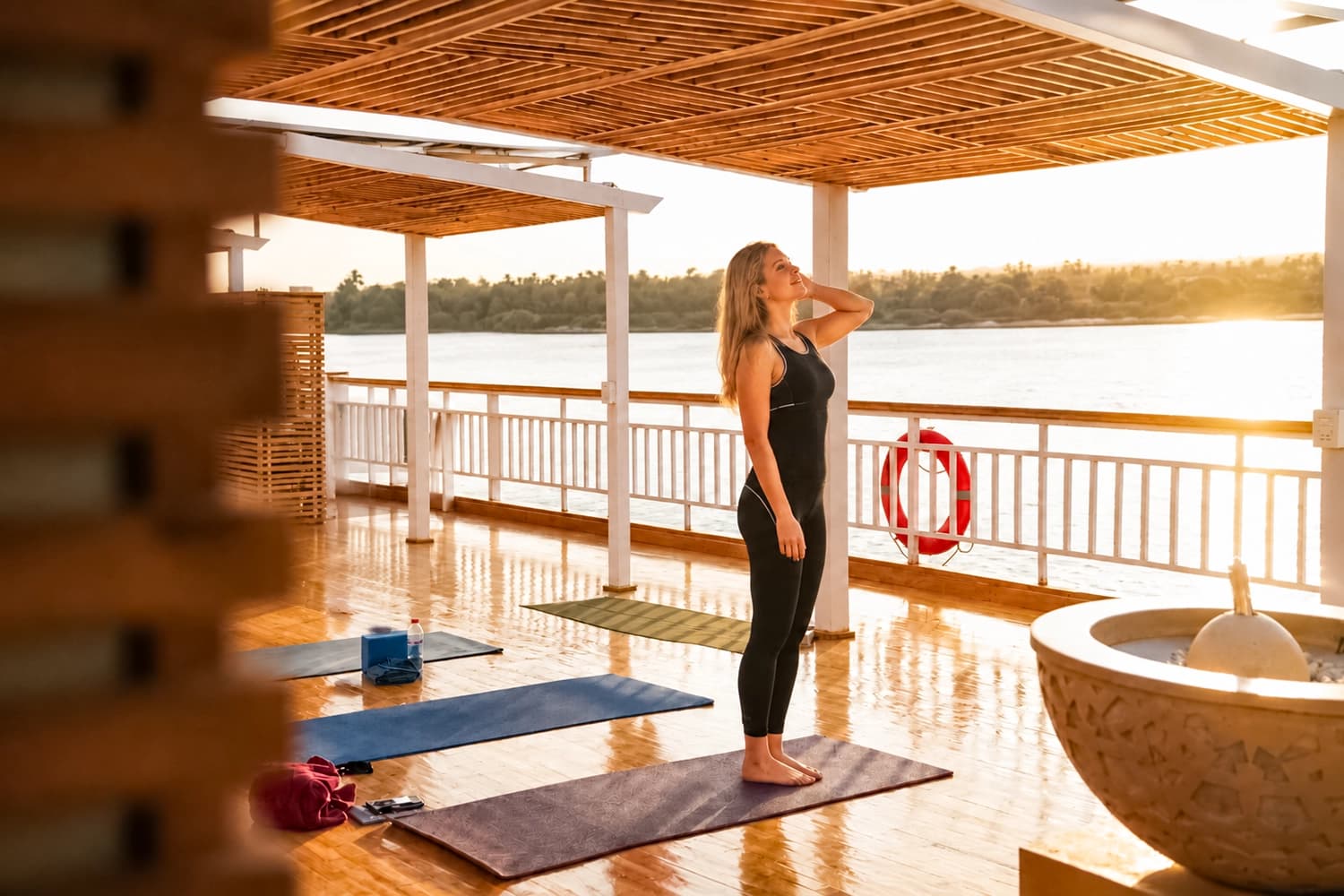
Imagine beginning the morning on the deck of a traditional Nile sailing boat. The river is still, the palms along the banks are catching the first sunlight, and the day’s first activity is not a hurried transfer or a queue outside a monument. It is time to stretch, breathe, and settle into the surroundings.
Later, you might visit a temple built thousands of years ago, share a meal with fellow travelers, or spend a quiet afternoon watching village life unfold along the river.
This is one of the possibilities that makes a wellness retreat in Egypt different from a conventional holiday.
Egypt is best known for its pyramids, royal tombs, and monumental temples. Yet the country also offers settings particularly well suited to slower, more intentional travel: the gentle rhythm of the Nile, secluded sailing experiences, spacious desert landscapes, and places where cultural discovery can be balanced with rest.
A well-designed retreat does not need to choose between exploring Egypt and taking care of yourself. It can create room for both.
But not every retreat offers the same experience. Some are centered on yoga and meditation; others emphasize breathwork, reflection, group connection, or spiritual practices. Understanding those differences is the first step toward choosing a journey that genuinely suits you.
What Is a Yoga or Wellness Retreat in Egypt?
A yoga retreat typically includes scheduled yoga practice as a central part of the experience, often alongside meditation, relaxation, and time away from everyday routines.
A broader wellness retreat may incorporate guided breathing, mindful movement, sound-based relaxation sessions, journaling, cultural excursions, and facilitated group discussions.
Some Egyptian retreats also describe themselves as pilgrimages. In this context, the word usually refers to a personal or spiritual journey through places that participants consider meaningful. It does not necessarily imply a religious requirement.
These distinctions matter.
A traveler who wants daily physical yoga classes may not be satisfied with a program built primarily around reflection circles. Someone seeking a hosted spiritual experience may prefer that to a conventional yoga holiday.
Before booking, look closely at the actual daily schedule, the qualifications of the facilitators, the group format, and the amount of free time.
The most rewarding retreat is not necessarily the one with the longest list of activities. It is the one whose structure matches your interests.
Why Choose Egypt for a Wellness Retreat?
Egypt offers something that many conventional retreat destinations cannot: an extraordinary cultural landscape alongside opportunities for quiet, nature-based travel.
The Nile runs through agricultural villages, palm groves, islands, and historic cities. Along its banks stand temples and monuments that have attracted visitors for generations.
This gives retreat organizers the possibility of creating a journey with different dimensions.
A morning might be devoted to meditation or movement. The afternoon might involve exploring the Temple of Philae or learning about the religious traditions of ancient Thebes from an Egyptologist. An evening could be spent aboard a small sailing vessel, away from the pace of a major city.
The result can be a holiday that combines rest with genuine cultural understanding.
It is important, however, not to confuse Egypt’s ancient religious history with modern wellness practices. Yoga developed within South Asian traditions; it is not an ancient Egyptian practice. Likewise, contemporary sound sessions, Reiki, and personal-development workshops should not be presented as historically authenticated temple rituals.
A thoughtful retreat can appreciate Egypt’s history without making unsupported claims about it.
The Nile: One of Egypt’s Most Distinctive Retreat Settings
For many wellness travelers, the most memorable part of an Egyptian retreat is not a single activity. It is the experience of spending several days on the Nile.
A particularly attractive option is a dahabiya, a traditional-style sailing vessel generally smaller and more intimate than a large Nile cruise ship.
Dahabiyas commonly offer a limited number of cabins, shared dining areas, and open decks where guests can enjoy the landscape.
Their smaller scale can create an appealing environment for group retreats.
There may be space for a morning practice session, a guided reflection, or simply an hour spent reading while the riverbanks pass by.
Unlike a hotel-based retreat, the scenery changes throughout the journey.
You might wake near Aswan, visit Kom Ombo, continue toward Edfu, and eventually reach Luxor. The precise route and stops depend on the vessel’s sailing schedule, river conditions, and the itinerary.
Why the Dahabiya Format Works for Small Groups
A small vessel naturally creates more opportunities for shared experiences.
Guests often eat together, spend time on the same deck, and encounter the same landscapes throughout the journey.
For a facilitated retreat, this can support a sense of continuity between sessions.
It also has practical limitations. A dahabiya is a boat, not a purpose-built yoga studio. Deck space, shade, privacy, and the stability of the vessel all matter.
If yoga is a priority, ask whether the sessions take place while the boat is stationary, whether equipment is supplied, and what alternative space is available in unsuitable weather.
Yoga and Meditation Along the Nile
Morning is a particularly appealing time for outdoor practice in Upper Egypt.
The air is generally more comfortable than during the middle of the day, and the river can be especially peaceful before sightseeing begins.
A retreat might use this time for gentle movement, guided meditation, or quiet breathing exercises.
The style of yoga should be specified by the organizer. A gentle restorative session is very different from a physically demanding vinyasa class.
Travelers with limited mobility or those new to yoga should ask whether modifications are offered.
Meditation also takes many forms. Some sessions involve silent observation; others use guided instructions, music, or reflective exercises.
There is no need to arrive with advanced experience unless the retreat explicitly requires it.
The value of these sessions lies partly in having time reserved for them, rather than trying to fit them around an already crowded sightseeing itinerary.
Exploring Egypt’s Temples During a Retreat
One of the strongest reasons to choose Egypt is the opportunity to combine retreat activities with visits to major archaeological sites.
These excursions are most rewarding when they include historical context rather than treating monuments simply as atmospheric backdrops.
Philae Temple, Aswan
Located on an island reached by boat, Philae is one of the most memorable temple complexes in southern Egypt.
Much of the surviving complex dates to the Ptolemaic and Roman periods and is closely associated with the goddess Isis.
The island setting makes the approach particularly striking.
For retreat travelers, a visit can offer a change of pace from life aboard the dahabiya while providing an opportunity to learn about the beliefs and artistic traditions of ancient Egypt.
Kom Ombo and Edfu
Between Aswan and Luxor, Kom Ombo and Edfu are two important stops on many Nile itineraries.
Kom Ombo is distinctive for its unusual double-temple arrangement, associated principally with Sobek and Horus the Elder.
Edfu preserves one of Egypt’s most complete ancient temple complexes, dedicated to Horus.
These sites offer more than impressive architecture. With a knowledgeable guide, visitors can begin to understand the relationship between temple design, religious imagery, royal authority, and ritual life.
Karnak and Luxor
Luxor is home to some of the most important remains of ancient Thebes.
Karnak developed over many centuries and includes monumental gateways, sanctuaries, obelisks, and the famous Great Hypostyle Hall.
Luxor Temple, connected historically with Karnak through ceremonial processions, offers another perspective on the religious and political life of the ancient city.
A retreat can include these visits without requiring travelers to spend every waking hour sightseeing.
The key is to allow enough time to appreciate the monuments while preserving the purpose of the retreat itself.
Dendera and Abydos
Some longer itineraries extend north of Luxor to Dendera and Abydos.
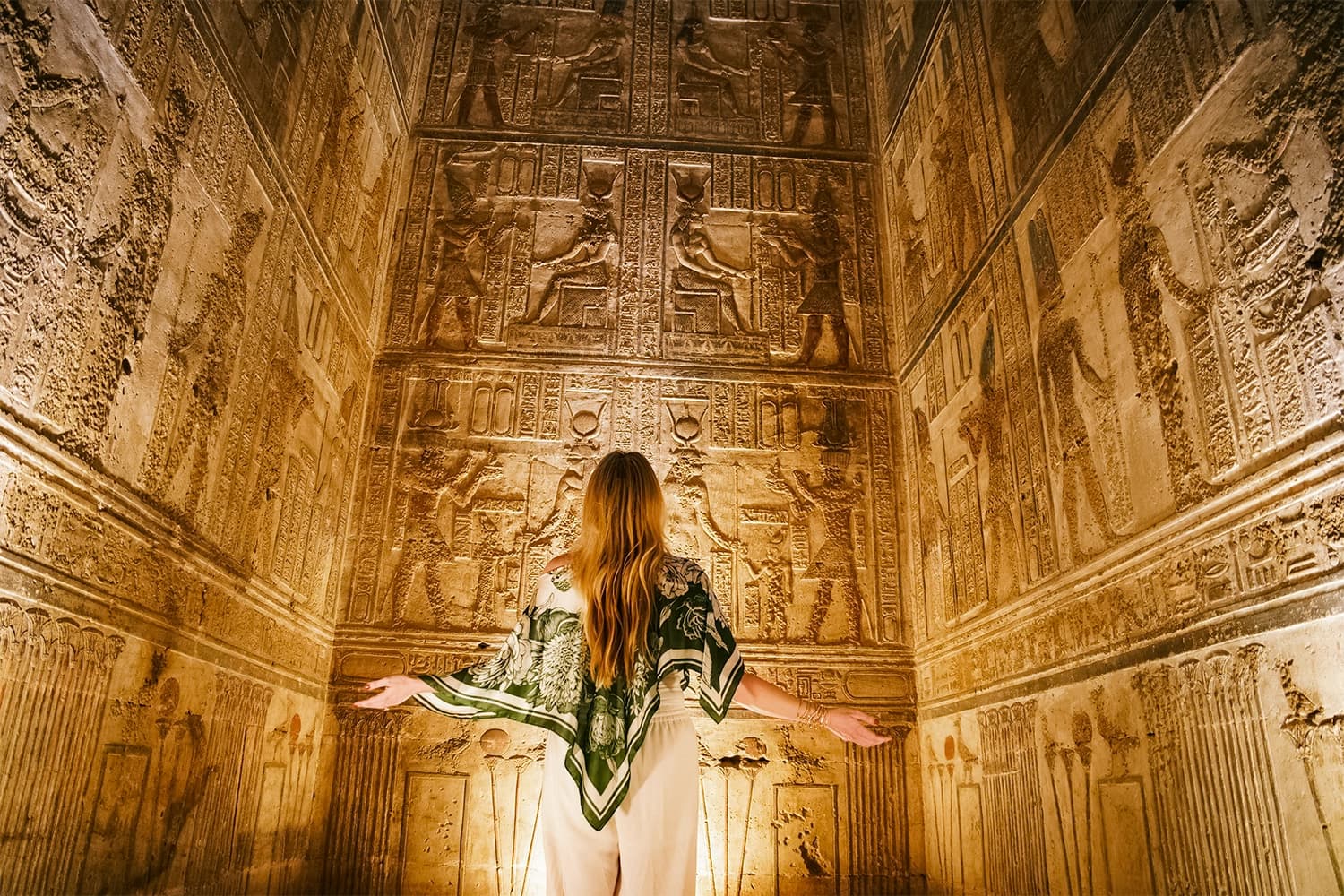
Dendera’s Temple of Hathor is celebrated for its remarkably preserved decoration and astronomical imagery.
Abydos is associated with the cult of Osiris and contains the magnificent Temple of Seti I, with some of the finest surviving relief carving in Egypt.
These visits can be particularly rewarding for travelers interested in ancient Egyptian religion and symbolism.
However, Dendera and Abydos involve additional road travel. Including both in a retreat should be a deliberate choice, not simply another attempt to fit more monuments into the schedule.
Yoga, Breathwork, Sound Sessions and Spiritual Pilgrimages: What’s the Difference?
The word wellness covers a broad range of experiences, and it is worth understanding what each type of retreat offers.
Yoga-centered retreats place regular physical practice at the heart of the program. Meditation and cultural visits may support that focus.
Breathwork retreats emphasize guided breathing practices. Techniques vary, and some can be physically or emotionally intense. Travelers should ask about the facilitator’s training and any relevant health precautions.
Sound sessions may use instruments, music, or vocal sounds as part of a relaxation or reflective practice. They can be enjoyable, but claims that they treat medical conditions should not be accepted without reliable clinical evidence.
Spiritual or transformational retreats may incorporate personal reflection, facilitated circles, symbolic rituals, or belief-based frameworks such as astrology or Human Design. These are personal-development or spiritual approaches, not scientifically established diagnostic methods.
None of these formats is automatically better than another.
What matters is knowing what you are booking and choosing a program that aligns with your expectations.
Three Different Wellness Retreat Experiences in Egypt
Luxor Booking Tours currently features several distinct retreat experiences, illustrating how varied this category can be.
Egypt Pilgrimage Retreat — 10 Days
This program combines Cairo, Aswan, and Luxor with three nights aboard a private Nile dahabiya.
It includes yoga and meditation, guided visits to major historical sites, workshops, and group ceremonies.
The journey begins with Cairo’s pyramids and the Grand Egyptian Museum before continuing south to Philae, Kom Ombo, Edfu, Karnak, and the Valley of the Kings. It also includes Dendera and Abydos.
This is a particularly relevant option for travelers who want a substantial Egyptian sightseeing itinerary alongside structured yoga and retreat activities.
Explore the 10-Day Egypt Pilgrimage Retreat
Return to the Throne — 8-Day Women’s Retreat
Scheduled for October 4–11, 2027, this hosted women’s retreat combines Cairo with five nights aboard the El Nur Dahabiya.
Its program emphasizes breathwork, sound sessions, Reiki, embodiment practices, and women’s circles rather than conventional daily yoga classes.
The itinerary includes a specially arranged visit inside the Great Pyramid, Nile sailing, and excursions to archaeological sites along the river.
It is designed for travelers specifically interested in a facilitated women’s retreat with an emphasis on group connection and personal reflection.
Mother of the World — 7-Day Pilgrimage
Hosted by Maria Amiouni and scheduled for December 11–17, 2026, this journey begins in Cairo and continues aboard the El Nur Dahabiya.
The program includes daily circles and reflections, with themes drawn from Human Design, Gene Keys, astrology, and the host’s spiritual approach.
It also incorporates visits to important historical sites, including Philae, Kom Ombo, Edfu, Karnak, and Dendera.
This is a hosted spiritual pilgrimage rather than a traditional yoga-intensive retreat.
Retreat dates, facilitators, accommodation, inclusions, and availability should always be checked on the individual program page before booking.
How Long Should an Egypt Wellness Retreat Be?
The right duration depends on how much of Egypt you want to explore.
A seven-day retreat can provide a meaningful introduction, particularly when the itinerary concentrates on Cairo and a Nile sailing experience.
Eight days allows additional room for hosted sessions, sightseeing, and travel between regions.
A ten-day program can cover a broader route, including Cairo, Upper Egypt, and additional temples, without compressing every experience into a short stay.
But duration alone does not determine quality.
A well-paced seven-day retreat may be more satisfying than a ten-day itinerary with constant transfers and insufficient rest.
When comparing programs, look beyond the number of nights. Consider how many days involve flights or long road journeys, how much time is spent aboard the boat, and how often sessions take place.
What Is the Best Time of Year for a Retreat in Egypt?
For outdoor yoga, Nile sailing, and cultural excursions, the cooler months are generally the most comfortable.
From approximately October through April, Upper Egypt usually offers more favorable conditions for combining sightseeing with time outdoors.
December and January can bring pleasantly mild daytime conditions, although early mornings and evenings may be cool.
Spring and autumn can also be attractive, but temperatures vary and occasional wind or dust can affect outdoor plans.
Summer in Luxor and Aswan is extremely hot. A retreat operating during this period needs careful scheduling, reliable cooling, and appropriate indoor alternatives.
The ideal season also depends on the actual retreat dates. Hosted group journeys often have fixed departures, whereas customized wellness travel may offer greater flexibility.
Is a Wellness Retreat in Egypt Suitable for Solo Travelers?
Yes, depending on the group format.
Many travelers join retreats without a companion because the shared program provides opportunities to meet others naturally.
Meals, excursions, and facilitated sessions create a structure for social interaction without requiring guests to organize everything themselves.
However, solo travelers should check the accommodation arrangements carefully.
Some retreat prices assume two guests sharing a room or cabin. A private room may carry a single supplement, and some group programs may offer shared accommodation only under specific conditions.
Also ask whether the group is women-only, mixed, or open to all travelers, and whether participation in every session is expected.
A retreat can be a welcoming way to visit Egypt alone, but the format should be clear before booking.
How Much Does a Wellness Retreat in Egypt Cost?
Prices vary significantly according to duration, accommodation standard, sailing arrangements, included flights, facilitator fees, and special-access experiences.
A luxury hosted retreat aboard a private dahabiya is not directly comparable with a hotel-based yoga holiday.
When evaluating a price, check whether it includes domestic flights, airport transfers, accommodation, meals, archaeological admission tickets, guiding, retreat sessions, and any special venue access.
Also check international flights, visas, gratuities, travel insurance, and optional excursions.
A lower advertised price may not represent better value if important services are excluded.
Currency matters too: Egyptian retreat programs may be quoted in US dollars or euros, so compare the final amount in the same currency.
What Should You Pack?
Packing for an Egyptian retreat means preparing for both wellness activities and cultural excursions.
Comfortable, breathable clothing is useful for daytime sightseeing, while flexible exercise clothing is suitable for yoga or movement sessions.
A light layer can be helpful on cool mornings or evenings aboard the Nile.
Bring comfortable walking shoes for archaeological sites, sun protection, any necessary personal medication, and a reusable water bottle where appropriate.
Ask the retreat organizer whether yoga mats, cushions, or other equipment are provided.
Respectful clothing is advisable when visiting religious sites and local communities.
There is no need to pack an elaborate wardrobe. Practical clothing that works for the climate and planned activities is more valuable.
Questions to Ask Before Booking a Retreat
A well-presented itinerary is only the beginning. Before confirming, make sure you understand the practical arrangements.
What practices are included, and who leads them?
Are sessions suitable for beginners, and can guests opt out?
Is the retreat women-only, mixed, or open to all?
Which hotels and vessels are confirmed, and what are the cabin arrangements?
Are domestic flights, meals, admission fees, and transfers included?
Are special-access temple experiences fully confirmed or subject to permission?
What are the deposit, cancellation, and refund conditions?
How much time is genuinely available for rest?
Clear answers are a good sign that the program has been planned with the guest experience in mind.
Planning a Wellness Journey With Luxor Booking Tours
A meaningful retreat requires more than selecting attractive hotels and adding yoga sessions to a sightseeing schedule.
The route, group format, facilitator, accommodation, and pace all need to work together.
Luxor Booking Tours offers a selection of Egypt retreat experiences combining cultural discovery with different wellness and personal-reflection practices.
Whether your priority is daily yoga, a hosted women’s journey, or a Nile-based spiritual pilgrimage, the first step is choosing the program that genuinely fits your interests.
Explore our Egypt Wellness Retreats to compare available journeys, or contact our team to discuss dates, accommodation, and the experience you are looking for.
Frequently Asked Questions
Are there yoga retreats in Egypt?
Yes. Egypt offers retreats that incorporate yoga, meditation, and cultural excursions, particularly in destinations such as Cairo, Luxor, Aswan, and along the Nile. The amount and style of yoga vary by program.
Can beginners join an Egypt yoga retreat?
Some retreats welcome beginners, but suitability depends on the actual sessions. Ask the organizer about experience requirements, physical intensity, and available modifications.
Are all wellness retreats in Egypt yoga retreats?
No. Some focus on breathwork, reflection circles, sound sessions, or spiritual practices rather than yoga. Always check the daily itinerary.
Can I stay on a dahabiya during a retreat?
Yes. Selected retreats use traditional-style Nile dahabiyas as their accommodation, combining sailing with organized activities and temple visits.
Are Egypt wellness retreats suitable for women traveling alone?
Many group retreats can be suitable for solo women travelers. Confirm the group format, accommodation arrangements, and support provided by the organizer.
Do I need to participate in every retreat session?
This depends on the program. Some hosted experiences have a structured group schedule, while others allow more personal flexibility. Ask before booking.
Are wellness retreats in Egypt religious?
Not necessarily. Some are secular yoga or wellness holidays, while others incorporate spiritual or belief-based practices. The retreat description should make this distinction clear.
What is the best season for a Nile wellness retreat?
October through April is generally preferable for outdoor activities in Upper Egypt, although exact conditions vary by month and location.
Final Thoughts
Egypt offers an unusual opportunity to combine wellness travel with a destination of extraordinary historical and cultural depth.
The Nile provides a beautiful setting for reflection and slower travel. The temples offer opportunities to discover ancient history with expert guidance. And carefully structured retreat programs can create time for practices that are often neglected in everyday life.
The important thing is to choose thoughtfully.
A yoga-centered journey, a hosted women’s retreat, and a spiritual pilgrimage may share the same Egyptian landscapes while offering very different experiences.
When the format, expectations, and itinerary are aligned, a retreat in Egypt can become a rewarding way to experience the country beyond conventional sightseeing.
الرحلات المرتبطة
استكشف الرحلات اليومية والبرامج السياحية والنايل كروز المرتبطة بهذا الدليل.
يبدأ من $3,990
USD / شخص
خلوة الحج الروحي في مصر لمدة 10 أيام
القاهرة · أسوان · الأقصر
اجمع بين اليوغا والتأمل اليوميين وزيارات المعابد بصحبة مرشد، ثم اقضِ ثلاث ليالٍ في الإبحار في النيل على متن ذهبية خاصة.
- 10 أيام / 9 ليالٍ
 خلوة جماعية
يبدأ من €5,330
EUR / شخص
خلوة العودة إلى العرش لمدة 8 أيام
القاهرة · دهبية النيل
زيارة داخل الهرم الأكبر، ثم قضاء خمس ليالٍ على متن النور مع جلسات التنفس والصوت وحلقات النساء.
- 8 أيام / 7 ليالٍ
- خلوة جماعية
يبدأ من €4,490
EUR / شخص
رحلة حج أم الدنيا لمدة 7 أيام
القاهرة · دهبية النيل
انضم إلى ماريا أميوني في دوائر وتأملات يومية، تبدأ في القاهرة قبل خمس ليالٍ على متن النور.
- 7 أيام / 6 ليالٍ
- خلوة جماعية