Even travelers who cannot explain it often notice something immediately:
The West Bank of Luxor feels different.
Not slightly different.
Fundamentally different.
The pace changes.
The atmosphere changes.
Even the emotional tone of the day often changes.
And while many travelers simply describe this as “quieter” or “more relaxed,” the reality is more interesting.
Because the West Bank feels different for several reasons—physical, psychological, environmental, and cultural.
It Is Not Just the Other Side of the River
On a map, the West Bank may seem like a simple geographic continuation of Luxor.
Cross the Nile, continue the trip.
But this is misleading.
The West Bank is not experienced as an extension of the East Bank.
It feels like entering a different rhythm entirely.
That difference begins almost immediately.
The Nile Creates a Psychological Transition
One of the most underestimated parts of the experience is crossing the Nile itself.
Transitions matter psychologically.
When travelers physically cross water, the brain often interprets this as movement between distinct environments.
Even when the crossing is short, it creates:
• Separation
• Reset
• A sense of leaving one atmosphere behind
This makes the West Bank feel more distinct than the distance alone would suggest.
The Difference in Urban Density
The East Bank feels structurally busier.
It contains:
• More hotels
• More commercial activity
• More visible traffic
• More tourism infrastructure
This creates movement and stimulation.
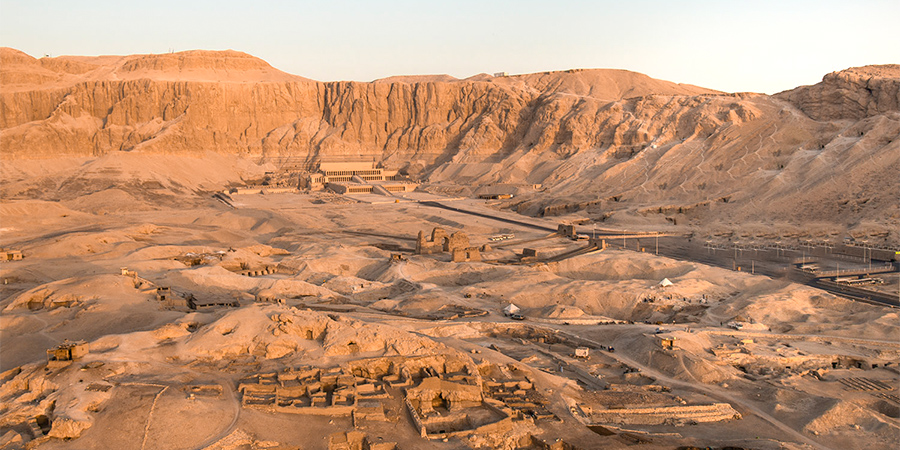
The West Bank feels less dense.
There is:
• More open space
• Less visual clutter
• Lower commercial intensity in many areas
The reduced stimulation changes how travelers feel.
Open Space Changes Emotional Response
Human psychology responds strongly to space.
The West Bank offers:
• Wider visual horizons
• More desert openness
• Less compression from urban structure
This often creates feelings of:
• Calm
• Mental spaciousness
• Reduced pressure
Even before visiting any site, the environment itself affects emotional state.
The Landscape Feels More Elemental
Part of the West Bank’s identity comes from environmental contrast.
The area feels shaped more visibly by:
• Desert geography
• Agricultural land transitions
• Open skies
• Sharp natural contrasts
This creates a more elemental environment than the East Bank.
And travelers often respond to that without consciously analyzing it.
Historical Sites Shape the Mood
The West Bank is also home to some of Luxor’s most psychologically distinctive sites, including:
• Tomb areas and funerary landscapes
These places naturally create a different emotional tone from the East Bank’s monumental temple environments.
The mood becomes:
• More introspective
• More spatially dramatic
• Less urban in feeling
Even travelers with little historical context often sense this difference.
Movement Feels Less Compressed
Another reason the West Bank feels different is movement rhythm.
On the East Bank, movement often feels:
• Structured
• Practical
• Destination-focused
On the West Bank, transitions often feel slower and more open.
The roads, spacing, and surrounding environment reduce the sense of compression.
This subtly changes the travel experience.
Silence Feels More Present
Not complete silence.
But relative silence.
Compared to more active areas, many parts of the West Bank offer:
• Less ambient noise
• Less visual urgency
• Less constant stimulation
This changes attention.
Travelers often become:
• More observant
• Less reactive
• More mentally present
And that shifts the emotional quality of the trip.
Why Some Travelers Prefer Staying There
Some travelers strongly prefer staying on the West Bank.
Usually not because of convenience.
But because they value:
• Quiet
• Atmosphere
• Slower pacing
• Psychological separation from busier environments
This especially appeals to:
• Slow travelers
• Reflective travelers
• Experience-focused visitors
The Trade-Offs Still Matter
Of course, the West Bank is not automatically “better.”
It also involves trade-offs:
• Fewer infrastructure options
• Less immediate convenience
• More planning depending on itinerary structure
This is why preference depends heavily on travel style.
The West Bank rewards certain priorities more than others.
Why the Difference Feels Emotional, Not Just Practical
The most interesting part is that many travelers describe the West Bank emotionally.
They say it feels:
• Different
• Quieter
• More peaceful
• Less stressful
These are not logistical observations.
They are emotional responses to environmental design.
And that is why the difference feels so noticeable.
What the West Bank Represents Psychologically
In many ways, the West Bank represents transition.
From:
• Activity → stillness
• Density → openness
• Structure → atmosphere
That psychological contrast creates memorable impressions.
And often, travelers feel it before they understand it.
Final Thoughts
The West Bank of Luxor feels different because it genuinely is different—not only geographically, but psychologically and environmentally.
The Nile crossing, open landscape, reduced density, and distinctive historical sites all combine to create a different kind of travel experience.
For some travelers, this becomes their favorite side of Luxor.
Not because it offers more.
But because it feels different in all the right ways.
Related Experiences in Luxor
• West Bank private experiences with flexible pacing
• Slow-travel itineraries focused on atmosphere
• Custom Luxor stays designed around travel style
Sometimes the most memorable difference in travel is not what you visit—but how the environment makes you feel.